


Scattering seed onto a patchy lawn without knowing why it's patchy is the single most common reason repairs don't stick. To repair patchy grass properly, first identify the cause, usually moss, thatch build-up, compaction, drought stress, shade or a nutrient problem on UK lawns, then follow the right repair order: treat moss if present, remove thatch or aerate compacted ground, feed the soil, overseed, water consistently and support the new growth.
If you're a UK lawn owner or gardener trying to fix bare or thinning areas, this guide walks you through that process step by step. It covers how to diagnose the cause of patchy grass, why the order of treatment matters, when to carry out each job, how to overseed and water for the best chance of success, and what kind of recovery you can realistically expect.
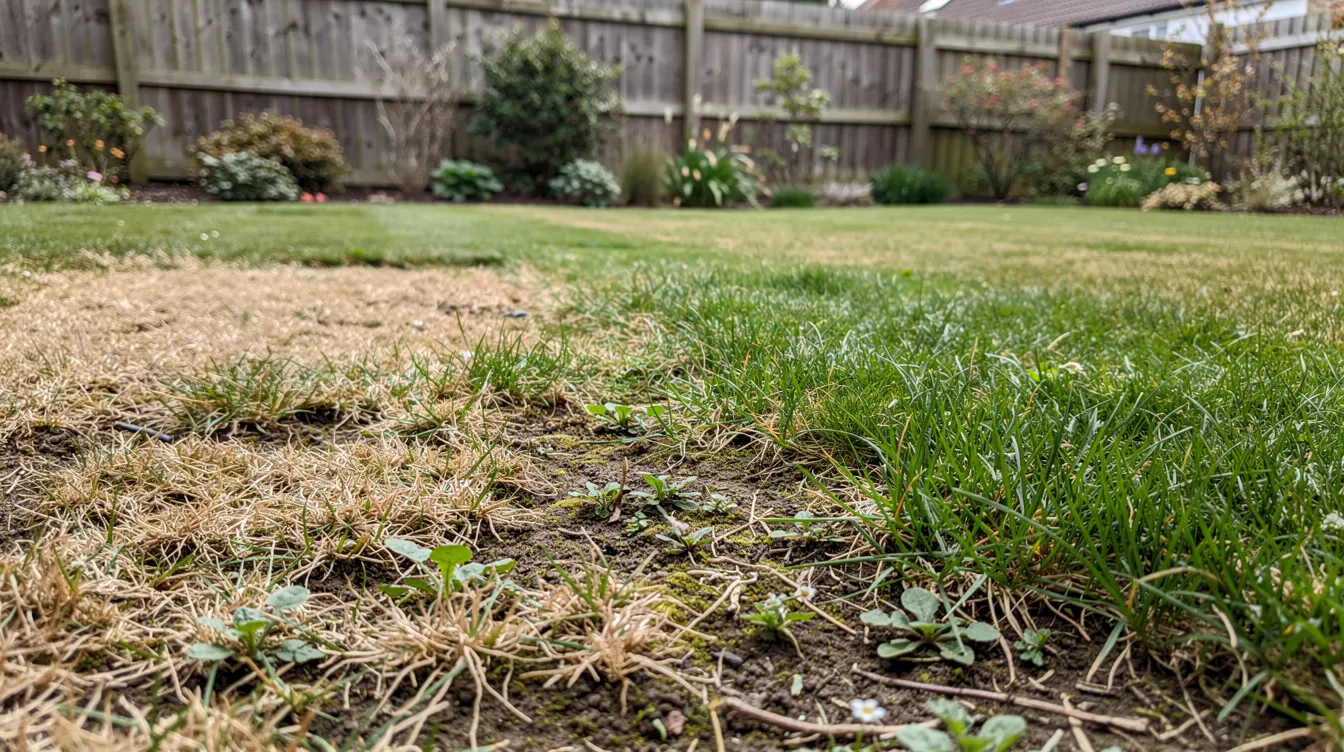
Diagnose it first
Answer these quickly:
-
Is there visible moss? Green, spongy, mat-like growth, especially in shaded or damp spots. → Moss.
-
Does it feel spongy underfoot, with water sitting on the surface? → Thatch buildup.
-
Are the patches on paths or high-traffic routes, with hard ground? → Compaction.
-
Did the patches appear in summer and partially recover after rain? → Drought or heat stress.
-
Are patches under trees, along fences, or worse as summer goes on? → Shade.
-
Is it yellow-green across a wide area rather than distinct bare patches? → Nutrient deficiency.
Many lawns have more than one of these at once, moss and compaction often show up together, for example. If your patches appeared specifically after this summer's dry weather, see lawn recovery after drought first, dormant grass needs a different starting point to genuinely dead patches. If you'd rather skip the guesswork, the free GREENER Lawn Diagnosis narrows it down in four questions.
Why the order of treatment matters
Grass seed is usually the third or fourth step in a repair, not the first. Reseeding is a common fix for bare patches, but it works best only after the underlying issue is fixed. Seed scattered onto live moss, compacted soil, or a thick thatch layer struggles to make contact with actual soil, so germination is patchy even when the product itself is fine; repairing patchy grass also means clearing dead grass or debris first and then keeping moisture consistent. Fix what's underneath first. The RHS's guide to repairing lawns covers the same principle, and our lawn renovation checklist turns the sequence below into a printable list.
The lawn repair sequence
1. Treat moss, if present
Apply an iron sulphate treatment. It kills active moss within 24–48 hours, visible as blackening and die-back. Don't scarify beforehand, that spreads live moss rather than removing it.
2. Remove thatch or relieve compaction
If the lawn feels spongy, scarify to remove the dead organic layer once moss has died back. If the ground is hard rather than spongy, aerate instead; a garden fork works for small areas, while a hollow-tine aerator for larger ones creates aeration holes that improve drainage and help relieve compacted soil. Skip this step if neither applies, over-treating a thin lawn without thatch or compaction just adds stress. Clearing away the loosened debris leaves prepared soil for the next repair step.
3. Use a seed-safe establishment fertiliser
Apply a fertiliser designed for seeding across the whole lawn, patches included, at the same time as the grass seed. Avoid a strong high-nitrogen maintenance feed on newly sown areas: it can push the existing grass without helping seedlings establish evenly. A seed-safe fertiliser with root-supporting ingredients gives new grass a better start while feeding the surrounding lawn. Use a spreader for even coverage and follow the stated application rate. See best autumn lawn fertiliser if you're repairing from September onward.
4. Overseed
Sow a UK-formulated lawn seed or seed mix at 15–25g per m², across the full lawn rather than only the bare bits, to thicken existing grass at the same time as filling gaps. Reseeding is the usual fix for bare spots and patchy areas, but using turf can provide immediate repair for larger bare areas. Go over patches twice for denser coverage. Rake lightly so seed contacts soil on the lawn surface. A thin layer of lawn dressing or top dressing over the seeded area can improve soil condition, support seed germination, and protect new seed. Full detail in how to overseed after summer.
5. Water and wait
Keep soil consistently moist for 7–14 days by watering lightly each day for at least two weeks after seeding, adjusting only if rain keeps the area wet; after that, water regularly as roots develop. Keep the top inch of soil at steady moisture levels, moist but not soggy, to support seed germination. First shoots typically appear in that window under decent conditions. This step fails more repairs than any other, and newly seeded spots that dry out often don't recover. Even when shoots show early, newly sown grass usually takes several weeks to establish.
6. Support and protect new growth
Once grass seedlings are visible, a liquid seaweed biostimulant helps grass roots develop. Don't mow until the new grass reaches 8–10cm; this should be the first mowing after repair. Fertilize 6 to 8 weeks after seeding, once the new grass is established, and continue regular feeding every 6 to 8 weeks during the growing season. Keep foot traffic off new growth for 4–6 weeks, as regular mowing and feed help build a healthy lawn and support healthy grass growth after establishment.
Timing matters as much as sequence
Patchy lawn repair works best when soil is above 8°C and moisture is reliable, that's roughly April–May or mid-August to mid-September in the UK, and those windows line up with the main growing season and more reliable moisture levels for grass growth. Repairs attempted in peak summer heat or deep winter cold get slower, less reliable results regardless of how well you follow the sequence above. See why September is the best time to repair your lawn for why that specific window works so well, though early summer can be workable if moisture is managed carefully, while peak heat still makes repair less reliable.
What to expect
-
Days 1–2: Visible darkening if moss treatment was used.
-
Days 7–14: New shoots in previously bare areas.
-
Week 3: Noticeably thicker coverage.
-
Week 4: Full transformation typically visible, dense coverage, consistent colour.
-
If you repair larger bare areas with turf: Sod patches can often blend in visually with the rest of the lawn within about two weeks.
-
Keep protecting those sod patches: They may still take up to six weeks to root fully, so avoid heavy foot traffic during that period.
Small patch or full lawn reset?
A handful of isolated bare spots can usually be repaired locally: clear the dead material, loosen the topsoil, add suitable seed and keep it moist. If bare or thin areas cover a large part of the lawn, moss is widespread, or the problem returns every year, treat the whole lawn instead. Repairing only the most visible patches leaves the underlying compaction, thatch or nutrient problem untouched.
Repair locally: one or two small patches with otherwise healthy surrounding grass.
Overseed the full lawn: widespread thinning, uneven density or numerous small gaps.
Complete lawn reset: recurring moss, extensive bare ground, serious compaction or several problems at once.
How to treat different types of lawn patch
Dog urine patches
Water the affected spot thoroughly when damage is fresh. Once the grass has died, rake out the dead material, loosen the surface and reseed. Avoid adding extra fertiliser directly to the patch because urine damage is already associated with concentrated salts and nitrogen. Read the full dog urine patch guide.
Shade patches
Use a shade-tolerant seed mix, improve light and airflow where practical, and mow slightly higher than the rest of the lawn. Repeatedly sowing a general-purpose mix beneath dense trees or beside a north-facing fence usually recreates the same bare patch.
Worn paths and play areas
Aerate compacted soil before seeding and keep people and pets away while seedlings establish. If the same route is used constantly, stepping stones or a defined path may be more durable than repeatedly repairing grass.
Low or waterlogged patches
Fix drainage or levels before adding seed. Seed will not solve soil that remains saturated. Small depressions can be levelled gradually with a suitable topdressing; persistent standing water may need more substantial drainage work.
Frequently asked questions
Will patchy grass fill in by itself?
Minor thinning can improve during active growth, but genuinely bare soil usually needs seed or turf. If the cause is moss, compaction, shade or wear, it must also be corrected or the patch is likely to return.
Can I put grass seed straight onto a bare patch?
Seed needs contact with loosened soil and reliable moisture. Rake away dead material, break up the surface and lightly rake the seed in rather than leaving it sitting on compacted ground.
How long does patch repair take?
Under suitable UK growing conditions, the first shoots often appear in 7–14 days. Expect several more weeks before the repair is strong enough for normal mowing and foot traffic.
Should I repair patches in spring or autumn?
Both can work, but early autumn usually offers warm soil with more reliable moisture. Spring is also suitable once soil temperatures rise. Avoid sowing during frost, waterlogging or a period when you cannot keep the seed moist.
Why does my lawn become patchy again?
Recurring patches normally mean the underlying cause was never removed. Check for compaction, shade, mowing too short, poor drainage, persistent wear, moss and inconsistent watering before repeating the same seed-only repair.
Everything for lawn care in the right order, in one box
The GREENER Transformation Kit follows this exact sequence, moss treatment, feed, seed, biostimulant, pre-measured for your lawn size, so there's no separate shopping trip and no guesswork on order or timing; for larger affected areas or a damaged lawn, you may need new turf instead of seed.
Fix Patchy Grass — From £89.99
If you use turf, set it at the same level as the surrounding lawn and water newly laid sod two to three times a day at first.
Backed by the 60-Day Lawn Pledge.
New to lawn care generally? Start with our new homeowner lawn guide.


