


If you're reaching for the same fertiliser you used in spring, stop. Autumn feed needs a different balance of nutrients, because the job it's doing is different: not pushing growth, but building resilience before winter.
Lawn feed hub: For fertiliser types, seasonal nutrients and NPK basics, start with our complete UK lawn fertiliser guide.
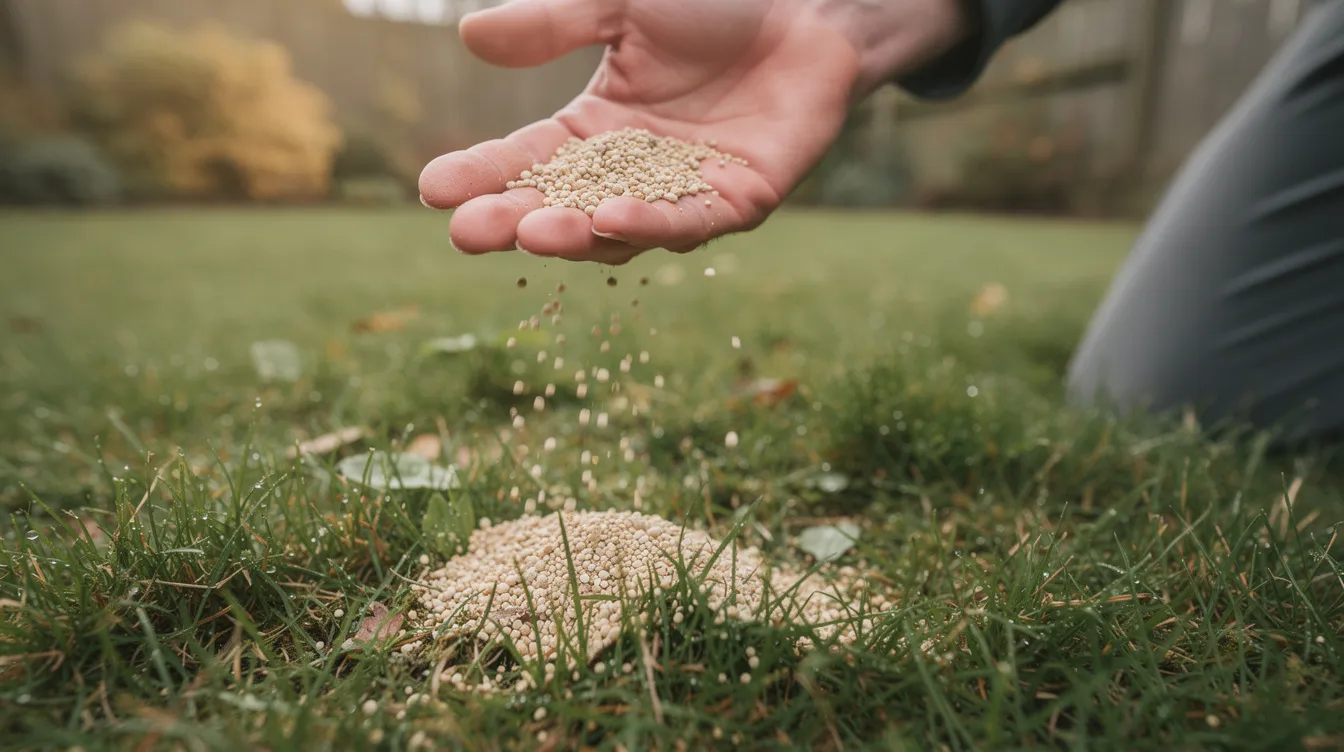
Why the formula changes
Fertiliser numbers refer to NPK: nitrogen, phosphorus, and potassium, in that order. Spring feeds lead with nitrogen because nitrogen drives leafy top growth, exactly what you want when grass is waking up and you want it thickening fast.
Autumn is the opposite problem. These feeds are designed to avoid excessive growth and shift the lawn's energy into root strength before winter. Pushing soft new leaf growth right before winter leaves it vulnerable to frost and fungal diseases, because growth that hasn't hardened off doesn't survive cold snaps well. So autumn feeds flip the ratio: nitrogen drops, and potassium becomes the lead nutrient instead to help protect the grass.
What to look for on the bag
Autumn lawn feeds typically carry NPK ratios such as 3-5-12, 4-3-8, 4-5-15, or 10-5-15: in other words, an autumn lawn feed should favour low nitrogen with high levels of phosphorus and potassium. Potassium strengthens cell walls and improves the grass's tolerance to cold and disease, which is exactly the job that needs doing between September and the first frosts. Some products also include iron, which helps suppress moss growth. Magnesium supports photosynthesis and helps keep the lawn green during shorter days.
Phosphorus, the middle number, supports root development, useful heading into a season where root growth matters more than leaf growth. The RHS's guide to fertilisers covers how to read NPK ratios in more depth if you want the general principle beyond lawns specifically.
Granular vs. liquid
Granular slow-release feed is generally the better choice for autumn application, as a lawn feed and fertiliser, and that steady pattern is beneficial because it supports the lawn through the autumn winter transition without pushing soft top growth. It releases potassium steadily over several weeks rather than all at once, which matches how the lawn is winding down its growth rather than surging through it. Liquid feeds act faster but need more frequent reapplication to deliver the same sustained effect, and they can be less convenient when autumn weather is unsettled and reapplication windows are narrower.
When to apply it
Early-to-mid autumn is the window, once summer heat has properly broken but before the ground starts cooling toward winter dormancy, giving an autumn winter lawn feed time to strengthen roots ahead of the winter months. For most of the UK that's roughly September into early October. As a general guide, apply 20-30 grams of fertiliser per square metre, though some labels specify 35g per m² to ensure even coverage, so the bag should take priority. Applying too late, once soil temperature drops much below 8°C, means the feed sits there largely unused because the grass isn't actively taking up nutrients anymore.
How to apply it correctly
-
Mow the lawn a day or two before feeding, so the feed reaches soil rather than sitting on long grass blades.
-
Apply evenly; a spreader gives more consistent coverage than hand-scattering, especially on larger lawns, and a typical spread rate is 20-30 grams per square metre.
-
Water in lightly if there's no rain forecast within a day or two, this helps granules start breaking down and reach the root zone while also reducing transfer onto shoes or pets' paws after treatment.
-
Avoid feeding right before a heavy downpour, which can wash granular feed away before it's absorbed; waiting for calmer conditions is better for the lawn and the wider environment.
Should you feed and seed at the same time?
Yes, and it's one of the more efficient autumn combinations for lawn care, especially if you want to re-seed worn or thin areas. A pre-seed or autumn feed applied a few days before overseeding gives new grass a nutrient base to establish into, while also feeding the existing lawn. Just check the specific product, some autumn feeds are formulated as pre-seed treatments and others as standalone maintenance feeds, and the sequencing (feed first, then seed a few days later) matters more than doing both on the same afternoon, so you can expect steadier establishment and a more even fill-in. This is especially relevant for newly laid turf, which should be established before feeding heavily. Full walk-through here: how to overseed after summer.
What autumn lawn feed won't fix
Fertiliser isn't a substitute for dealing with moss, thatch, or compaction. Before feeding, you may need to remove thatch by scarifying with a spring tined rake so nutrients can reach the roots properly. Aerating with a garden fork by spiking holes 10-15cm apart helps open the soil to air and water, and can also improve resilience in periods of drought. On compacted patches, top dressing after aeration with loam and sand can help improve the surface and drainage.
A lawn with active moss or heavy thatch will get limited benefit from feeding until those are addressed first, the nutrients can't reach the roots properly through a blocked layer. Feed is one part of a renovation sequence, not a stand-in for the rest of it, see the lawn renovation checklist for where feeding fits in relative to moss and thatch treatment, and remember feed alone will not control weeds.
Get the right feed, correctly timed
GROWTH, GREENER's autumn winter lawn feed, is formulated for UK soil and included in the correct sequence within the Transformation Kit, so you're not guessing which ratio or when to apply it. It is designed to protect grass plants through colder conditions rather than push soft top growth.
Shop the Transformation Kit — From £89.99
For feed delivered automatically at the right point every season, the Seasonal Care Subscription makes ongoing lawn care easier by removing the need to remember timing at all.


