


A lawn renovation checklist is a step-by-step order of jobs that helps you renovate a lawn properly: spot the underlying problems first, deal with moss, thatch and compaction, feed the soil, overseed, water consistently, then support new grass with the right aftercare. Most lawn renovations don't fail because of bad products. They fail because steps get done out of order, or skipped altogether.
For UK homeowners and gardeners who want thicker, healthier grass, this guide lays out the full process in the order that actually works, including when to renovate for UK conditions, how to prepare the lawn, what to treat before seeding, and how to maintain new growth once it starts to establish. You can tick items off as you go rather than trying to remember what comes next or risking common mistakes that leave renovation patchy or unsuccessful.
Before You Start Lawn Renovation
-
Identify the cause. Is it moss, thatch, compaction, drought stress, shade, or a nutrient gap? If roughly 30–50% or more of the lawn area is damaged, a full lawn renovation is usually the better option. See how to repair patchy grass for a full breakdown of each cause, and check soil condition with a pH test so you can choose the right amendments. Not sure? A free lawn diagnosis narrows it down in four questions.
-
Check the calendar. UK lawns renovate best in the two windows when soil is above 8°C and rainfall is reliable: mid-August to mid-September, and April to May. See why September is the best time to repair your lawn for the reasoning, and the RHS guide to repairing lawns for the wider seasonal picture. Avoid starting a full renovation in the middle of summer or winter.
-
Clear the space. Remove toys, furniture, and anything else sitting on the grass. Trim overhanging branches if shade is part of the problem.
-
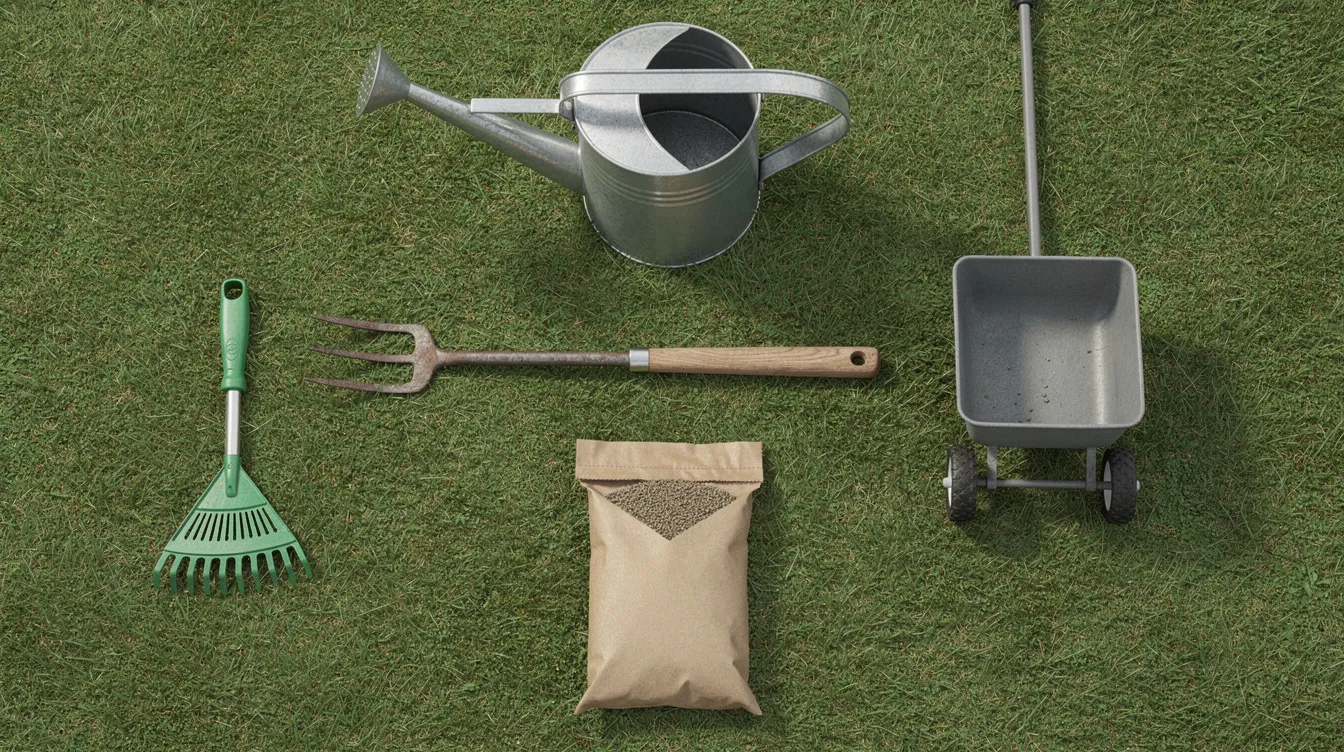
Gather your tools. Rake or scarifier, garden fork or aerator, spreader (or a steady hand), watering can or hose, high-quality seed suited to UK conditions, regionally appropriate and chosen for local climate, different lawn types, and intended lawn use.
Step 1: Treat Moss First
-
Apply an iron sulphate treatment if there's any visible moss, even a small amount, as this comes early in the renovation process before scarifying or seeding.
-
Wait 24–48 hours for the moss to blacken and die back as part of the wider process.
-
Do not scarify before this step. Scarifying live moss spreads it rather than removing it, and non-selective herbicides such as glyphosate are only for lawns being fully stripped and restarted, not routine overseeding jobs.
Step 2: Deal With Thatch and Compaction
-
Check for thatch: does the lawn feel spongy underfoot? Dethatching improves seed access to the soil by removing thatch and moss, and scarifying removes dead organic matter to expose the soil surface; this is sometimes called vertical mowing or verticutting because a scarifying machine cuts into the soil's top layer.
-
Check for compaction: is the ground hard, especially on paths or high-traffic areas? Aeration by aerating with a fork or hollow-tine aerator helps, and a hollow-tine aerator removes soil cores to relieve compaction. Those holes let water, seed, and nutrients penetrate more easily and improve drainage.
-
Skip this step for lawns without noticeable thatch or compaction. Over-scarifying a thin lawn makes it worse, not better.
Step 3: Feed the Soil Before You Seed
-
Apply a pre-seed fertiliser across the whole lawn, not just bare patches, and avoid any lawn feed with pre-emergents at seeding time because it can suppress new growth. See best autumn lawn fertiliser if you're doing this in September, as autumn feed needs a different NPK ratio to spring feed; after overseeding, switch to a high-phosphorus fertiliser for new grass to build strong roots, improve disease resistance, and reduce the risk of disease.
-
Water in lightly.
-
Leave 3–7 days before moving to seeding, so nutrients have started working into the soil.
Step 4: Overseed with Grass Seed
See how to overseed after summer for the full step-by-step if you want more detail than the checklist below, but overseeding is a key part of creating a healthy lawn and is generally worth doing at least once a year.
-
Choose a UK-formulated grass seed blend matched to your existing lawn type.
-
Sow at 35g per square metre, covering the whole lawn, not just bare patches, for even thickening.
-
Rake lightly so seed makes contact with soil.
-
Go over bare or thin patches a second time to help fill gaps caused by drought or shade with new grass seed and fresh turf growth, supporting a healthy finish.
Step 5: Water Consistently
-
Keep soil moist (not saturated) for the first 7–14 days with light watering 2–3 times per day for the first two weeks, adjusted for weather and each week as conditions change. On sloped areas, a light mulch or seed blanket can protect seed from washing away.
-
Water early morning where possible to reduce evaporation.
-
Expect first shoots within 7–14 days under good autumn or spring conditions.
Step 6: Support Establishment
-
Apply a liquid seaweed biostimulant once new growth is visible, to support root development.
-
Avoid mowing until grass reaches 8–10cm.
-
Keep foot traffic off newly seeded areas for 4–6 weeks.
Step 7: Aftercare (Ongoing) for Bare Patches
-
Mow regularly as part of regular maintenance, never removing more than a third of the blade height in one cut, to keep a newly renovated lawn in good shape.
-
Feed seasonally: nitrogen-led in spring, potassium-led in autumn.
-
Aerate annually to prevent compaction building back up as part of ongoing lawn care.
-
Water deeply and infrequently rather than little and often, to encourage deep roots; regular mowing and regular maintenance also include appropriate weed control.
Common Mistakes This Checklist Prevents
-
Seeding before treating moss or thatch (seed fails to establish in poor soil)
-
Renovating in the middle of a hot, dry summer (poor germination, heavy watering needed)
-
Skipping the pre-seed feed (slower, patchier establishment)
-
Mowing or walking on new grass too early (undoes 2–3 weeks of growth in one afternoon)
Do It in One Sitting
The GREENER Transformation Kit contains everything in this checklist, correctly measured for your lawn size, with the sequence built into the instructions, supporting the whole renovation process from a patchy, weed-filled lawn to lush, healthy turf. No separate trips for moss killer, feed, seed and biostimulant.
Get the Full Kit — From £89.99
For ongoing seasonal maintenance after the hard work of renovation, the GREENER Seasonal Care Subscription delivers the right treatment at the right time of year automatically to help keep the lawn healthy. New to all this? Our new homeowner lawn guide is a gentler starting point.


