


Overseeding is the fastest way to thicken a lawn that's come out of a hot, dry summer looking thin, patchy, or worn in the areas that took the most stress. In the UK, the best time to overseed is from late August to mid-October, with early to mid-September usually giving the most reliable results. But timing matters more than almost any other factor in whether it actually works: sow too early and the seedlings compete with weeds and heat stress, sow too late and they won't establish enough root before winter to survive it.
Grass seed hub: For seed selection, timing and sowing fundamentals, start with our complete UK grass seed guide.
This guide covers when to sow, why autumn usually beats spring, how to overseed properly after dry conditions, what happens if you miss the window, and the practical details, from soil preparation to choosing the right seed, that actually determine whether it works.
The Short Answer
For most of the UK, the overseeding window runs from late August to mid-October, with early-to-mid September generally considered the sweet spot. The exact cut-off isn't a calendar date so much as a soil temperature: once soil temperature consistently drops below 8°C, seed germination slows dramatically and newly sown seed will effectively sit dormant over winter with poor results. Rolawn's guide to overseeding covers the same principles if you want a second reference.
Spring (March to May) works as a backup window, though it's generally less reliable than autumn because conditions can turn dry quickly just as the seed needs consistent moisture. Avoid sowing during the height of summer heat in June and July, and avoid winter frost altogether.
Why Autumn Beats Spring for Lawn Overseeding
It's a common assumption that spring is the natural time to sow grass seed, since it's when everything else in the garden is waking up. For overseeding specifically, autumn has three practical advantages for the cool-season grasses that make up most UK lawns:
Warm soil, cooling air. Soil retains summer heat well into September, which is what grass seed actually needs to germinate reliably. Meanwhile cooler air temperatures slow the weed growth that would otherwise outcompete new seedlings in spring and summer.
More reliable rainfall. Seedbeds need to stay consistently moist from sowing until the new grass is established, roughly 3 to 4cm tall and has been mown at least once. UK autumn rainfall does much of this work automatically, whereas spring sowing often needs far more manual watering to avoid the seedbed drying out.
Less competition and less traffic. Lawns generally see less foot traffic and less mowing pressure through early autumn than they do in peak summer, giving new seedlings a better chance to establish undisturbed.
Worth a brief note if you've come across advice written for warmer climates: warm-season grasses, more common outside the UK, follow the opposite calendar and are usually overseeded from late spring to early summer instead. Almost all UK lawns are cool-season grasses, so the autumn window above is the one that applies.
Step by Step: Overseeding After a Dry Summer
If you've got a weed problem, treat it about two weeks before you start. Weed killer needs time to work before you disturb the soil and introduce new seed.
-
Wait for genuine recovery signs first. If your lawn is still dormant rather than actively growing, hold off, see our full drought recovery plan for how to tell the difference. Overseeding works best once the existing lawn is growing again, not while it's still stressed.
-
Mow short before you start. Cut the existing lawn slightly shorter than usual, but don't remove more than a third of the blade height at once or scalp it, and clear away clippings so seed isn't blocked from the soil surface.
-
Address compaction first if needed. Drought-baked soil is often compacted and won't absorb water or let roots through easily. Aerating before overseeding, covered in our aeration guide, opens up small holes that relieve that compaction and improve water and air movement.
-
Choose the right seed mix for the job. Perennial ryegrass is a durable choice for high-use lawns, fescue mixes suit shaded or dry areas better. Match the mix to how the lawn is actually used, not just what looks best on the bag.
-
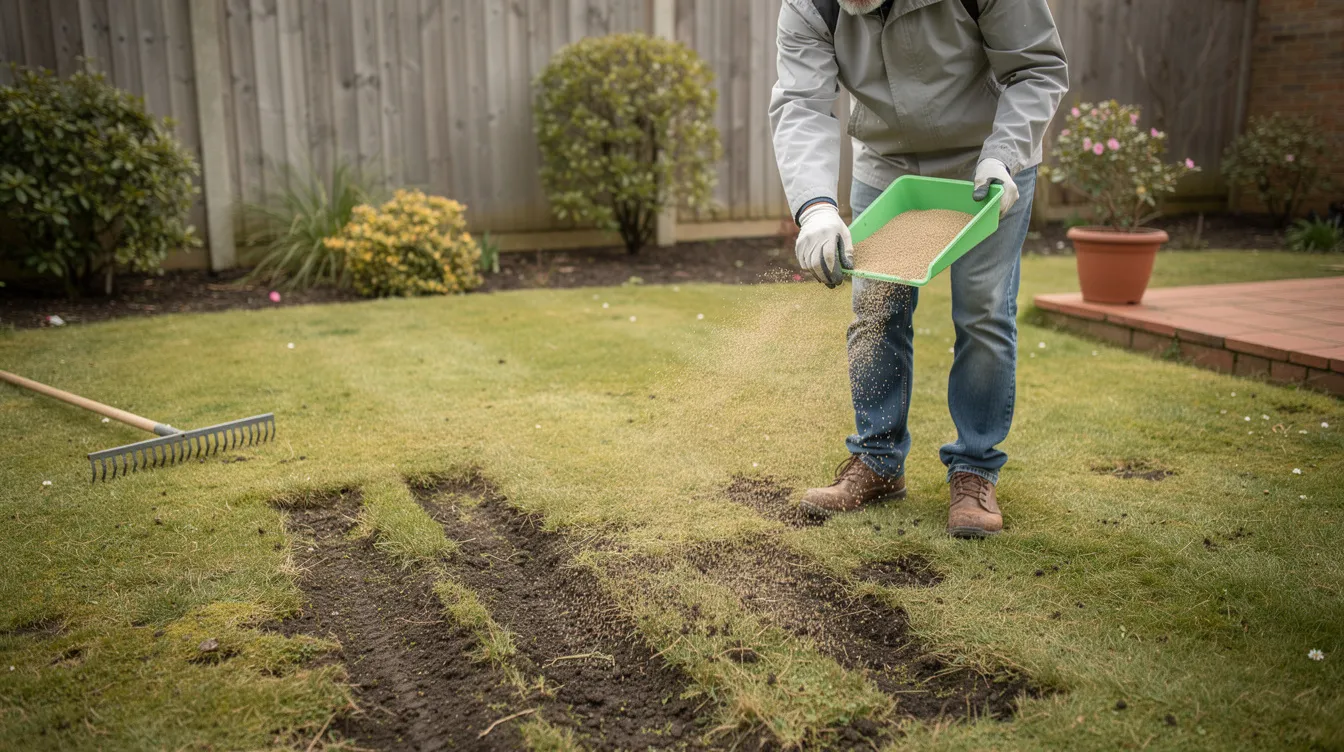
Sow at the right rate and get good soil contact. Spread seed evenly, then lightly rake so it makes proper contact with the soil surface without being buried or smothering the existing grass.
-
Keep it consistently moist. This is the one stage where, ban permitting, light and frequent watering is briefly correct, the opposite of how you'd treat an established lawn, because germinating seed needs constant surface moisture rather than deep infrequent watering. The surface shouldn't be allowed to dry out completely during the first few weeks, germination typically takes 7 to 21 days in good conditions.
-
Hold off on full mowing until established. Wait until new growth reaches 3 to 4cm before the first cut, and keep off the area as much as possible before that point.
Done properly, overseeding pays off well beyond the current season: a thicker lawn crowds out weeds on its own, resists disease better, and needs less chemical intervention over time.
What Happens If You Miss the Window
If soil temperatures have already dropped below the reliable germination threshold, sowing now typically means the seed sits through winter with little to no germination, and often gets lost to birds, rot, or frost before spring. In that case, it's genuinely better to wait for the following spring window, March to May, than to sow into cold soil and waste both the seed and the effort. Keep an eye on the forecast as spring approaches: if conditions are still cold in March, the safer end of that window is closer to April or May.
Timed to Arrive When You Need It
Knowing the window is one thing, actually having the right seed and feed to hand the week it opens is another. GREENER's seasonal subscription delivers a lawn care box tailored to whatever your lawn needs that season, spring, summer, autumn, and winter, straight to your door four times a year. The autumn box is timed to this exact calendar, seed and an autumn feed built for the same window described above, so you're not tracking soil temperatures or racing the garden centre once everyone else has the same idea. See our guide to the best autumn lawn feed for how that half of the sequence works.
Get the autumn box timed to this window →
FAQs
Can I overseed straight after a drought, or should I wait? Wait until the existing lawn shows clear signs of active recovery, ideally new green growth after the drought breaks, rather than overseeding onto a still-dormant lawn. If drought has left bare or badly thinning patches across the whole lawn rather than isolated areas, full reseeding may be a better option than spot overseeding. Overseeding too early, while the base lawn is still stressed, generally gives poor results because the whole area is competing for limited resources.
How do I know if my soil is warm enough to overseed? A simple soil thermometer pushed a few centimetres into the ground gives a reliable reading. Consistent readings above 8°C are needed for good germination, below that, germination becomes unreliable and slow. The forecast matters too, newly sown seed needs a run of mild conditions to germinate quickly and build a strong root system before growth slows down.
Do I need to feed before or after overseeding? A light autumn feed timed after overseeding, once seedlings are established, supports root development without overwhelming young grass. Heavy feeding immediately before sowing isn't necessary and can encourage weed competition in bare soil ahead of the new seed establishing.
For a direct comparison of both seasonal windows, read when to overseed a UK lawn: spring versus autumn.


