


Buying a house often means inheriting a lawn with no useful backstory, which is exactly what this new homeowner lawn guide is for. If you’ve got grass attached to your first home but no idea what’s been done to it, what kind of lawn you have, or why it looks the way it does, this will help you assess its condition, spot common issues like moss or compaction, and decide what to fix first.
It also walks through when to tackle bigger improvements, how to mow and water properly, and where guided lawn-care kits or subscriptions can make the first season simpler. That matters because most new homeowners don’t need expert knowledge, they need a clear starting point, a sensible order of jobs, and a way to improve the lawn step by step without making it more complicated than it needs to be.
You don't need to diagnose everything before you start
The instinct is to research every possible cause before touching anything. In practice, most first-lawn situations fall into a handful of patterns, and you can act on the obvious ones straight away while you figure out the rest.
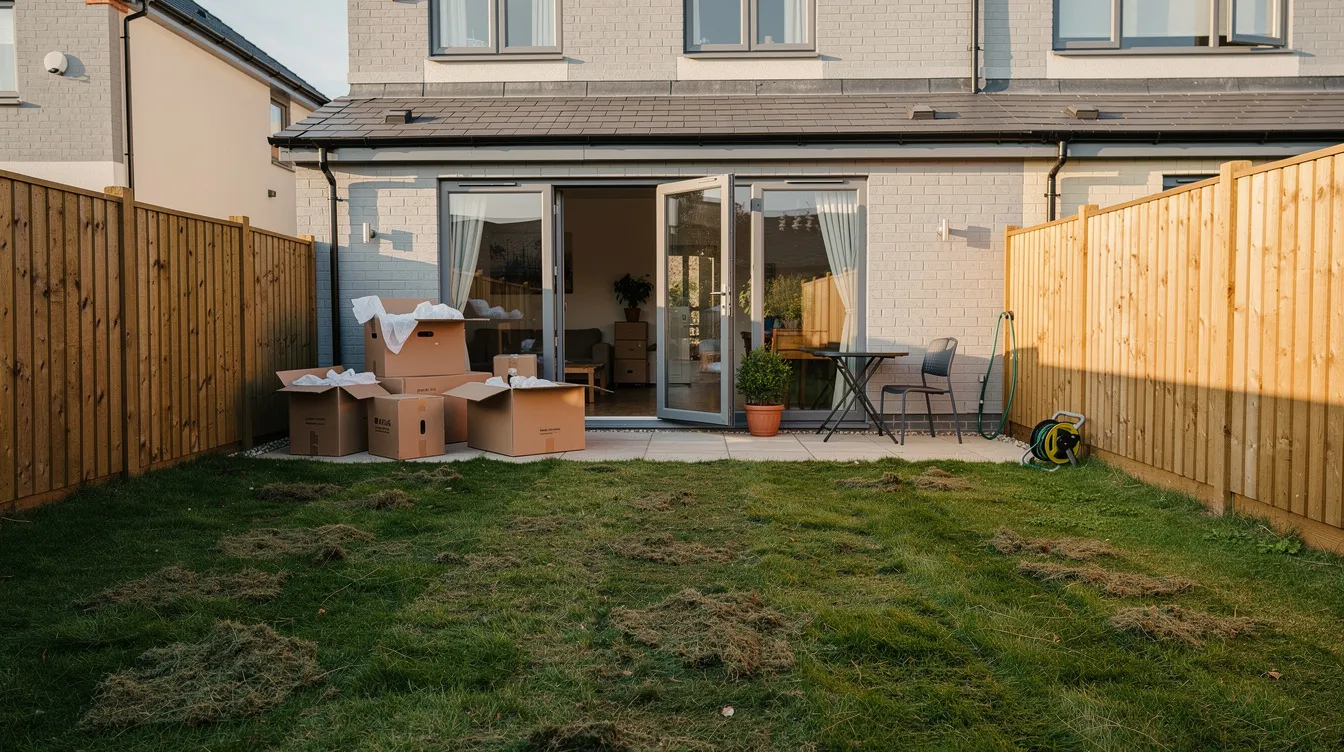
If it's a new build: the "lawn" is often thin turf or hydroseed laid over builder's rubble and minimal topsoil. It looks green at handover and thins out fast because there's very little for roots to establish into.
If it's an older, resold house: you're inheriting whatever the previous owner did or didn't do, years of neglect, over-mowing, or a lawn that was actually looked after and just needs continuing care.
Either way, the same starting questions apply.
Work out what you're dealing with for a healthy lawn
-
Is there moss? Common in both scenarios, especially in shaded or damp corners. Green, spongy patches are the tell.
-
Does it feel spongy or hollow underfoot? Likely thatch, dead organic matter that's built up and needs removing before anything else will take.
-
Is the ground hard, especially near paths or a shed? Compaction from construction traffic or years of foot traffic.
-
Patchy, thin, and inconsistent colour with no obvious pattern? Could be poor topsoil (common on new builds) or just general neglect. Poor soil is hard to confirm by sight alone, so soil testing can reveal nutrient deficiencies and pH levels before fertilization.
If you'd rather skip working this out yourself, the free GREENER Lawn Diagnosis asks four quick questions to help identify common lawn issues and gives practical lawn care advice. For the full breakdown of each cause and how to treat it, see how to repair patchy grass.
What new homeowners should do in your first season
-
Don't do everything at once. A lawn with multiple issues doesn't need every treatment simultaneously. Moss first, then thatch or compaction, then feed, then seed, in that order, is the sequence that actually works. Overseeding helps with bare patches and thin areas grow thick, while improving resistance to weeds over time.
-
Match your first big push to the calendar, not your move-in date. If you moved in during spring or summer, that's not the best time for a full renovation. The two windows that work best in the UK are April–May and mid-August to mid-September, when soil is warm enough for seed to germinate reliably and rainfall is more consistent. Timing also depends on grass type and weather conditions: cool-season grasses do best in spring and fall, while warm-season lawns suit hotter southern regions in summer. In North America, fall is usually the best time for overseeding. See why September is the best time to repair your lawn and the RHS's guide to repairing lawns for more on why this window matters.
-
Mow properly from day one, even before you renovate anything. Never cut more than a third of the grass height in one go, and keep the lawn mower blades sharp. Set the cutting height to at least 2 inches, with 3–4 inches preferred to support deeper grass roots and protect the grass blades. Clean mower cuts help build a healthy lawn, and even a new mower may need its blades checked before first use. Wait to start mowing new grass until it is well rooted, then use the highest setting first. Mow regularly during active grass growth, and mulch clippings where practical to return nutrients to the soil. This alone improves the look of an inherited lawn within a few weeks, and healthy grass is less vulnerable to pests, disease, and weeds when mowing and feeding are handled properly.
-
Water deeply, not often, if you water at all. Frequent light watering produces shallow roots that struggle later. Water your lawn deeply rather than lightly, aiming for about 1 to 1.5 inches per week once established. Early morning is best so moisture reaches the root zone, penetrates to around 15 cm, and is less likely to be wasted or encourage fungus. Keep newly seeded areas consistently moist until germination, which typically happens within 1–2 weeks. Occasional deep watering (or none, once established) builds a more resilient lawn.
The one lawn mower task worth doing early regardless of season
Even outside the ideal renovation window, treating active moss is safe and worth doing as soon as you spot it, and feeding should be ongoing rather than one-off if you want to maintain the lawn in good condition year round. Fertilizer is typically applied every two to three months, and granular fertilizer should be spread evenly with a spreader. Many new homeowners prefer an organic fertilizer over synthetic products, especially on a new lawn. Left alone, it spreads and outcompetes grass for water and nutrients, so waiting months to deal with it just makes the eventual renovation bigger. When you are ready for the full renovation, our lawn renovation checklist walks through every step in order.
Setting lawn care expectations
A single season rarely fixes everything, especially on a new build with poor underlying soil, and an inherited lawn behaves differently from freshly laid turf. Expect your first proper renovation (moss treatment, feed, overseed, or using grass seed on scratched-in bare patches) to noticeably improve density and colour within 2–4 weeks of application, with the lawn continuing to thicken over the following months as roots establish. A true new lawn follows different early-care rules: wait 2–3 weeks before mowing, and water at about 5 litres per square metre daily until established so moisture reaches roughly 15 cm deep. Full maturity, especially on thin new-build turf, can take a full year or two of consistent seasonal care.
Start with one clear plan, not six separate purchases
The GREENER Transformation Kit gives you the full sequence, moss treatment, feed, seed, biostimulant, in one box with pre-measured quantities, so your first lawn project in the yard doesn’t start with a dozen separate decisions.
For ongoing care once your lawn's established, clear debris before routine mowing, and the Seasonal Care Subscription sends the right treatment automatically as ongoing lawn advice with year round tips to help keep it lawn green and healthy, so you don't need to track a calendar yourself.


