


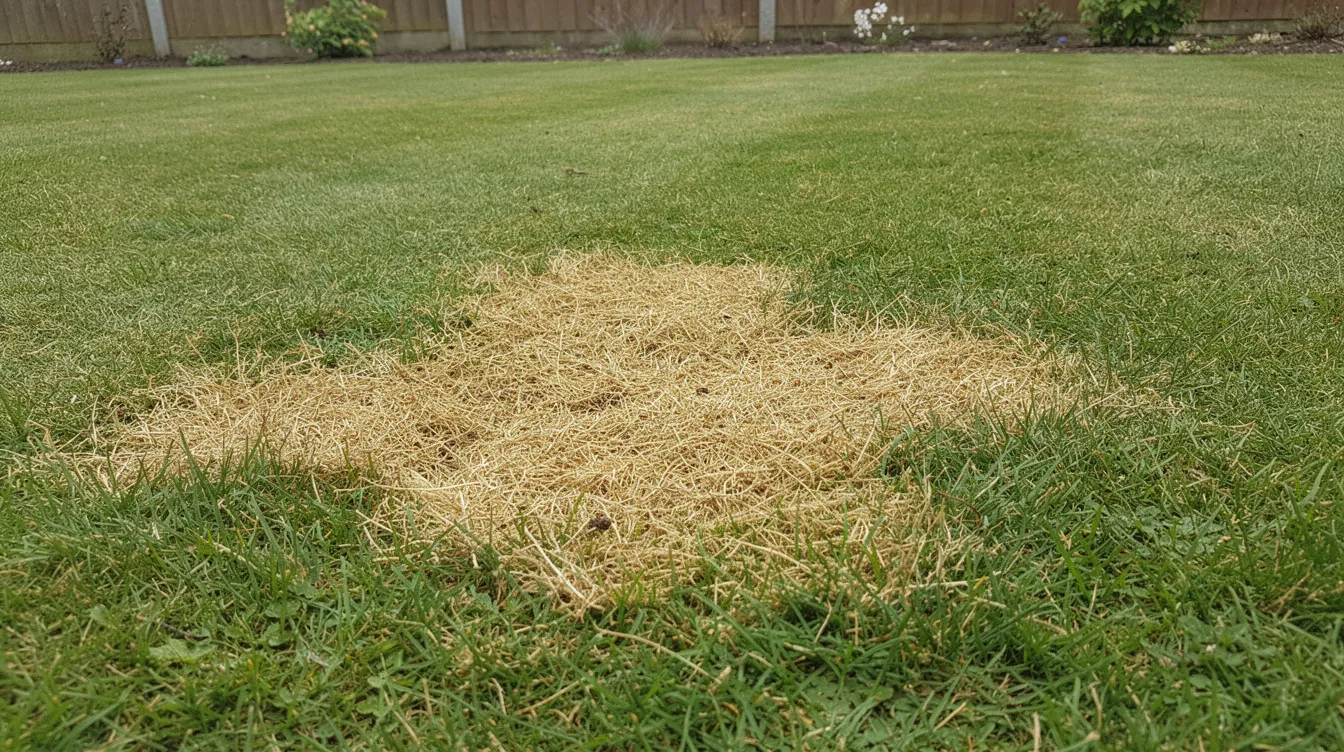
Dog urine patches have a distinctive look once you know what to check for: yellow at first, then a dead, straw-coloured centre surrounded by a ring of unusually dark, lush green grass. To repair dog urine patches on a lawn, wash fresh urine spots with water straight away to dilute them, then rake out dead grass, loosen and level the soil, reseed, and keep the area moist until it establishes. That ring isn't a second problem. It's the same cause, just at a different concentration, and understanding that is the key to fixing the patch properly instead of reseeding over the top and hoping.
Free download: Grab the complete GREENER Lawn Guide: everything you need to grow, fix and maintain a UK lawn, all year round.
Why dog urine burns grass
Dog urine is high in nitrogen and salts. At the centre of a patch, where the concentration is highest, it scorches the roots and kills the grass outright. Around the edges, where it's diluted by soil and rain, that same nitrogen acts as a free dose of fertiliser, which is why the ring around a dead patch is often greener than the rest of the lawn. Both effects come from the same event, just different concentrations of the same ammonia-rich, high-nitrogen urine.
First response: flush it immediately
If you catch your dog in the act, or spot where they've been, flushing the area with water within a few hours dilutes the urine before it has time to burn the roots. A watering can or hose over the spot is usually enough, and it's the safest immediate response. Skip home remedies marketed as urine neutralisers; some can damage grass rather than protect it. This single step prevents a lot of patches from forming in the first place, particularly for larger dogs or spots your dog favours repeatedly. Squatting dogs, more often females, tend to release a larger volume in one spot rather than spreading it around the way a marking male often does, which is usually why their patches look worse, and bigger dogs cause more damage simply because they produce more urine.
Repairing an established patch of dead grass
Once a patch has already died back, flushing alone won't bring it back; the roots are gone and it needs proper repair. Rake out the dead grass and any debris so you're working with clear soil. Loosen the top few centimetres with a hand fork, particularly if the ground feels compacted, since aerating here also improves drainage and helps flush any remaining nitrogen salts. Some gardeners work in gypsum to help displace residual salts; it's optional rather than essential. Level with a little topsoil if the patch has left a dip, then reseed with a matching, urine-resistant mix, such as fescue or perennial ryegrass, which cope better with future spots than most lawn grasses. Returfing is a faster fix if you want to restore the look immediately. Keep the area consistently moist while it establishes, without waterlogging it.
Best time to reseed
Seed won't germinate reliably in cold soil, so timing matters whether you're reseeding or turfing. The RHS puts the minimum at around 7°C, with germination fastest somewhere between 10°C and 18°C. New growth is quickest when the soil is warm enough and evenly moist, rather than seed sitting waiting in cold ground. That generally means spring or early autumn are your best windows; peak summer heat and winter cold both work against you, one through drought stress, the other through dormancy.
Realistic timeline
Once conditions are right, expect visible green shoots within 7 to 14 days. Repaired spots usually fill in from the surrounding grass as the new seed establishes, with the patch fully knitted in by around six to eight weeks. Letting the grass grow slightly taller around the repair helps protect it and supports stronger new growth. Keep pets and heavy foot traffic off the area while it's establishing: a repaired patch that gets used before it's rooted in usually needs starting again.
Reducing future damage
A few habits make a real difference if you've got a dog that uses the same spots repeatedly. Encouraging your dog to drink more water dilutes their urine naturally, and some owners find a change in diet reduces the nitrogen load further, though that's worth checking with a vet before changing what your dog eats on the strength of lawn-care advice alone. Flush favourite spots with water as a matter of routine rather than waiting for damage to show. Where possible, train your dog toward one area of the garden away from the main lawn, particularly useful for larger dogs. Overseed repeat-damage patches with the same urine-tolerant mixes mentioned above, and keep the surrounding lawn thick and well fed: dense grass dilutes and recovers from occasional damage far better than thin grass does.
Dog urine patches are one of the more predictable lawn problems, which also makes them one of the easiest to get ahead of. Avoid piling extra nitrogen feed onto damaged spots, since the urine's already delivered a concentrated dose, and reach for a pet-safe treatment rather than a generic one if you're feeding nearby. GREENER's Transformation Kit is built to grow the kind of dense, resilient lawn that shrugs off everyday wear, pets included. If patches keep reappearing in the same spots no matter what you try, our free lawn diagnosis quiz can help work out what else might be going on underneath.


