


A good summer grass feed can be the difference between a tired, yellowing lawn and a thick, green garden that looks in good shape through barbecues, football, pets and dry spells. In UK gardens, patchy grass, moss, bare patches and lawn weeds often appear just as the weather warms, because the lawn is suddenly asked to grow, recover and cope with wear all at once.
Spring is the ideal time to feed your lawn, as applying a high-nitrogen feed promotes strong leaf growth to prepare the lawn for summer. Then a slow release summer lawn feed keeps the momentum going, usually helping visible colour and density within 2–4 weeks when the soil, rain and mowing routine are right.
Think of it as a spring summer lawn programme: spring lawn feed wakes the grass after the winter months, while summer lawn feed maintains healthy growth through warmer weather. GREENER’s approach to lawn care is simple: less guesswork, clearer timing and DIY products such as the GREENER Transformation Kit and Seasonal Subscription that arrive around your next delivery time for the season.
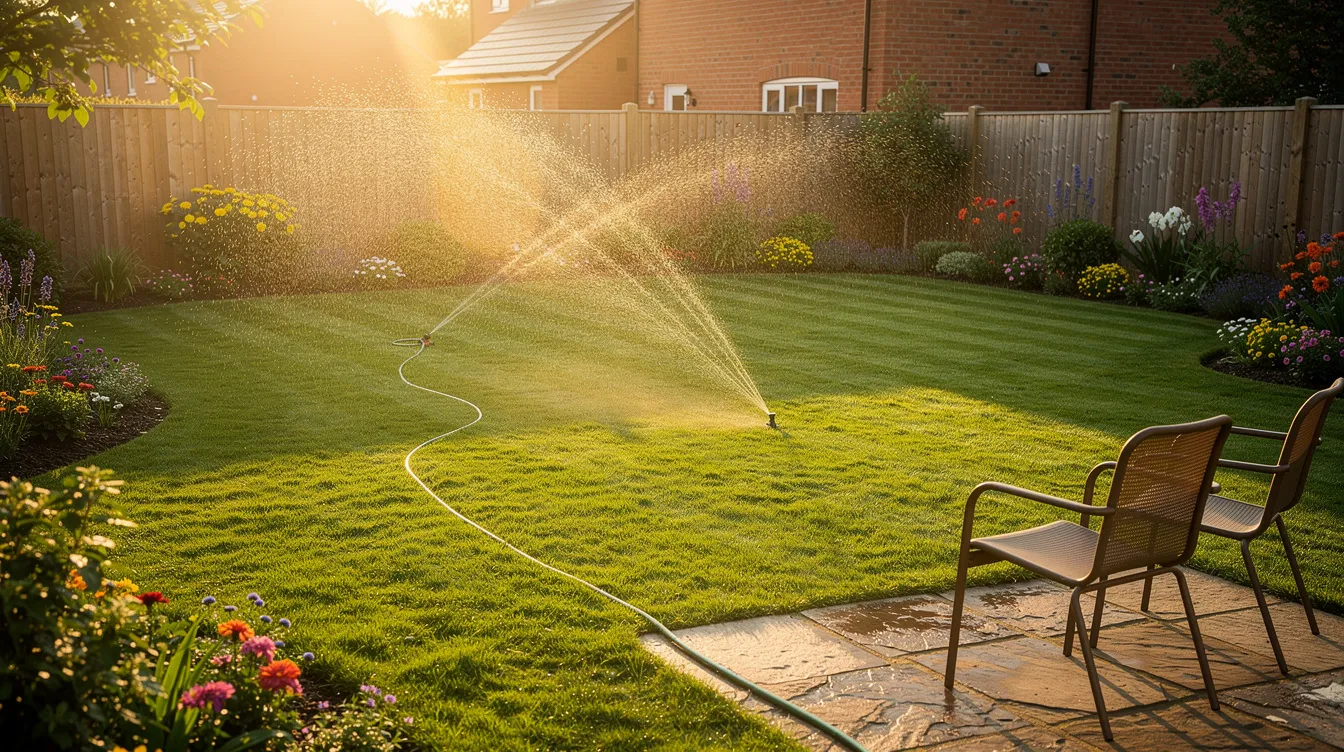
What Is Summer Grass Feed and How Does It Work?
Summer grass feed is a fertiliser specially formulated for late spring and summer UK conditions. Seasonal lawn fertilizers are formulated to meet the specific needs of grass during different times of the year, with spring and summer feeds being high in nitrogen to promote healthy growth, but a dedicated “Summer” or “Spring/Summer” feed usually contains lower nitrogen levels than a spring-only product to promote healthy roots and vibrant green color.
The key nutrients are N-P-K: nitrogen, phosphorus and potassium. Nitrogen supports leaf growth and colour, phosphorus helps root development, and potassium improves drought tolerance, disease resistance and recovery from wear. Grass loses nitrogen from constant summer mowing and requires a steady supply of nutrients to remain green, alongside potassium and magnesium; trace elements such as iron can also deepen colour. Lawn nutrient requirements shift significantly based on the underlying soil structure, so sandy soil may need a different routine from heavy clay.
Slow release granular feeds are popular because polymer- or sulphur-coated granules break down gradually with warmth and moisture, delivering a steady stream of nutrients over 10–16 weeks without causing sudden growth spikes. Slow-release fertilizers are designed to provide nutrients to plants over an extended period, typically 12 to 16 weeks, which helps strengthen roots and protect against drought.
Granular fertiliser dissolves with rain or water and feeds the roots rather than sitting on the surface. Liquid fertilizers are absorbed instantly through both the leaves and the roots and work best as a quick health boost in mid-to-late summer. Use slow-release granular fertilizers or liquid seaweed feeds during summer to promote consistent leaf growth, root strength, and drought tolerance.
Spring vs Summer Lawn Feed: What’s the Difference?
Spring and summer feeds are not identical. Using the wrong lawn feed at the wrong point in the season can cause excessive leafy growth, scorch, yellowing or stressed grass.
|
Season |
Typical timing |
Nutrient balance |
Main benefit |
|---|---|---|---|
|
Spring feed |
March to early May |
Higher total nitrogen |
Strong grass growth after winter |
|
Summer feed |
Late May to August |
Balanced N-P-K, around 11-5-5 or 10-2-4 |
Colour, roots and drought resilience |
|
Spring summer lawn feed |
Late spring into summer |
Controlled, slow release |
Steady growth with fewer spikes |
Applying fertilizer in early spring can improve lawn vigor and help prevent weeds and moss from establishing, especially in areas with changing climates. As summer arrives, select a balanced N-P-K ratio of around 11-5-5 or 10-2-4 for summer lawn care.
High-nitrogen, slow-release fertilizers and fast-acting liquid feeds with seaweed extract are recommended for summer grass feeding when used correctly. If your lawn starts to look pale and patchy in summer, an additional feed can be applied to give a boost of nutrients to help repair lawn damage, but avoid forcing growth during heat stress.
When to Feed Your Lawn in the UK
Timing depends on temperature, rainfall and whether the grass is actively growing. The RHS spring and summer lawn care guidance also stresses feeding when the lawn can use the nutrients, not when it is dormant.
March–April: Apply the first spring feed once the soil is consistently above roughly 7–8°C and the grass has started growth. In early spring, a suitable lawn feed helps recovery from the colder months, encourages strong root development and reduces space for weeds.
May: Move into a spring summer product or a light top-up if the first feed has faded. This is also a good time to sow seed into thin areas, provided you can keep the soil damp.
June–August: Summer is a critical time for lawn care, and applying a slow-release fertilizer can provide necessary nutrients throughout the season, especially during dry spells. We recommend applying summer lawn feed every 8–12 weeks, in a cool evening or before rain.
September: Switch to an autumn feed with lower nitrogen and higher potassium. Autumn feeding prepares grass for winter and helps roots handle disease pressure after summer wear.
Scotland, Northern England and exposed gardens can run 2–3 weeks behind the South of England. Let the weather guide you more than the calendar.
How to Apply Summer Lawn Feed Step by Step
Correct application matters as much as the product. Over-fertilizing can lead to lawn damage, including scorch and yellowing, so it’s important to follow recommended application rates and water the lawn after fertilization.
-
Measure your lawn in metres, length × width, so you know how much stock you need. Always check the packaging for exact square footage and application rates, as over-applying fertilizer can severely damage the grass.
-
Check the weather. Apply grass feed during a cool evening or an overcast day to prevent burning the grass blades. Avoid strong sun, frost and heatwaves.
-
Mow 2–3 days before applying lawn feed and remove heavy clippings. Do not mow immediately after feeding; let the nutrients move into the soil first.
-
Apply granular lawn feed with a spreader. Granular fertilizers are typically applied using a spreader, while liquid fertilizers are best applied with a sprayer for even coverage. Aim to apply evenly and avoid double passes on turns.
-
Apply grass feed when the soil is damp but the grass blades are dry, and always water the feed in thoroughly afterward to prevent burning. If rain is not due, spread water over the lawn yourself.
-
Keep children and pets off until granular feeds have dissolved and the grass is dry.
Avoid feeding a lawn that is actively suffering from drought or completely dormant; wait for rain or wet the lawn beforehand. Withhold fertilizer during dry spells until the ground is damp, as salt-heavy feeds can damage dry, dormant grass. For faster results in mid-to-late summer, a liquid seaweed feed can give a quick colour lift without replacing your main slow release programme.
The GREENER Transformation Kit is designed to make this easier for established lawns, with clear quantities, calibrated spreader settings and simple guidance for typical UK gardens.
Dealing with Lawn Weeds, Moss and Bare Patches in Summer
Many homeowners expect feed alone to fix everything. In reality, a healthy lawn looks good, withstands wear and tear better, and is less prone to disease, which can be achieved by feeding the right nutrients at the right time, but weeds, moss and bare patches still need targeted care.
Lawn weeds
Dense, well-fed grass naturally suppresses many lawn weeds by shading the soil and not allowing weeds much light or space. If the lawn is mostly grass with scattered weeds, hand removal or a targeted UK-approved treatment is usually more precise than treating the whole garden.
Weed and feed products can help established lawns, but they should be used exactly as the label says and not on a new lawn. Avoid using herbicide-heavy products on young plants or freshly seeded areas.
Moss
Moss usually points to shade, compaction, poor drainage or weak soil health, not just lack of feed. Feeding helps the grass compete, but it will not solve the cause by itself.
Improve drainage, aerate compacted soil, increase light where possible, then use a suitable spring and summer lawn feed to encourage grass to thicken. If the area is very thin, seed can be added once the lawn is actively growing and moisture is reliable.
A consistent spring and summer routine is the simplest way to move from thin, yellow grass to a thicker, healthier lawn in one season. If you want the right feed at the right delivery time without planning every step, explore GREENER’s Seasonal Subscription and browse our lawn care guides for weeds, moss and repair advice.


