


Rain’s back, or the ban’s been lifted, and the temptation is to throw everything at the lawn straight away to make up for lost time. Don’t. Lawn recovery after drought works best in a set order: wait until rain returns and the grass plant shows real regrowth after hot weather, dry spells or little or no rain, then mow gradually at a high setting, hold off feeding until steady growth starts, reseed bare patches at the right time, and leave weed, moss and other lawn treatments until the lawn is fully recovering.
For lawn owners and gardeners, especially in the UK after a dry summer, summer drought or hosepipe restrictions, that order matters. Lawns often stop growing and turn brown in dry conditions, but many recover naturally once water is available again; rush the process and a drought-damaged lawn can stay in poor condition for longer. This guide shows how to check whether the lawn will recover, when to mow, feed and reseed, and what to avoid so healthy lawns come back without unnecessary work or costly renovation.
First, check your drought damaged lawn is genuinely recovering, don't assume
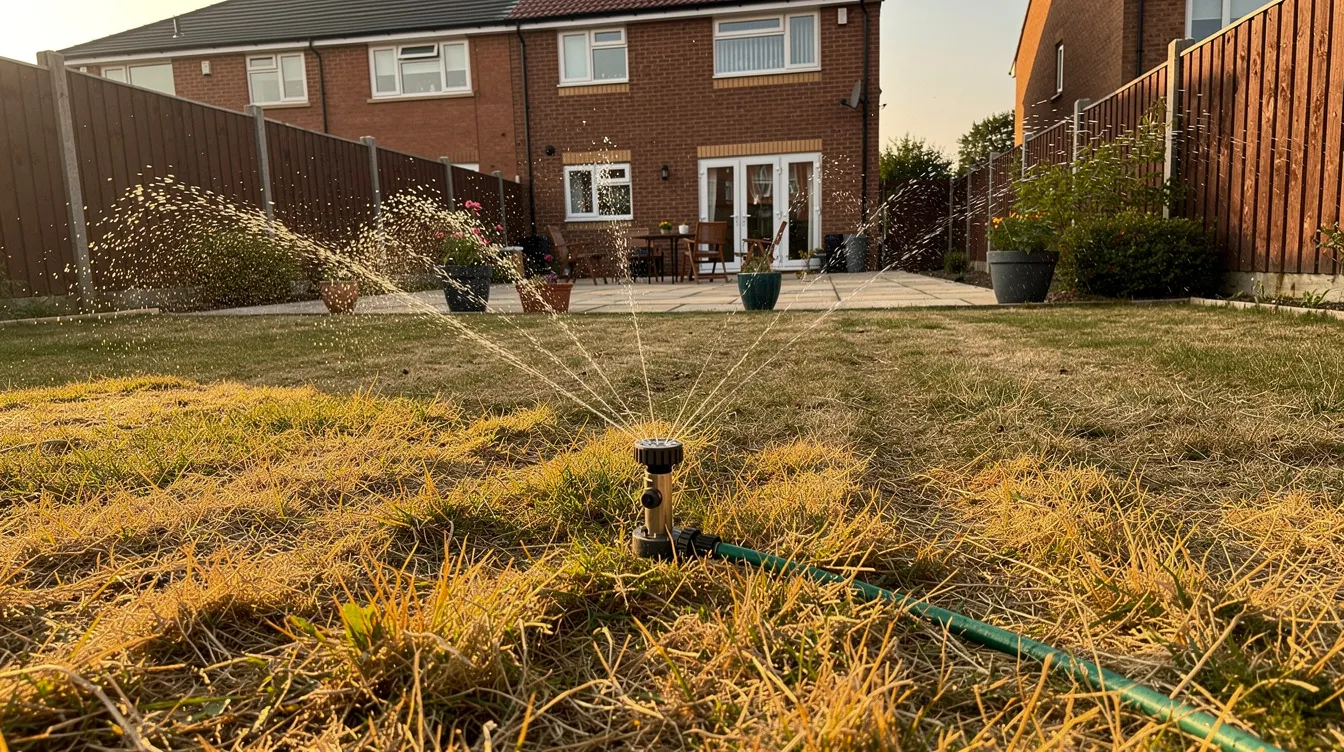
Before restarting any watering, check local hosepipe restrictions. Give it a proper rain event, not just a light shower, then wait a week or two. Perennial ryegrass and fescue, the grasses behind most UK lawns, can turn brown or stop growing in dry conditions during hot weather or a summer drought, and recovery takes time after dry spells, but they typically show visible green regrowth within about 14 days of real soil moisture returning. If you did the tug and scratch tests we covered earlier in this series to check dormant versus dead patches, this is the point to repeat them. Areas that were dormant should now show new green growth pushing through. Areas that still pull up with no resistance and no sign of new growth have likely lost the crown and will need reseeding rather than time. In general, well maintained lawns tend to recover naturally when rain returns, while a drought damaged lawn in poor condition may need more targeted lawn treatments or lawn care steps.
Resume mowing gently, not straight back to normal
Once there's clear new growth, mow, but start high. Set the mower to its highest setting for the first cut or two, just tidying the tips rather than bringing it straight back to your usual height, and stick to the one third rule throughout. Step the height down gradually over several mows spaced about a week apart rather than scalping it back to normal in one go, the same approach you'd use on any overgrown lawn, drought-recovery or not. Leave short grass clippings in place if they're not clumping, as they help the soil surface retain moisture while the lawn is still recovering. Rushing this step is one of the most common ways people undo weeks of a lawn holding on through a dry spell.
Hold off on lawn feed until it's actually growing, not just green
Colour returning and active growth aren't quite the same thing, and it's worth waiting for the second before feeding. A lawn that's greening up but still recovering from stress can't make good use of fertiliser yet, the same reason we said not to feed it while dormant. Give it two or three mows' worth of steady, visible growth first, with enough water to support deeper roots and better drought tolerance. Healthy lawns recover more reliably when grass growth is consistent, so if you're mowing, keep it light: mow at 40-50mm during drought conditions, and for cooler season grasses it's often worth staying closer to around 3–4 inches while recovery is still underway. Dry weather also slows grass growth, so mow less often instead of sticking to your usual routine. Once you're there, a light lawn feed is genuinely useful, and this is where a product like GREENER's Lawn Transformation Kit earns its place: the iron-based treatment in it is built to drive a fast, visible colour change once grass is actively growing, typically within 24 to 48 hours, which is a satisfying way to see a stressed lawn turn a corner, but it's a follow-on step once recovery's underway, not a substitute for waiting, and one of several lawn treatments that work best when clippings are left to fall back and help retain moisture at the soil surface.
Deal with bare and thin patches with grass seed separately, and mind the timing
Any patches that failed the tug test and won't recover on their own need reseeding or turfing, not just more time, and any feeding should wait for active grass growth rather than just a greener colour. The catch is timing: if the ban's just lifted in the middle of summer, the weather may still be too hot and unpredictable for new seed to establish reliably, even with watering allowed again. Give it two or three mows' worth of steady, visible growth first. Lawns with deep roots are more drought-resistant than shallow-rooted ones, so water deeply and infrequently rather than little and often. Early autumn, once temperatures have eased but the soil's still warm, is the more reliable UK window for renovation work. If your drought breaks in July or August, it's usually worth treating the rest of the lawn now and holding the patch repair until September rather than rushing seed into ground that might dry out again before it's rooted.
What to skip
Don't reach for weedkiller or moss treatment as part of a "clean slate" recovery push. Both need the same actively-growing conditions as fertiliser to work properly, and applying them to a lawn that's only just coming out of stress risks the same problem as feeding too early. If moss or weeds were an issue before the dry spell, they'll still be there to deal with properly once the lawn's fully back on its feet, there's no advantage to rushing it now.
The order, summarised with regard to soil temperatures
Wait for genuine regrowth, don't assume from colour alone. Mow gently and gradually, not straight back to normal height. Feed once growth is consistent, not just once it's green. Reseed bare patches at the right time of year, not the moment the ban lifts. Leave weed and moss treatment until everything else is settled.
None of this is complicated, but it does ask for patience after what's probably already been a frustrating few weeks of watching a lawn you couldn't do much for. Get the order right, though, and most lawns come back fully rather than needing a bigger renovation job later.


