


Lawn care during a heatwave in the UK means doing less, but doing it more deliberately: water only the areas most likely to survive, mow higher and less often, keep people off stressed grass, skip feeding and treatments, use grey water carefully if you have it, and leave renovation or overseeding until rain returns. For UK gardeners and homeowners trying to keep a lawn alive through hot weather and possible hosepipe bans, the aim is not a perfect green finish but reducing drought stress until conditions improve.
No hosepipe doesn't mean no options. It means being more deliberate about where your effort goes, since you can't just leave a sprinkler running and walk away. Here's what's actually worth doing during a heatwave or hosepipe ban, from targeted watering and mowing changes to what to avoid or postpone, in order of what makes the most difference.
Prioritise a few areas, not the whole lawn
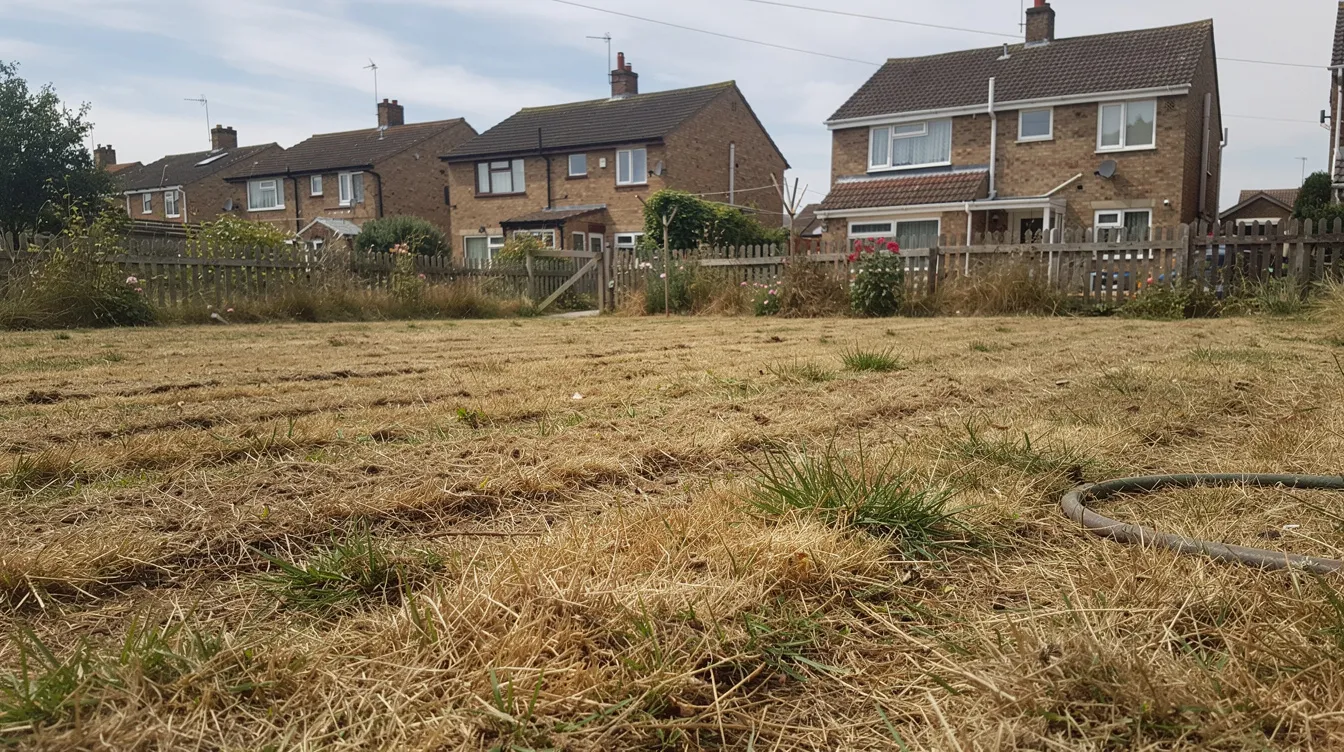
Trying to keep an entire lawn evenly green with a watering can is a losing battle, and not a very useful one either, since established lawns are built to cope with dry conditions on their own and the grass can go dormant in prolonged heat, so brown patches are often temporary rather than dead (more on that in our piece on why lawns go brown in a drought). Spend your watering-can time on the areas that actually need it: newly turfed or seeded patches, anywhere you've recently repaired, and spots in full sun with no shade at all, which dry out fastest and have the least reserve to fall back on. Everywhere else, water grass only if absolutely necessary during summer; if you do, use deep watering once or twice a week rather than little and often, ideally in the early morning when cooler temperatures help it soak in and conserve water. That kind of watering helps roots grow more strongly.
If you've got a water butt, collect rainwater and use it first to reduce reliance on mains water for lawns; a small submersible pump feeding a short length of hose directly from the butt to your watering can or a drip line isn't the same as using a hosepipe connected to the mains, the restriction is specifically on mains water usage, not on moving water around your own garden. Worth checking your supplier's exact wording if you're unsure, since phrasing varies, but the principle holds generally, especially after rain.
Adjust how, and how often, you mow in hot weather
Raise your lawn mower's cutting height and mow less often during drought, hot weather, and the summer months to reduce moisture loss. Longer grass helps shade the soil surface, cut evaporation, and protect the roots, so it copes with dry conditions noticeably better than a tightly cut lawn. In warm but not extreme weather, once every 10 to 14 days is usually enough, and in a genuine heatwave, it's worth holding off mowing altogether until temperatures ease. Mowing less frequently reduces stress on grass during dry weather.
Whenever you do mow, stick to the one third rule, never remove more than a third of the blade height in one go, and avoid the middle of the day, mid-morning or early evening is kinder to stressed grass. Cutting too short damages the plant and increases moisture loss. If watering is needed, early morning is best because the cooler air means less evaporation; avoid the hottest part of the day. We've covered the full timing picture, including exactly when to leave the mower alone, in a dedicated guide if you want the detail. Grass clippings can act as a mulch to retain moisture and return nutrients as part of good lawn care.
Keep off it
Stressed or dormant grass is more brittle than it looks. Repeated foot traffic, especially the same route worn in day after day, can crush the crown at the base of the plant rather than just the visible blade, and that's the part the lawn actually needs intact to recover. Where you can, vary your route across the garden or lay down a temporary path (an old board, a spare bit of decking) over the spots you cross most.
Don't feed, weed, or treat established lawns
This is the one that catches people out, the instinct when a lawn looks bad is to do something about it, and during a heatwave that instinct is usually wrong. Fertiliser, weedkiller, and moss treatments all rely on grass actively growing to have any effect, and a lawn in survival mode isn't growing, it's just holding on. Avoid high-nitrogen fertilisers during heatwaves, as they can burn stressed grass. Applying anything now doesn't help it cope and can add chemical stress on top of drought stress. The same goes for scarifying or aerating, both disturb the ground and root system in ways a healthy, actively growing lawn shrugs off easily but a stressed one can't, and in dry conditions that can damage soil structure and increase moisture loss. All of this can wait until the lawn is visibly growing again.
Use grey water properly if you've got it
Water from the bath, shower, or washing-up bowl is fine on a lawn, unlike on edible plants, there's no residue concern with grass, and a watering can is the most efficient way to apply it in these conditions. A few practical notes and tips from experienced gardeners: let it cool if it's hot, avoid water that's heavy with strong detergents or bleach, and use it to protect dry patches, lawns near pots, or other spots where regular watering can make a big difference and help save water before reaching for tap water. If you're using grey water on the lawn, early morning or late evening is the best time to do it.
What to skip entirely until it rains
Beyond feeding and treating, hold off on anything that asks the lawn to do more than survive during the summer months: overseeding bare patches, laying new turf in exposed areas, or starting any renovation project, because it is more likely to recover from dormancy once rain returns than if you force new growth in a heatwave. These all need consistent moisture to establish, and a heatwave is the worst possible time to start something that depends on it.
Make a note of what needs doing and come back to it once conditions genuinely improve; if you are planning changes later, choose drought resistant or drought tolerant options and improve the soil with organic matter, while surrounding beds can use organic mulch to conserve soil moisture in summer, and once the rain returns, autumn is the better time for renovation and reseeding—we've covered exactly what that recovery process should look like once the rain's back and the ban lifts.


