


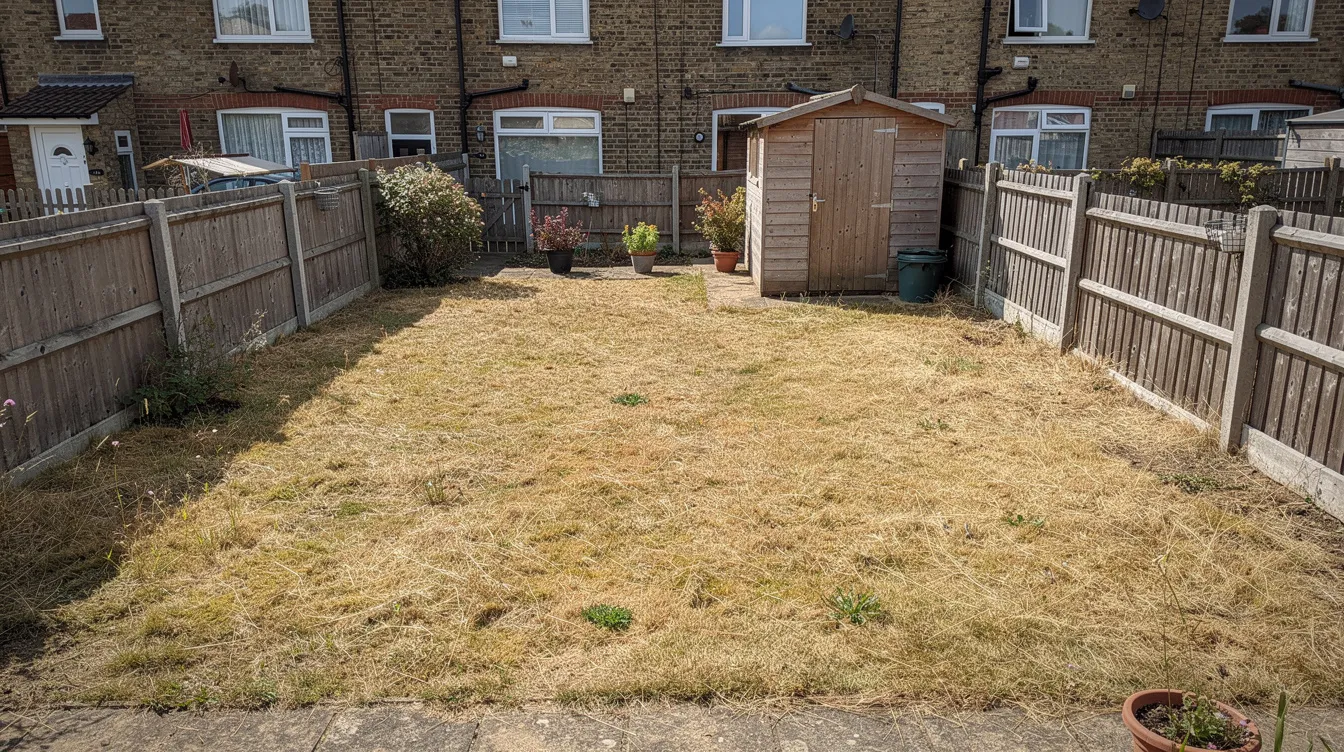
A brown lawn in a drought is very likely dormant, not dead. Grass shutting down its visible growth is a survival response, the plant is protecting its crown and roots by sacrificing the leaf, not giving up entirely. Most UK lawns, dominated by perennial ryegrass and fescue, are built to do exactly this.
That doesn't mean every brown lawn is fine, and it doesn't mean doing nothing is always the right call either. Here's how to actually tell the difference, and what that means for what you should and shouldn't do right now.
Why dormant grass turns brown in the first place
When soil moisture drops, grass can stop growing during heat and drought as a survival response rather than dying. The blades lose chlorophyll and turn straw-brown, but dormant grass conserves moisture and nutrients by sacrificing top growth while the plant redirects what little it has left into keeping the crown, the small growing point at the base of each plant, and the root system alive. It's a deliberate trade-off, not a collapse. As long as the crown survives, the lawn can regrow from it once conditions improve, even if every blade above ground turns brown in extreme heat or drought and looks dead.
The tug test
The simplest way to check: grab a small handful of grass and tug gently, the way you would testing if a weed's ready to come out; the tug test is one of the few ways to tell if grass is dead or dormant.
If it resists, if there's some pull and the grass stays rooted, dormant grass resists pulling because the crown and root system are still alive. That's dormancy. Leave it alone and wait.
If it comes away easily, with no resistance and no roots attached, dead grass pulls up easily, and you can inspect the crown at the base for signs of life. That’s a sign the crown itself has died, not just the visible growth. That patch won't recover on its own and will likely need reseeding once conditions allow.
A healthy crown looks white or cream-colored; a dead crown won’t show that colour.
The scratch test
A second check, useful if the tug test is inconclusive: scratch gently into the soil at around 25mm depth near the base of the grass, checking just below the soil surface near the crown. If you find white runners or rhizomes, with grass blades above possibly straw-coloured but crown tissue below pale, firm, and clearly alive, the plant is still going and recovery is very likely once it rains. If everything at that depth is brown and brittle, that area's more likely gone, especially if dead crowns are brown or black and often soft or brittle.
How long can a dormant lawn actually survive
Perennial ryegrass and fescue, the two grasses behind most UK lawns, can typically survive around 6 to 8 weeks of dormancy and green back up within 4 to 6 weeks once rain returns, though dormant grass can survive for several weeks before dying, and 3 to 4 weeks is a safer rule of thumb in severe drought conditions. Past roughly 8 weeks of genuinely bone-dry soil, the crown starts dying off in patches rather than the entire lawn turning brown evenly, and by 10 to 12 weeks a lawn has generally passed the point where it'll fully recover without help.
If your area's been dry for a few weeks, this is very likely still straightforward drought dormancy, especially if the turf browned uniformly after a hot spell. The pattern also depends on grass type, since different grasses respond to weather and drought conditions differently. If you're seeing small random circles, dead patches, or other brown patches, that points more to disease or insect damage than whole-lawn dormancy. If it's been closer to two or three months, it's worth doing the tug and scratch tests properly in a few different spots rather than assuming the whole lawn is in the same state, some patches may need reseeding even if most of it comes back on its own.
Lawn care: What to actually do while it's dormant
Mostly, less than you'd think, and that's the hard part psychologically. Specifically:
-
Don't fertilise. Dormant grass isn't actively growing, so it can't use what you put down; in good lawn care, do not fertilize dormant grass because it can cause harm rather than help.
-
Don't apply weedkiller or moss treatment either, for the same reason, the lawn needs to be actively growing for any treatment to actually work.
-
Keep foot traffic to a minimum. Dormant grass is more brittle than it looks, and repeated walking, especially the same route (hello, the path to the washing line) can crush the crown itself rather than just the blade, making it harder to keep a healthy lawn with healthy grass.
-
Raise your mower height if you're mowing at all, and mow less often. If the lawn is fully dormant, avoid mowing unless necessary because it's easier to damage; this is one of those bits of regular lawn maintenance that matters more in dry spells. Longer grass shades its own soil and loses less moisture than a tightly cut lawn.
-
Water legally where you can, using a watering can, water butt, or grey water, targeted at the most stressed patches rather than trying to cover the whole lawn. Aim to give enough water to soak the soil to about five inches deep, not just a light surface sprinkle, because regular watering or occasional deep watering is what helps dormant grass turn green again when conditions improve. We've covered exactly what's allowed under current restrictions separately.
When to actually worry
If large patches fail the tug test (come away with no resistance) after a genuinely long dry spell, water suspect areas consistently for 1 to 2 weeks before deciding you have a dead lawn, and watch for signs of green growth because dormant turf may respond as conditions improve. If the grass is dead, it cannot be brought back to life and must be replaced. If grass stays brown after adequate watering, the grass dead in those patches is likely not dormant at all. Most of a lawn, even after a rough summer, tends to come back once rain returns and it's treated at the right time, not before.
That timing question, what to actually do once the rain's back and the ban's lifted, is exactly where we pick this series up next, with more tips for repair in spring or fall: rake out dead material first, then aerate and overseed so seed and new grass can fill bare spots before weeds do, and use a soil test to check pH and nutrient levels if recovery is poor.
Once the grass has been assessed, follow the complete UK drought recovery plan before aerating, feeding or reseeding.


