


Repairing lawn damage is not just about throwing down seed and hoping for rain. The right fix depends on why the bare patches appeared, what grass you grow, and whether the area needs seed, turf, or a different solution altogether.
Key Takeways
-
Diagnose the cause first: pests, shade, compaction, poor soil, moss, or pet damage can all create bare areas.
-
In the UK, the best lawn repair windows are mid-spring, April–May, and early autumn, September–October.
-
Patch overseeding suits small thin spots; turf laying is better for large, completely bare patches.
-
Keep a new patch consistently moist with frequent, light watering until grass plants are established.
-
Choose grass seed that matches the existing lawn, climate, shade level, and wear.
1. Diagnose the problem before you repair
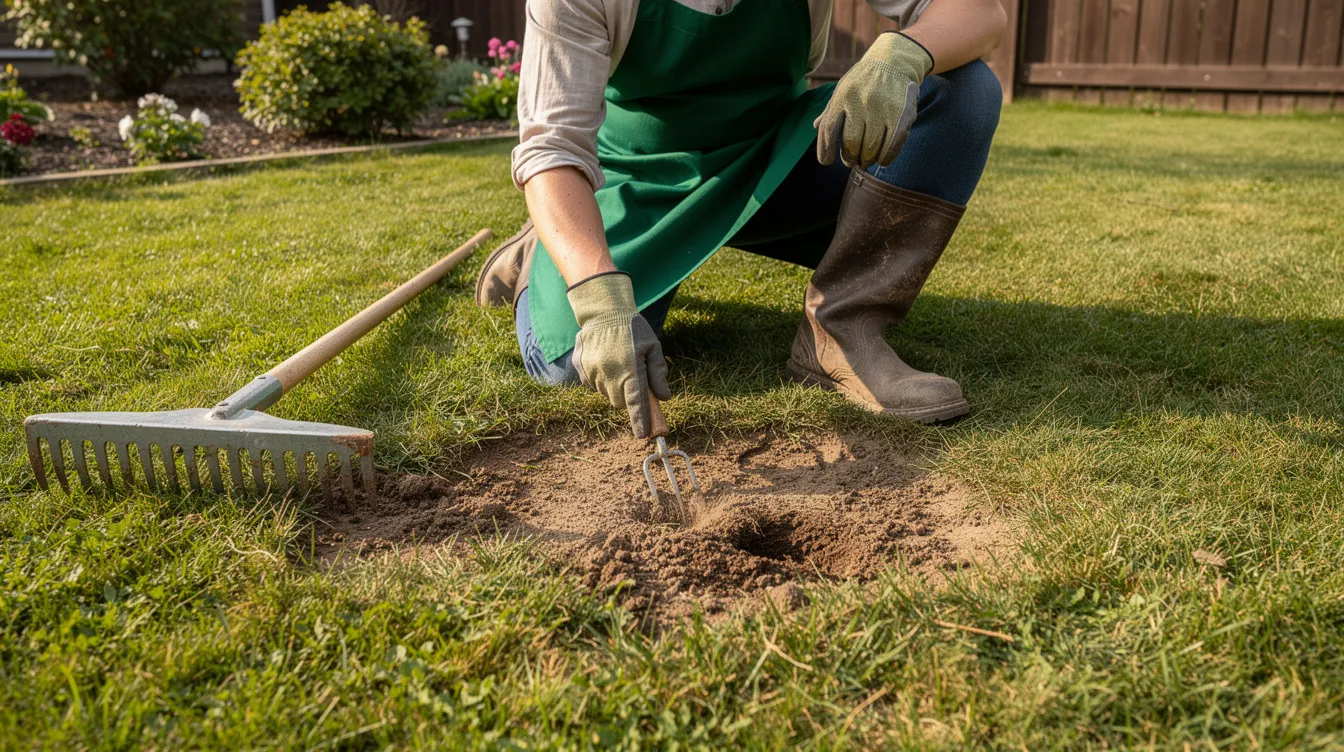
Before you carry out any repair, identify the core issue. A grub infestation, poor soil conditions, compacted clay soil, drought, disease, weeds, moss, or too much shade can all lead to dead grass. If you skip this step, the same patches often return.
Here are the common causes to check:
-
Lift a small section of turf and look for pests such as grubs around the roots.
-
Push a fork into the surface; hard ground usually means compaction and weak grass roots.
-
Check whether trees or overhanging plants block light for most of the day.
-
Look for hollows, bumps, runoff channels, or areas where wet weather leaves standing water.
-
Review your lawn care routine, because regular lawn maintenance, including proper watering and fertilization, is crucial for preventing and diagnosing issues like bare patches and weed infestations.
If certain areas of your lawn are too shady for grass, consider using shade-loving groundcovers or adding hardscape elements to improve the space. Sometimes the best repair is not more grass; it is using the garden in a smarter way.
2. Choose the right timing and grass type
Timing matters because grass seed needs the right conditions to germinate. The ideal temperature for grass seed germination is between 10 and 16 degrees Celsius, which usually occurs in March, April, and May. Spring is often considered one of the best times to repair your lawn with seed, as the weather is typically warmer and more predictable, promoting better germination rates.
In the UK, the best times of year for lawn patch repair are mid-spring, April–May, and early autumn, September–October, when the soil is warm and rainfall is frequent. September is also a good time to repair lawns, as the soil remains warm from summer, which can help with seed germination, although caution is advised due to the potential for cooling temperatures and early frost.
Cool-season grasses are suitable for the UK climate, thriving in damp, temperate conditions. Selecting the right grass type is important to ensure the patch blends well and survives the local climate. Kentucky Bluegrass is known for its lush, dark green color and self-repairing properties, while Perennial Ryegrass establishes quickly and handles heavy foot traffic well.
Different climates across the US require distinct grass selections, with Kentucky Bluegrass recommended for cool-season areas and Bermuda Grass for warm-season regions. Purdue notes that soil temperature is a better guide than the calendar when choosing a seeding window.
3. Prepare the soil properly
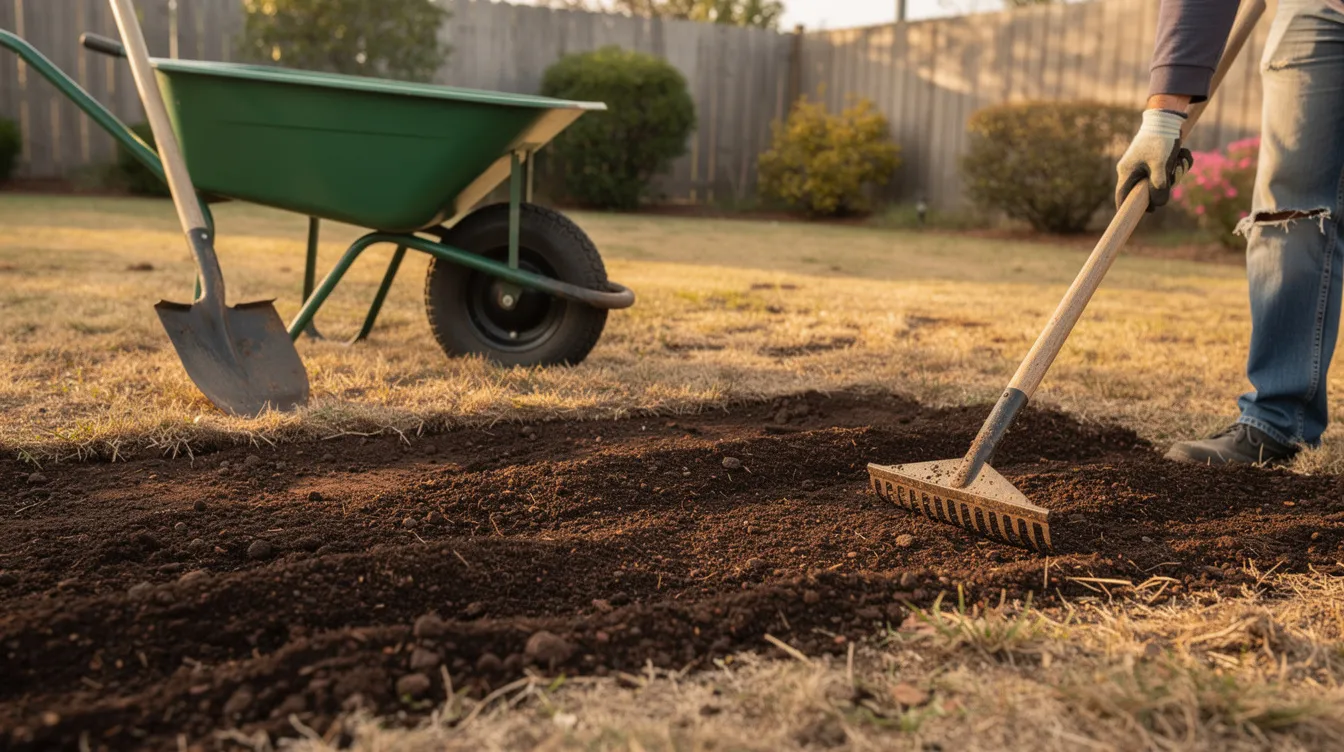
Soil preparation is crucial for effective lawn patch repair, including clearing dead grass, weeds, and debris, loosening the soil, and adding quality topsoil. Use a rake to remove old grass and rough up the surface so the seed can contact the soil.
For compacted areas, dig or fork the patch to a depth of a few inches. Mix in compost to improve nutrients and water holding capacity, especially in sandy ground. On clay soil, avoid working during very wet weather because it can smear and compact the surface.
A simple preparation process:
-
Cut away loose turf and remove dead grass.
-
Loosen the soil and break up clods.
-
Add top soil or compost where the level is low.
-
Remove excess soil so the repaired area sits level with the existing grass.
-
Lightly firm the surface before sowing.
Topdressing is effective for fixing uneven ground and dips in a lawn. Use lawn dressing, or a suitable mix of sand and soil, to correct small hollows gradually. This keeps mowing safer and prevents scalping by the mower. Do not bury the sward too deeply; grass blades still need light and air.
4. Repair with seed, turf, or both
The best methods for repairing lawn damage depend on the size of the bare patches, involving patch overseeding for small spots or turf laying for large areas. Patch overseeding is best for small, thin, or brown areas, while turf laying is suited for large, completely bare patches.
When to use grass seed
Lawn seed is quick and easy to sow, relatively cheap, and allows for the selection of a seed mix that suits specific growing conditions, but it can take several months to establish. For patching, grass seed should be sown at a rate of approximately 25g to 35g per square metre.
To seed a bare area:
-
Spread a thin layer of top soil.
-
Sow seed evenly by hand or with a small spreader.
-
Rake lightly so the seed is just covered.
-
Add a pre seed fertiliser if the product is suitable for new grass.
-
Water gently and wait for growth.
Pre-germinating seeds by placing them in moist compost can enhance the establishment process, allowing for quicker growth once sown. This is useful in dry weather, but do not let the compost dry out.
When to use turf
Using turf for lawn repair provides an instant fix, but it may take time for the new turf to blend in with the existing lawn, as the difference in color can be noticeable until the grass grows in. If you want instant results, new turf is often better for a large bare space than re seeding.
Cut the damaged area into a neat square, remove the old layer, level the soil, and lay the turf firmly. Water well, then keep foot traffic off the new patch for at least two weeks until roots have knitted into the soil below. Lift a corner gently after 10 days — if there is resistance, the turf is establishing well.
Using both seed and turf together
For lawns with a mix of large bare areas and thin, patchy sections, a combined approach often works best. Lay turf on the worst completely bare areas for immediate cover, then overseed thinner sections alongside it. Both need the same aftercare — consistent moisture and minimal traffic — so managing them together is straightforward.
5. Watering and aftercare
New seed and newly laid turf both need consistent moisture to establish. This is the stage where most lawn repairs fail — not because the products are wrong, but because watering stops too soon.
For the first two weeks, keep the top 1–2cm of soil consistently moist. Light and frequent watering is better than heavy soaking. In dry or warm conditions, water once or twice daily. As roots deepen into the third and fourth week, gradually reduce frequency and increase depth — this encourages roots to grow down rather than staying shallow.
Practical aftercare checklist:
- Keep children, pets and foot traffic off the repair for at least 4 weeks
- Protect seed from birds with lightweight netting if needed
- Do not mow new grass until it reaches 6–8cm in height
- First cut: raise the blade to its highest setting and remove no more than one-third of the leaf
- Resume normal mowing height gradually over the following two or three cuts
6. Feeding after repair
Once new grass is established and has been mown two or three times, a light feed supports continued thickening and colour. Use a balanced spring formulation in April–May or an autumn feed in September–October. Avoid high-nitrogen products on very new grass — they push soft, fast top growth before root systems are strong enough to support it.
For the most effective results, a fertiliser containing a mycorrhizal inoculant helps new root systems develop quickly and absorb nutrients more efficiently in the weeks after repair.
7. Preventing bare patches from returning
Repaired areas can thin again within a season if the underlying cause isn't addressed. Once the immediate repair is complete, review what caused the damage in the first place.
Common long-term fixes:
- Compaction: aerate annually in autumn, particularly in high-traffic areas
- Poor drainage: topdress with sharp sand mixed into the surface over two or three seasons
- Pet damage: designate a toilet area away from the main lawn, water urine spots immediately to dilute nitrogen concentration
- Shade: raise tree canopies where possible, switch to a shade-tolerant seed mix in heavily shaded areas
- Thatch: scarify lightly every autumn to prevent build-up from choking the surface
Consistent seasonal feeding, correct mowing height and annual light scarification will keep a repaired lawn thick enough to resist the conditions that created bare patches in the first place.
Ready to fix your lawn properly?
The GREENER Transformation Kit takes the guesswork out of lawn repair. Four professional-grade products — liquid iron to suppress moss, premium UK grass seed to fill bare patches, granular fertiliser with mycorrhizal inoculant to build strong roots, and liquid seaweed biostimulant to support recovery — applied in under an hour in the correct sequence.
Visible results in 4 weeks or your money back.
28-Day Lawn Pledge — full refund if no visible improvement. No returns needed.
FAQ: Repairing Lawn Patches
How long does it take for a lawn patch repair to work? With grass seed, expect a green haze within 7–14 days in warm conditions and noticeable thickening by week four. Full blending with the existing lawn typically takes one full growing season. Turf patches establish faster visually but need 10–14 days for roots to knit before normal use.
Can I repair my lawn in summer? Yes, but results are less reliable. High soil temperatures and dry conditions reduce germination rates significantly. If repairing in summer, water once or twice daily and consider waiting for September for the most consistent results.
Why do my lawn patches keep coming back? Recurring patches almost always indicate an unresolved underlying cause — compaction, drainage, shade or persistent pest activity. Fix the cause alongside the visible damage and patches won't return.
How much grass seed do I need for patch repair? Sow at 25–35g per m² for overseeding thin areas. For completely bare patches with no existing grass, increase to 35–40g per m² to compensate for lower germination rates on exposed soil.
Do I need to scarify before reseeding? For small isolated patches, a firm raking to expose bare soil is sufficient. For larger areas or lawns with significant thatch, light scarification before seeding significantly improves seed-to-soil contact and germination rates.


