


If your lawn is plagued by bumps, hollows, moss or patchy grass that never quite fills in, you’re not alone. Thousands of UK homeowners face the same frustrations every year—and in many cases, the solution lies in a simple but powerful technique called lawn top dressing.
Top dressing involves spreading a thin layer of sand, soil, or a blend of both over your existing lawn to level uneven surfaces, improve drainage, and boost overall grass health. It’s not about burying your turf under inches of material; it’s about introducing the right mix at the right time to help your lawn thrive from the roots up.
At GREENER, we use top dressing as a core part of our Transformation phase, then maintain results through Seasonal Care with GROWTH, POWER and BOOST. This guide will walk you through when, why and how to top dress step by step—so you can achieve the healthy lawn growth you’ve been working towards. If you’re new to lawn care in general, our lawn care for beginners guide explains the core principles that sit alongside top dressing.
What Does Lawn Top Dressing Do?
Top dressing works on two levels: the visible surface and the soil underneath. On the surface, it smooths out the lumps, dips and mower-scalped patches that make your lawn look tired. Below ground, it transforms soil structure and feeds the biology that keeps grass growing strong.
Here’s what a quality lawn dressing can achieve:
-
Levels bumps, hollows and uneven areas for a smoother, safer surface that’s easier to mow without scalping
-
Improves drainage on heavy UK clay soils, helping reduce puddles, standing water and the moss that thrives in wet conditions
-
Adds organic matter that feeds soil microbes and encourages grass to root deeper into the soil
-
Dilutes and breaks down thatch when combined with scarification and aeration, preventing that spongy layer from choking your lawn
-
Protects against drought by improving moisture penetration and retention in sandy, free-draining areas
Consider a typical 150m² suburban lawn in Leeds that holds water for days after rain. The grass stays soggy, moss creeps in, and the surface becomes uneven from worm casts and foot traffic. One autumn top dressing, applied after aeration, can start changing how quickly that lawn dries out—often within weeks.
For most UK lawns, a premium 70/30 sand–soil blend works best. The sand improves structure and drainage while the soil or loam provides nutrients and helps retain just enough moisture. It’s this balance that makes top dressing so effective for our climate.
What Is in Lawn Top Dressing Mix?
Not all top dressing is the same. The mix you choose should suit your soil type and your goal—whether that’s levelling, improving drainage, or helping a struggling lawn recover.
The classic formulation used by sports pitches and recommended for most domestic UK lawns is a 70% medium to fine silica sand blended with 30% screened topsoil or loam. This multi purpose lawn dressing delivers the best of both worlds.
When might you adjust the ratio?
-
Sand-heavier mixes (80/20 or even 90/10) work well for very wet, compacted, clay-based lawns where drainage is the priority
-
Loam-heavier mixes (60/40 or 50/50) suit very light, free-draining sandy soils prone to drying out and losing nutrients
A good quality specification might look like this: a sand based 70/30 blend using 3mm screened sports sand and sterilised, low-stone top soil. The sand should be kiln dried to remove moisture and prevent clumping, while the topsoil must be peat free and screened to eliminate stones larger than 5mm.
Avoid these common pitfalls:
-
Builders’ sand often contains salts and has the wrong particle size, which can harm your grass and compact over time
-
Un-screened garden soil introduces weed seeds, compacts easily, and may contain stones that damage mower blades
-
Anything with peat is now restricted in the UK and unnecessary for a healthy lawn
GREENER specifies peat free mixes with thoroughly screened materials to protect your lawn and minimise moisture penetration issues from poor-quality fills.
When Is the Best Time to Top Dress Your Lawn in the UK?
For a wider view of seasonal timing, our lawn care calendar for UK gardens and detailed guide to the best time to repair your lawn in the UK show how top dressing fits alongside other essential jobs.
The golden rule is simple: only top dress when grass is actively growing so it can recover and grow through the dressing. Apply at the wrong time and you risk smothering your lawn rather than helping it.
Early autumn (late August to early October) is the ideal window for most UK lawns, and it also tends to be the best time of year to reseed your lawn in the UK. The summer stress has passed, soil is still warm enough for root activity, and you have several weeks of growth before temperatures drop. This timing also aligns perfectly with scarification and aeration—completing all three tasks together maximises results.
Late spring (late April to late May) offers a second excellent opportunity. Soil has warmed up, frosts have largely passed, and grass growth is strong. Spring top dressing supports the rapid new grass growth that follows successful overseeding.
Avoid these periods:
-
Mid-winter when grass is dormant and cold, wet soil won’t integrate the material properly
-
Peak summer heat (think July 2022-style heatwaves) when stressed grass struggles to push through even a light dressing
-
Waterlogged conditions at any time of year, which cause smearing and prevent proper root zone contact
A practical guide: if the soil no longer feels bitterly cold to the touch and you can see your grass is clearly growing, conditions are suitable. When soil temperature reaches 8-10°C, grass enters its active phase.
GREENER aligns top dressing with our Transformation visits, then supports recovery with GROWTH fertiliser to drive root development and BOOST seaweed feeds to build stress resilience during the same growing period.
How to Top Dress Your Lawn Step by Step
You don’t need specialist machinery for a typical 50–200m² UK lawn. With the right materials, a calm day, and a few hours of effort, you can achieve professional-quality results. Here’s the process.
Step 1 – Choose a dry, calm day
Work on a dry lawn with dry material. Wet dressing clumps, smears across grass blades, and won’t integrate properly into the root zone. A still day prevents material blowing around your garden.
Step 2 – Mow shorter than usual
Cut your grass to around 20–25mm, which is shorter than your normal utility lawn height. Collect all clippings to leave a clean surface for the dressing to reach the soil.
Step 3 – Tidy up
Remove leaves, debris, and obvious moss. If your lawn has heavy moss or thatch, treat the moss and scarify first—top dressing on a thick thatch layer simply sits on top rather than reaching the soil.
Step 4 – Scarify and aerate (ideally)
This step transforms results. Scarification removes thatch and moss, while aeration punches holes that allow dressing to funnel directly into the soil profile. The combination accelerates soil improvement dramatically.
Step 5 – Calculate how much dressing you need
For a light 0.5–1cm dressing on an average garden lawn, plan for 4–6 litres per square metre. A 100m² lawn needs approximately 400–600 litres of material.
Step 6 – Spread the top dressing
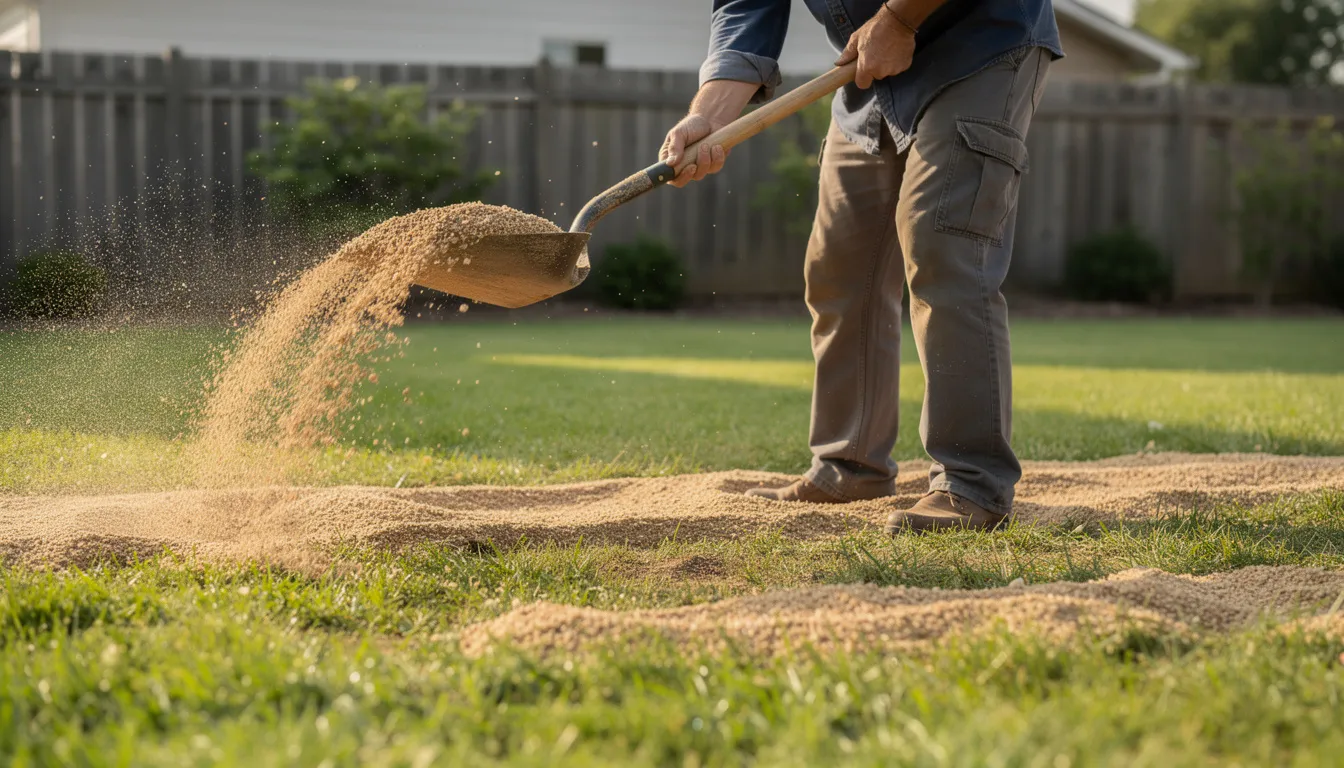
Use a shovel to flick small piles evenly across the lawn, working methodically in strips. Some gardeners prefer using a wheelbarrow and spreading by hand, while mechanical spreaders suit larger areas.
Step 7 – Work it in
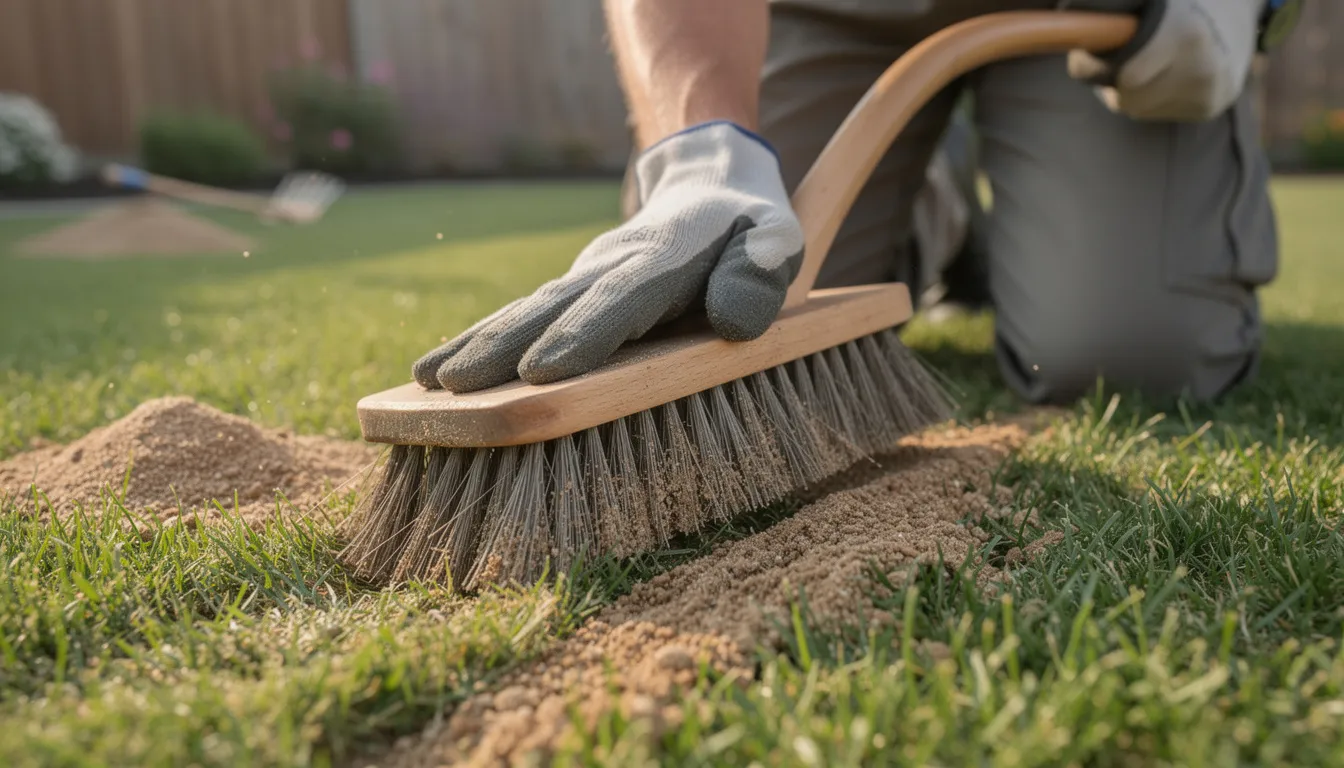
This is where the magic happens. Use the back of a rake, a landscaping lute, or a stiff brush to drag and brush the material so it settles between grass blades and down to the soil surface. Work in multiple directions for even coverage.
Step 8 – Check coverage
At least 70–75% of each grass leaf should remain visible. You’re improving your lawn, not burying it. If grass tips disappear under material, brush more vigorously to redistribute.
Step 9 – Lightly water if dry
A gentle watering helps material settle and make contact with the soil. Avoid heavy watering that causes runoff or puddles.
A note on safety: Wear gloves to protect your hands, lift sensibly (a large bag of dressing is heavy), and never attempt to move bulk bags with makeshift methods. Consider having materials delivered with a tail lift if access is limited.
For badly uneven lawns, resist the temptation to fix everything at once. Several light dressings across 1–2 years produce better results than one heavy application that risks smothering your grass.
Seeding and Aftercare: Before or After Top Dressing?
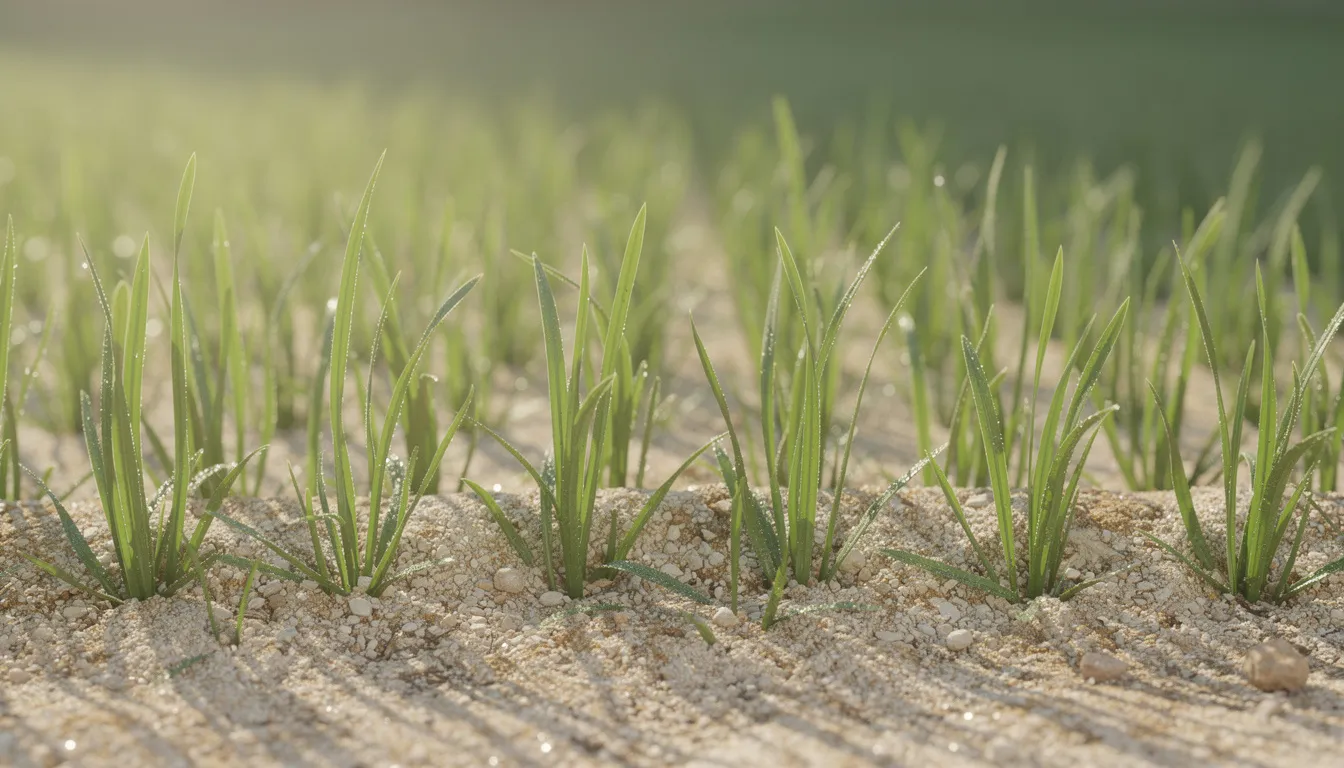
Combining top dressing with overseeding is one of the quickest ways to thicken a thin or patchy lawn. The dressing creates ideal conditions for grass seed to germinate and establish.
The recommended sequence for most UK lawns:
-
Top dress first
-
Then overseed into the dressing
This approach ensures excellent seed-to-soil contact and protects seed from drying out or being eaten by birds. Very light dressings can be spread over seed, but heavier applications risk burying lawn seed too deep for successful germination.
Practical seeding guidance:
-
Use a quality perennial ryegrass and fescue mix suited to UK conditions
-
Apply at approximately 25–35g per square metre for overseeding established lawns
-
Aim for seed to sit within the top 5–10mm of the dressing—not exposed on the surface or buried deeply
Essential aftercare for success:
-
Keep the surface evenly moist (not waterlogged) for 2–3 weeks while seed germinates
-
Short daily waterings during dry spells work better than occasional drenching
-
Avoid heavy use of the lawn until new grass has been cut 2–3 times
-
Delay mowing until new grass reaches about 5–7cm, then cut gently, removing only the top third of the leaf
-
Stay off newly seeded areas as much as possible to prevent compaction
GREENER pairs top dressing and overseeding with targeted POWER fertiliser for strong early root development and vibrant green colour, plus BOOST treatments to support recovery after renovation work.
How Much Top Dressing Do You Need and How to Buy It
Ordering the right quantity saves wasted money and effort. Too little and you won’t achieve the level lawn surface you’re after; too much and you’re paying for material that sits in bags or gets spread too thickly.
Simple rules of thumb:
|
Dressing Depth |
Material per m² |
Material for 100m² |
|---|---|---|
|
Light 0.5cm |
~5 litres |
~0.5m³ (500L) |
|
Moderate 1cm |
~10 litres |
~1m³ (1000L) |
|
Real-world examples: |
|
|
-
A typical 60m² front garden in Manchester needing a light dressing in autumn will use around 3 bags of 20kg/25L product
-
A 150m² back lawn requiring more substantial levelling may justify a single 850L bulk bag or equivalent loose delivery
Comparing formats:
-
Small bags (20-25L): Easier to handle, ideal for access-restricted gardens, perfect for spot levelling uneven areas. Available from most garden centres at a reasonable price.
-
Bulk bags (850L-1000L): Cost-effective for larger projects or full-lawn applications. Require space for offloading and a preferred delivery date when you’re home. Some suppliers offer hooded bags to keep material dry.
-
Loose loads: Only practical for very large areas where driveway access allows tipping directly. Rarely needed for domestic lawns.
Quality matters enormously. Peat free, fully screened top dressing avoids the stones, rubble and weed seeds often found in cheap fill materials. Spending a little more on an excellent top dressing saves headaches later, especially when combined with a structured programme like the GREENER seasonal lawn care subscription kit.
GREENER supplies and applies professional-grade dressing as part of our lawn transformation service. We calculate exact quantities, specify appropriate mixes for your soil type, and handle delivery and application—so you don’t have to guess or get it wrong.
Common Top Dressing Mistakes to Avoid
Most homeowner problems come from doing the right job in the wrong way—too deep, wrong mix, or poor timing. Here’s what to watch out for.
Applying too thick a layer
The most common error. Spreading more than 5mm in a single pass smothers grass, causing yellowing, patchy die-back, and sometimes complete failure. If grass tips are buried, you’ve gone too heavy. The fix: rake out excess immediately and accept that multiple light applications work better than one heavy coat.
Using the wrong materials
Builders’ sand compacts, introduces salts, and has the wrong particle size. Un-screened garden soil brings weeds and compacts over time. Cheap “topsoil” may contain rubble and contaminants. Always use a purpose-made lawn topdressing from a reputable supplier.
Skipping preparation
Applying lawn topdressing onto long grass, debris, or thick thatch means material just cakes on top rather than reaching the soil. Always mow, clear, and ideally scarify and aerate before spreading.
Top dressing at the wrong time
Working on waterlogged or frozen ground leads to smearing, poor integration, and no root zone improvement. Similarly, top dressing during drought or heatwave stresses grass that’s already struggling. Wait for conditions where grass is actively growing.
Expecting miracles from one application
Top dressing improves drainage and levels surfaces gradually. Severe compaction needs aeration first. Poor soil biology needs organic matter over multiple seasons. One light dressing won’t transform a new lawn built on builder’s rubble—but it’s an essential start.
A rescue example: A homeowner in Bristol applied 2cm of cheap topsoil in one pass, burying their grass completely. Three weeks later, patches had died and weeds were emerging through the bare areas. The rescue involved raking out excess material, overseeding with fresh grass seed, and applying a proper light dressing. Within eight weeks, the lawn was recovering—but those extra steps could have been avoided entirely with correct technique from the start.
Light, repeated applications using suitable materials are always safer than aggressive one-time efforts.
How Top Dressing Fits Into the GREENER Lawn Care System
Top dressing is one part of a complete programme, not a stand-alone miracle cure. For lasting results, it needs to work alongside proper preparation, quality feeding, and ongoing seasonal care, as outlined in our seasonal lawn care routine for UK gardens.
How GREENER uses top dressing:
-
During the Transformation phase, we combine top dressing with scarification, aeration and overseeding to reset tired, struggling lawns completely
-
We support recovery with GROWTH feeds that drive new root and shoot development through the dressing layer
-
We follow up with Seasonal Care using POWER fertiliser to maintain density and colour, and BOOST treatments to build resilience against stress, drought and disease
Real transformation examples:
A moss-ridden, bumpy lawn in Glasgow had struggled for years despite the owner’s best efforts. Over one autumn and the following spring, GREENER applied aeration, top dressing, overseeding and the full Seasonal Care schedule. The result: a dense, green lawn that drains properly and resists moss naturally.
A newly built home in Milton Keynes came with “lawn” laid on compacted builder’s soil—thin, yellow, and full of uneven surfaces. Two rounds of targeted top dressing, combined with feeding through GROWTH and POWER, transformed it into a proper family lawn within twelve months.
These results aren’t magic. They come from understanding your specific soil, choosing the right materials, timing applications correctly, and following through with proper nutrition. That’s exactly what GREENER delivers.
Ready to transform your lawn?
If lumpy surfaces, patchy grass, moss or poor drainage are holding your lawn back, top dressing could be the turning point. Whether you tackle it yourself using this guide or prefer expert help that removes the guesswork entirely, the path to a healthier, greener lawn starts with the right approach.
Visit https://grassisalwaysgreener.co.uk/ to discover how the GREENER system can be tailored to your lawn—and book your lawn transformation today.


