


A patchy lawn rarely needs replacing from scratch. Good lawn repair starts by finding the cause, preparing the soil properly, then choosing between lawn seed and turf for the fastest route back to a lush, green surface.
Fast answer: the quickest ways to repair bare patches
Lawn seed and new turf are the two main ways to repair bare patches in an existing lawn. The right answer depends on time, budget, and the size of the damaged area.
-
Use grass seed for most small bare patches up to dinner-plate size; expect 4–8 weeks for the colour and growth to blend with existing grass.
-
Choose new turf for large or badly broken areas when you want instant results and same-day cover, but expect higher cost and more lifting work.
-
Quick rule: if you want cheaper, slower lawn repair, choose lawn seed; if you need immediate cover for a party, house sale, or rental inspection, choose turf.
-
In the UK and Ireland, optimal recovery of lawns happens in mid-spring or early autumn when soil temperatures are ideal for seed germination.
-
Aim for late March–May or September–early October, when soil is warm, above 10°C, and rain is more reliable.
What’s gone wrong? Common causes of lawn damage
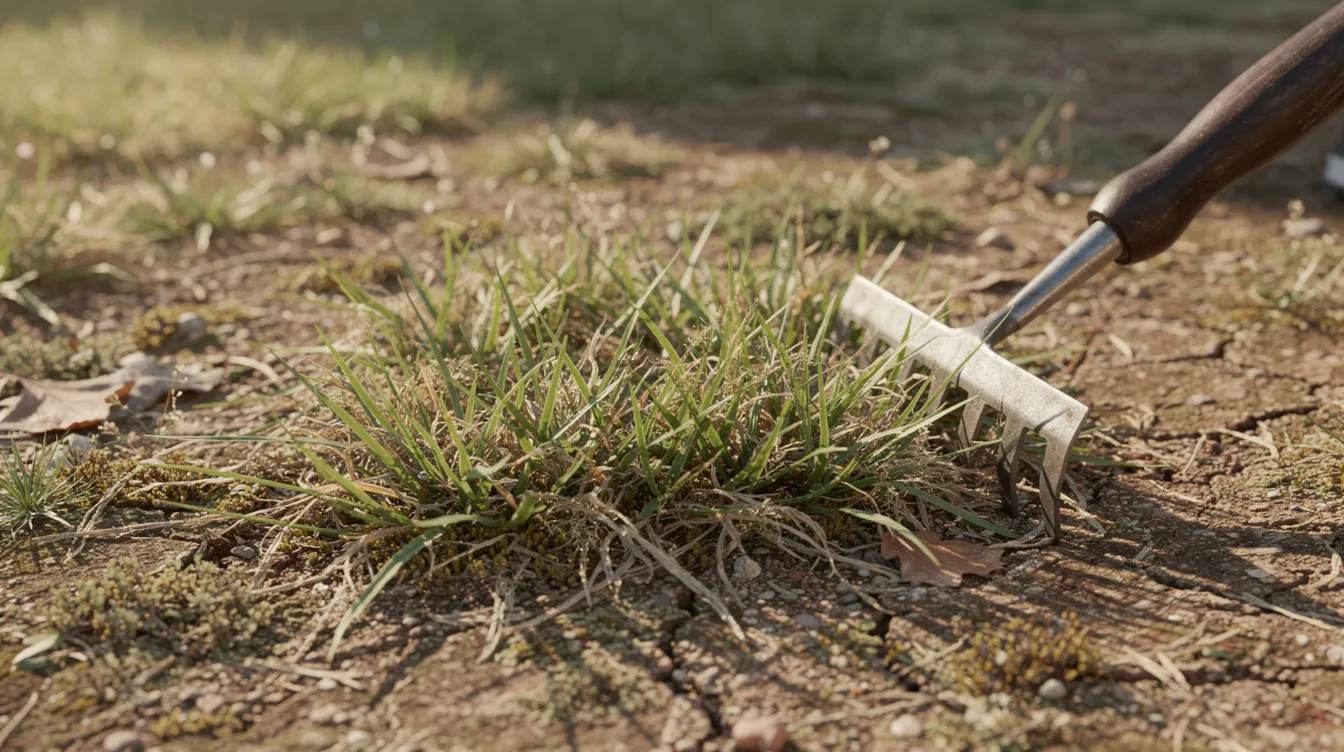
Bare patches can reoccur due to underlying issues such as poor drainage, lawn grubs, pet urine, or heavy shading, so diagnose before repairing lawns.
-
Wear and tear: heavy feet, children’s play, goalmouths, and shortcut paths compact soil, thinning grass and creating patches.
-
Lawn edges often get damaged due to being walked on or shaded by overhanging plants, which can lead to wear and tear.
-
Pet urine: straw circles with a dark green outer ring, especially in hot dry weather.
-
Weather and soil: drought, waterlogging, and clay soil that stays wet in winter then bakes hard in summer.
-
Pests and disease: leatherjackets, chafer grubs, and fungi can cause yellowing and loose turf. The RHS guidance on leatherjackets explains their root-feeding damage.
-
Grass discolouration, bare lawn areas, and unexplained holes can indicate deficiencies or damage caused by external influences such as animals, diseases, or waterlogging.
-
Poor lawn care: scalping, blunt mower blades, low nutrients, moss, weeds, and thatch.
-
Inspect the garden over several days, including early morning and after rain; dig a small test patch if turf lifts easily.
Preparing an existing lawn for repair
Good preparation is 80% of successful lawn repair. Repairing bare patches in lawns relies on removing dead matter, ensuring good seed-to-soil contact, and maintaining consistent moisture.
-
Mow short, but do not scalp, 1–2 days before work so light reaches the soil surface.
-
Rake or scarify dead grass, moss, weeds, debris, and thatch until mostly bare soil is visible.
-
Aerating soil by punching holes helps reduce compaction, allowing better access to water, oxygen, and nutrients.
-
Fork or aerate compacted areas to a depth of 7–10 cm.
-
Brush a thin layer of topsoil, top soil, or lawn repair mix into holes and lows to create a level surface.
-
On heavy clay soil, mix sharp sand, silica sand, compost, or screened topsoil into the top 5–8 cm; add compost to sandy ground to improve moisture retention.
-
Step-by-step photos of mowing, scarifying, aerating, and levelling would be helpful for readers.
Repairing bare patches with grass seed
Overseeding bare patches is the most economical and natural-looking way to repair lawns. Match the seed mix to the existing lawn where possible.
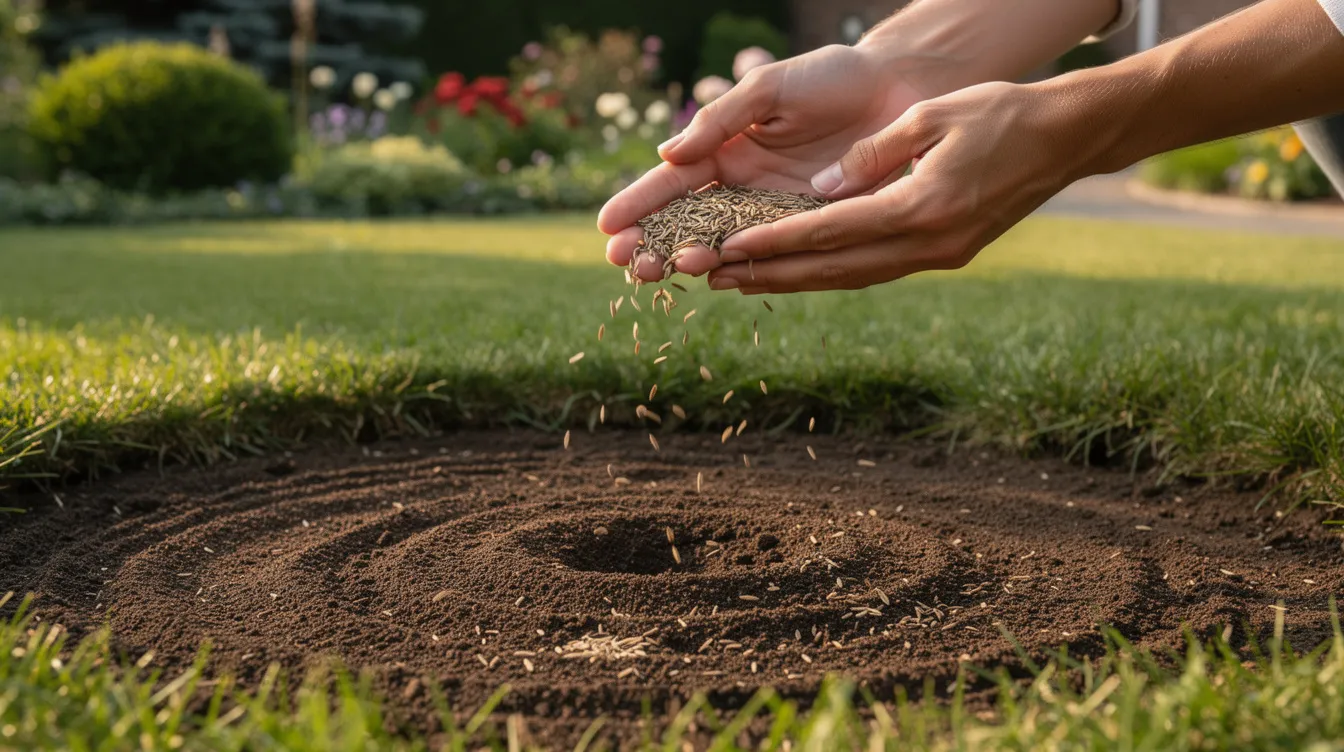
Choose lawn seed carefully:
-
Hard-wearing ryegrass mix for family lawns.
-
Fine fescue mix for ornamental grass.
-
Shade blends for trees, fences, and north-facing areas.
For sowing:
-
Sow in April–May or September, avoiding heatwaves, frost, sodden ground, and frozen soil.
-
Rake to create crumbly tilth, loosen soil, and work in compost or lawn dressing.
-
Scatter grass seed evenly, about as dense as coarse pepper on toast.
-
Rake lightly so seed is covered by no more than 1 cm.
-
Optional: pre-germinate grass seed for 3–4 days in moist compost at cool room temperature.
-
Water with a fine rose so moisture stays even but not waterlogged for 2–3 weeks.
-
Keep feet, pets, and children off the new patch until first mowing.
-
Mow when grass reaches 6–8 cm, using sharp blades on the highest setting.
A pre seed fertiliser can help if used exactly as directed, but avoid strong fertiliser on young seedlings.
Overseeding larger thin areas
If more than 25–30% of the whole lawn is thin, overseed sections rather than isolated circles.
-
Mow the entire existing lawn short.
-
Scarify moss and thatch.
-
Core aerate in two directions.
-
Spread seed by hand or spreader in two passes at right angles.
-
Apply a light top-dressing of sandy loam or repair mix, then brush it in so seed touches moist soil, not leaf blades.
-
Feed with a suitable spring or autumn product one or two weeks before or after seeding, following the label to prevent scorch.
Repairing lawns with new turf
Patching with new turf gives instant green cover when time is short or the damaged area is severe. The process still depends on careful soil preparation and watering.
-
Cut out damaged turf in a square or rectangle with a spade or half-moon edger.
-
Lift old grass and roots to about 5 cm depth.
-
Fill and level exposed soil with fresh topsoil so the base sits just below surrounding lawn height.
-
Use healthy, weed-free new turf, or lift a small piece from a hidden corner of the garden.
-
Lay the turf with edges tight against the existing lawn.
-
Trim gaps with a knife.
-
Firm with the back of a rake or gentle treading to remove air pockets.
-
Water daily in dry spells for 10–14 days.
-
Note that newly sown grass and newly laid pieces of turf require regular watering to prevent drying out until they are well rooted.
-
Avoid mowing until the turf resists gentle lifting.
For many small islands of damage, returfing a whole section may look better than patchwork.
Using rolled turf for fast bare patch repair
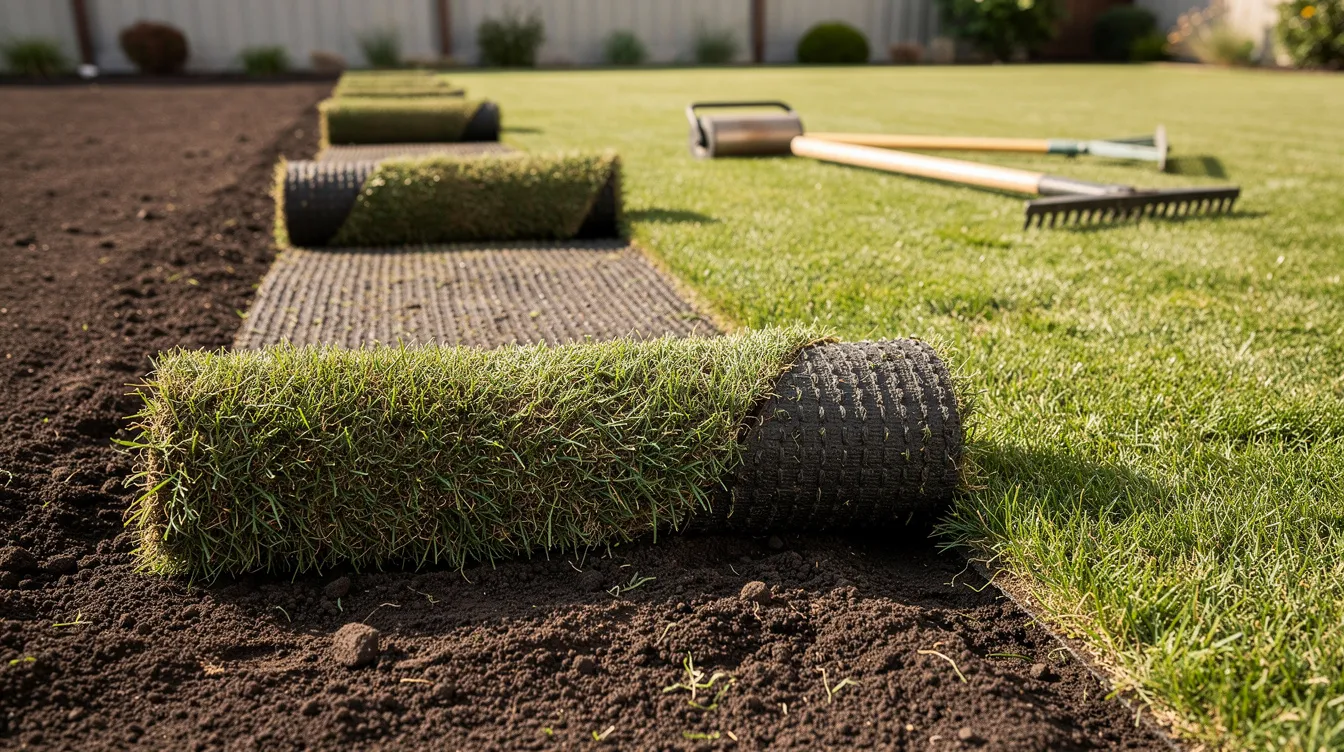
Rolled turf is pre-grown grass on a soil mat that creates an immediate lawn surface.
-
Prepare soil until level, firm, and raked to a fine tilth, with no stones or clods.
-
Stagger joins like brickwork to avoid long seams.
-
Water immediately so moisture soaks through the turf and 7–10 cm into the root zone.
-
Rolled turf costs more than seed, but can be walked on gently sooner once roots knit into soil.
Fixing holes, divots and uneven lawns
Holes, bumps, and dips are trip hazards, make mowing difficult, and often lead to recurring bare patches.
-
Identify the cause: dogs, foxes, badgers, birds pulling grubs, rodents, or soil settlement.
-
Holes in the lawn are often caused by visiting animals that dig up the garden in search of food, leading to unsightly trip hazards and damage to the grass.
-
For shallow depressions up to 2 cm, brush in sandy loam and compost in spring or early autumn; let existing grass grow through.
-
For deeper holes, fill in layers with quality topsoil, firming each layer before reseeding or laying small turf pieces.
-
For bumps, slice off turf, lower the soil beneath, then relay turf at the new level.
-
Very uneven lawns are best corrected over two or three seasons with repeated light top-dressings.
Animals and lawn damage
Some wildlife damage is temporary; other activity creates lasting bare patches.
Common culprits include dogs and cats digging, badgers and foxes searching for grubs, birds pulling turf, and rodents tunnelling under the surface. Observe at dawn or dusk, then look for footprints, droppings, or disturbed soil patterns. After filling holes with topsoil or compost, reseed or patch with turf. Use humane deterrents, designated dog toilet areas, and wildlife-friendly protected zones rather than harmful control.
Improving clay soil and drainage before repairing lawns
Heavy clay soil and poor drainage are major reasons repairs fail, because roots suffocate in wet weather and dry out in summer.
-
Check drainage after heavy rain; standing water for more than 24 hours is a warning sign.
-
Dig a test hole and time how quickly water drains.
-
Open compacted clay with hollow-tine aeration or a garden fork over several seasons.
-
Work sand-rich top-dressing into holes to improve the upper 5–10 cm around each root.
-
Add compost or well-rotted manure in thin layers to encourage worms and microbes.
-
In extreme cases, install land drains, French drains, or reshape the garden before reseeding or laying turf.
Top-dressing: what it is and when to use it
Lawn top-dressing is a thin layer of sand-soil-compost mix spread over the existing lawn surface.
Use it to level minor dips, improve drainage, protect new seed, and encourage healthy growth. A typical DIY mix is three parts sandy loam, two parts sharp sand, and one part peat-free compost, adjusted to your soil. Scatter 0.5–1 cm, brush in with a rake so blades remain visible, and water lightly. Apply in spring or early autumn, avoiding very hot or very wet periods.
Aftercare: mowing, feeding, and long-term lawn care
Once seed has germinated or turf has rooted, consistent lawn care keeps bare patches from returning.
-
Mowing grass to a height of 3 inches helps shade roots and promotes a healthier lawn.
-
Never remove more than one-third of blade height at once.
-
Raise the mower in summer drought and sharpen blades at least once a season.
-
Watering lawns deeply with approximately 1 inch of water per week is recommended for optimal growth.
-
Water early morning during dry spells to encourage deeper roots.
-
Applying seasonal fertilizer in spring or autumn provides necessary nutrients to support lawn health.
-
Use spring feeds for growth and autumn feeds with more potassium for root strength.
-
Scarify and aerate regularly, especially on clay or high-traffic lawns.
-
Rotate play equipment, move wear paths, and use boards during building work.
-
Regular maintenance in spring and autumn is essential to keep your lawn looking its best after repairs.
With the right process, repaired areas should blend into the rest of the lawn by the end of the first growing season. Start with the cause, choose seed or turf, then carry out steady aftercare to restore a thick, lush lawn.


