


Most UK lawns don’t fail because of bad grass. They fail because jobs get done at the wrong time.
The UK climate throws up unique challenges. Wet, cold winters followed by the occasional summer drought means the window for each lawn care task is narrow. Miss it, and your products don’t work. Get the timing right, and you’ll see results within weeks.
This guide is a practical, month-by-month lawn care schedule built specifically for UK weather conditions. Not American advice. Not generic tips. Real guidance for dealing with patchy grass, persistent moss, weeds that keep coming back, and those muddy patches from kids and pets trampling across the garden. Each month, you’ll find practical lawn care tips to help you maintain a healthy, beautiful lawn all year round.
You don’t need to be an expert. You don’t need to hire a gardener. Following this lawn care calendar will give you a thicker, healthier lawn by the end of a single growing season.
If you’d rather skip the guesswork entirely, GREENER offers a done-for-you system with seasonal products delivered at the right time and step-by-step instructions for each month. But whether you go DIY or choose the simpler route, this schedule will show you exactly what your lawn needs and when.
All timings assume typical UK conditions: cool, wet winters, mild springs, and occasional summer droughts. Adjust slightly for your region if you’re dealing with very wet, cold, or hot spells.

A well-maintained lawn can significantly enhance the aesthetic appeal of a property, creating a welcoming outdoor space for relaxation and entertainment. Healthy lawns can also improve air quality by absorbing carbon dioxide and releasing oxygen, contributing to a healthier environment.
Quick UK lawn care calendar: what to do each month
Here’s the at-a-glance schedule for people who want answers fast. Bookmark this section and check it at the start of each month.
-
January – Protect the lawn, stay off frozen grass, no feeding
-
February – Inspect for moss and bare patches, light tidying only
-
March – First light mow, edge the lawn, plan spring feeding
-
April – Feed, treat moss, overseed bare patches, regular mowing
-
May – Mow weekly, follow-up feed if needed, repair damage
-
June – Lower mowing height slightly, water deeply in dry spells
-
July – Mow higher and less often, avoid stress during hot weather
-
August – Continue mowing, note problem areas for September
-
September – Main renovation month: scarify, aerate, overseed
-
October – Autumn feed, rake leaves, final overseeding
-
November – Final feed if mild, tidy up, store tools
-
December – Rest month, protect from frost, plan for next year
The main themes are simple. Protect in winter. Feed and fix in spring. Maintain and protect from drought in summer. Repair and strengthen in autumn.
Scroll down for the detailed “what, when and how” for each month.
January lawn care UK
January is peak winter. Soil is cold, often waterlogged or frosty. Your grass is dormant and needs protecting, not working on.
Walking on frozen or very wet grass causes compaction and bruising. Frost-damaged blades turn black when thawed, then brown, leaving visible footprints that last for weeks. Those muddy ruts created in January become permanent features visible to neighbours all year round.
Use paths, stepping stones, or temporary boards for bins, bikes, and regular routes across the lawn. Keep heavy foot traffic off the grass entirely if possible.
Don’t feed, seed, or do heavy raking in January. The grass can’t use nutrients when it’s dormant, and granular products will wash away in winter rain or sit locked in cold soil. You’re wasting money.
Instead, use January for tool maintenance:
-
Clean and sharpen your mower blades (torn grass is more prone to disease)
-
Check extension leads for damage
-
Oil moving parts on your lawn mower
-
Calibrate your fertiliser spreader so spring feeding is accurate
On milder days, clear heavy debris like fallen branches, toys, and garden furniture. Anything left sitting on grass through winter creates dead patches where grass can’t get as much light or air.
February lawn care UK
February is still winter, but a few mild, dry days can be used to inspect the lawn and prepare for spring.
Walk the lawn on a dry day and check for:
-
Moss patches
-
Thatch (a spongy layer between grass and soil)
-
Pooling water or drainage issues
-
Bare patches
This information guides your April treatment decisions. If you spot thick thatch, you’ll know to schedule scarifying. If there’s moss everywhere, you’ll need moss killer ready.
It’s usually too early for treatments, but you can plan now which lawn areas need moss control, aeration, or new grass seed from late March onwards.
Do some gentle tidying. Lightly rake up fallen leaves and twigs, but avoid aggressive scarifying while the lawn is weak. Don’t roll or compact wet lawns. Avoid parking cars or heavy equipment on the grass.
If you haven’t finished mower maintenance, do it now. Get those blades sharpened so your first spring cuts are clean, not tearing the grass.
March lawn care UK
March marks the start of the growing season in many parts of the UK, though early spring weather can still be cold and wet.
Most feeding, weed killer, and seeding should wait until soil temperature is consistently above 8–10°C. In southern UK, this typically happens in late March. In the north and Scotland, wait a bit longer.
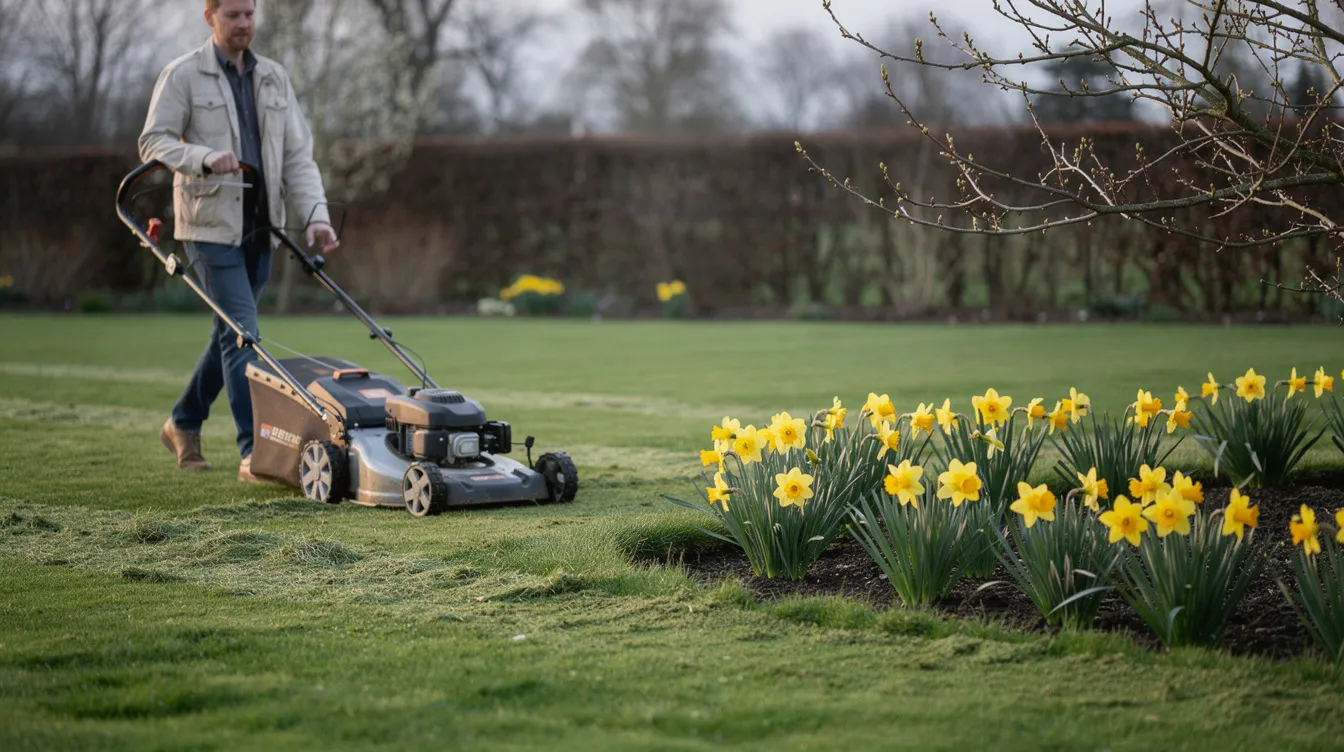
The first mow should happen when grass is clearly growing, not just responding to a warm week. Use the highest setting on your lawn mower and remove no more than a third of the grass height. This is the one-third rule, and it’s critical for grass roots and overall lawn health.
Avoid mowing frozen or very wet lawns. You’ll create ruts and damage blades of grass. Wait for dry weather conditions even if it delays your first cut by a week or two.
Start edging the lawn along paths and beds for a quick visual improvement. Use a half moon edging iron or flat bladed spade to create clean lines. This stops grass creeping into colourful borders and makes the whole garden look tidier instantly.
Late March is when you can start planning your lawn feed and moss control. Check use-by dates on old products or choose new, lawn-safe fertilisers.
April lawn care UK
April is one of the busiest and most important months in the UK lawn care schedule. Weather conditions are usually ideal for feeding, moss control, and recovery.
Soil is warming up. Regular rainfall provides moisture for product activation. Grass growth is active, so interventions are used immediately.
Apply your first proper lawn feed in April. Use a spring/summer fertiliser with balanced nitrogen and potassium. Nitrogen stimulates leaf growth and that luscious green lawn colour. Potassium strengthens grass roots and disease resistance.
Apply on a dry day with rain forecast within 24–48 hours, or water in yourself. Applying granules before rain lets them dissolve slowly and distribute nutrients into healthy soil where roots can access them.
If your lawn has moss, apply a dedicated moss control product now. This is critical: don’t rake aggressively until the moss has turned black and died. Raking live moss spreads spores and makes the problem worse.
After the dead moss has blackened (usually 10–14 days), do light scarifying or vigorous raking to remove thatch and open the soil surface.
Overseed bare patches after scarifying. Rake the soil, apply quality grass seed, lightly rake again, then water and keep moist until germination.
April: dealing with weeds and moss
Weeds and moss surge as temperatures rise and bare soil appears. April is the first reliable treatment window.
Use a selective weed killer or combined feed, weed, and moss product. Follow label rates exactly. Don’t double-dose hoping for better results. Overdosing damages your lawn and wastes product.
Different weeds respond at different times. Some may need a repeat treatment 6–8 weeks later, which is normal.
Never rake or scarify live moss. This spreads spores across the whole lawn and multiplies the problem. Treat first, wait for moss to die, then remove.
Keep children and pets off the lawn until products have dried, according to manufacturer safety guidance.
April: preparing to sow grass seed
Ideal soil conditions for sowing in April: moist but not waterlogged, crumbly surface, soil temperature comfortably above 8–10°C.
Before sowing:
-
Rake away debris and thatch
-
Spike compacted areas with a garden fork to improve drainage and root growth
-
Level hollows with a thin layer of sandy topsoil or lawn topdressing
Choose seed mixes suited to UK conditions:
-
Hard-wearing mixes for gardens with kids and pets
-
Fine ornamental mixes for show lawns
-
Shade-tolerant mixes for lawn areas under trees
Water newly seeded areas gently but regularly. Keep the top 1–2cm moist until germination and early establishment. Once established (after 2–3 mown cuts), you can treat with weed killer and feed, but premature treatment kills young seedlings.
April: mowing and watering
Regular mowing should become more frequent in April as rapid growth kicks in. Most established lawns need mowing once a week.
Suggested cutting height:
-
Family lawns: 3–4cm
-
Ornamental areas: slightly shorter
-
Never scalp down to soil
Brush or lightly rake away worm casts before mowing to avoid muddy smears and keep mower blades in good condition.
Watering is rarely needed in April except on very free-draining soils. Rely on natural spring rain where possible.
Keep blades sharpened for clean cuts. Torn grass looks poor and is more susceptible to fungal diseases.
May lawn care UK
May is when lawns can really thicken up. It’s prime time for overseeding, feeding, and fine-tuning your mowing routine.
Mow your lawn once or twice a week depending on grass growth. Keep following the one-third rule: never remove more than a third of the blade at each cut.
If growth looks pale or patchy, or if you missed the April feed, apply a follow-up spring feed now.
May is excellent for repairing winter and spring damage:
-
Overseed thin areas
-
Patch-repair pet damage with fresh seed or small turf pieces
-
Re-shape lawn edges with a half moon edging iron
Newly seeded or turfed patches need a light touch. No weed killer for at least 8 weeks. No strong feeding until the grass has been mown 2–3 times. Premature treatment kills the seedlings.
Watch for early weed growth and spot-treat rather than letting weeds spread across the whole lawn. Early intervention is far more effective than waiting.
June lawn care UK
June is usually warm with longer days. The focus shifts from repair to regular mowing and protecting against early drought.
Lower the cutting height slightly compared with spring, keeping family lawns around 2.5–3cm. But if dry weather or a hosepipe ban is forecast, raise the height again to help shade the soil and conserve moisture.
Deep, infrequent watering beats light daily sprinkling. Water deeply once or twice a week during very dry spells rather than a quick sprinkle every day. Water in early morning or late evening to minimise evaporation.
Most granular feeds applied in April or May will still be working. Only use a light liquid feed if the lawn looks hungry or washed out.
Move furniture, paddling pools, and toys regularly. Items left in one place block light and air, causing yellow patches or dead zones. This simple habit maintains visual consistency across your lawn.
July lawn care UK
July can be hot and dry in many parts of the UK. Some browning is normal during hot weather and not permanent.
The priority is preventing stress:
-
Mow less often
-
Use a higher setting (3–4cm or more)
-
Avoid cutting during the hottest part of the day (early morning or late evening is better)
Avoid strong weed killer or high-nitrogen fertilisers during drought or heatwaves. These can scorch weakened grass.
Spot-water high-wear areas like goal mouths, washing-line paths, and routes from the back door where grass gets thinnest.
Most healthy UK lawns will stay green when rain returns, as long as roots haven’t been damaged by scalping or compaction. Don’t panic during July browning. It’s temporary and will reverse when rainfall returns.
If moss and weeds are still a problem and weather conditions aren’t too dry, a mid-summer combined treatment can be applied, but only if the label allows a second yearly use.
August lawn care UK
August is a good time to maintain mowing and prepare for autumn renovations.
Continue mowing at a slightly higher cutting height if the weather is dry. Mow less frequently if grass growth slows.
Walk the lawn and make notes of:
-
Bare patches
-
Thin zones
-
Compacted high-traffic areas
These are the spots to tackle properly in September.
Fill small hollows with a thin layer of topdressing and lightly overseed if nights are cooling and rain is more regular.
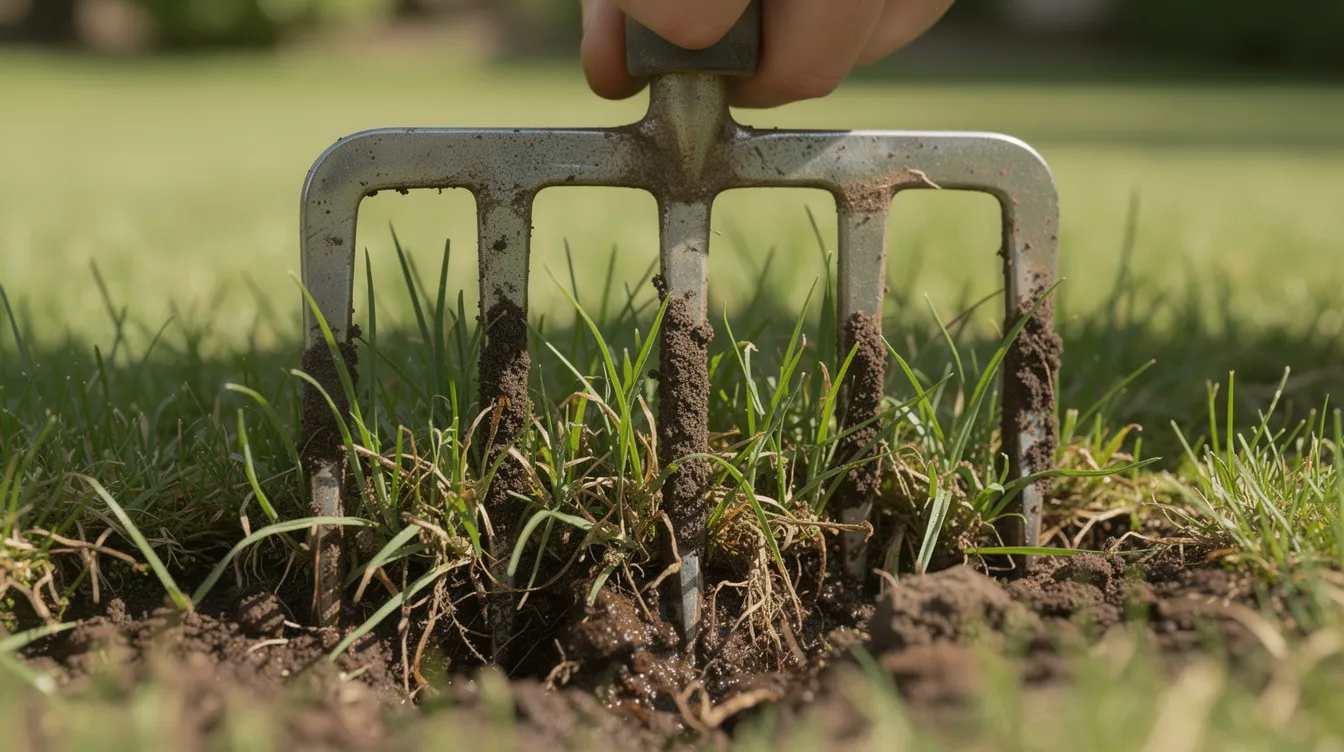
August lawn care also includes aeration. Use a garden fork on very compacted lawns, pushing holes 5–8cm deep to help rain penetrate later in the season. This will improve drainage and prepare healthy soil for autumn.
Don’t give heavy granular feeds during prolonged dry weather. Wait until temperatures ease and rain is more reliable.
September lawn care UK
September is the main renovation month in the UK lawn care schedule. Cooler nights and regular rain create perfect repair conditions.
This is the best month for major work:
-
Scarifying – Remove thatch and dead moss with a power-rake or vigorous hand-raking
-
Aerating – Relieve compaction with a garden fork or mechanical aerator, targeting holes 5–8cm deep across high-traffic zones
-
Topdressing – Apply a light autumn lawn topdressing to even the surface and improve soil quality, brushing it into holes and thin spots
-
Overseeding – Generous new grass seed application after scarifying and aeration
Autumn renovations in September typically show significant improvement by November and dramatic transformation by next spring.
Water regularly to keep seedbeds moist for 2–3 weeks. September seeding usually germinates within 7–14 days if soil stays moist.
This major September work addresses year-round problems: thatch and compaction from summer, moss from wet patches, thin coverage from traffic and drought. A properly executed September renovation transforms lawn appearance.
October lawn care UK
October is the last reliable month for seeding in most of the UK. It’s time to prepare lawns for the winter months.
Apply an autumn lawn fertiliser with lower nitrogen and higher potassium. This strengthens grass roots before cold weather arrives rather than stimulating soft growth that’s vulnerable to frost.
Rake or collect fallen leaves weekly. Leaf accumulation prevents light penetration, creates humid conditions for moss and fungal diseases, and leaves yellow patches by spring.
Final overseeding can still work in early October in southern and milder areas, but may struggle later in colder regions.
Do a final round of light aeration in wet, compacted corners that tend to puddle in winter.
Gradually reduce mowing frequency as growth slows. Raise the cutting height and stop mowing entirely once soil becomes consistently cold and wet weather sets in.
November lawn care UK
November is about tidying, protection, and finishing any last-minute feeding rather than spring renovations or big work.
Apply one final autumn feed if it was missed in October and conditions are still mild (no frost, soil workable).
Mow only when necessary and only on dry, unfrozen days. Keep the lawn mower on a high setting so grass can grow slightly longer going into winter.
Keep fallen leaves, branches, and heavy items off the lawn to avoid dead patches by spring. This regular lawn care tip is often overlooked but makes a big difference.
Check drainage in problem areas. If puddling is persistent, plan any bigger work (like installing drains or reshaping) for the following spring.
Store away hoses, sprinklers, and electrical tools safely for winter storage once major lawn work is finished.
December lawn care UK
December is usually a rest month. Your lawn depends on protection, not hard work.
Walking on frosty or snowy grass bruises blades and leaves black, then brown, footprints once thawed. Keep to paths and patios wherever possible. If access is essential, use one defined route rather than random trampling.
Don’t feed, scarify, seed, or aerate in December. Soil and air temperatures are too low for recovery. Any products applied now are wasted.
On mild days, do a final light tidy:
-
Remove any remaining fallen leaves
-
Clear toys and furniture
-
Check that drain covers and gullies aren’t blocked
Use December to review how your lawn responded year round. Note which months gave the best results. This helps you refine your schedule next year.
Common UK lawn care mistakes to avoid
Most lawn problems come from timing and overdoing jobs, not from “bad lawns” or poor grass genetics.
Cutting too short (scalping)
Cutting below 2cm, especially during hot weather or drought, exposes soil and weakens grass roots. This invites weeds and moss. Always follow the one-third rule: never remove more than a third of blade height in one cut.
Wrong fertiliser timing
High-nitrogen feed applied in late autumn stimulates soft growth vulnerable to frost damage and winter fungal diseases. Use autumn fertilisers (lower nitrogen, higher potassium) from September onwards.
Applying treatments during drought
Weed killer during dry weather is less effective and can scorch stressed grass. Wait until plants are actively growing and water is available.
Never aerating
High-traffic lawn areas become compacted over years of foot traffic, kids, and pets. Compacted soil restricts water penetration, causes puddles, and invites moss. Annual or biennial aeration in high-traffic zones is essential.
Raking live moss
Aggressive raking of live moss spreads spores and multiplies the problem. Apply moss killer first, wait for moss to turn brown and die, then remove dead moss.
Treating new seed too early
Weed killer within 8 weeks of seeding kills seedlings. Strong feed before grass has been mown 2–3 times causes weakness. Be patient with newly seeded patches.
Simple tips for sticking to your lawn care schedule
Busy UK homeowners often forget lawn jobs or miss the right week when warmer weather finally arrives.
Set calendar reminders
At the start of the year, add phone reminders for key months:
-
April: first feed and moss treatment
-
September: major renovation work
-
October: autumn feed and leaf clearing
Group jobs into power hours
One Saturday in April for feeding and patch repair. One in September for scarifying and overseeding. Short bursts are easier to commit to than constant small jobs.
Keep tools ready in one place
Store your rake, garden fork, lawn mower with blades sharpened, fertiliser spreader, watering can, and a bag of quality grass seed together. When it’s time to act, you won’t waste energy hunting for equipment.
Track progress with photos
Take quick photos at regular intervals throughout the year. Comparing your January lawn to your July lawn shows dramatic transformation and keeps motivation high.
Consider a done-for-you system
Using a seasonal plan with the right products sent at the right time removes the guesswork. GREENER provides exactly this: pre-planned lawn treatments matched to the UK calendar, with step-by-step instructions for each month. No remembering what to apply when. No wasted treatments.
GREENER vs DIY lawn care calendars
You can follow this guide entirely yourself or choose extra help. Both approaches work.
DIY approach:
-
Buy separate lawn feed, moss killer, weed killer, and grass seed
-
Read labels and match products to the monthly schedule
-
Time applications correctly based on weather conditions
-
Effective, but time-consuming and easy to mistime
GREENER approach:
-
Pre-planned seasonal lawn treatments matched to the UK lawn care calendar
-
Products delivered at the right time with step-by-step instructions
-
No need to remember what to apply when
-
Fewer wasted treatments and faster, more consistent results
GREENER isn’t for everyone. But if you like the idea of following a schedule without handling the planning and product selection yourself, it’s a simpler path to a perfect lawn.
The top tips remain the same either way: stick to the calendar, time your treatments properly, and your lawn will respond.
Conclusion: your UK lawn care schedule in one simple plan
The core idea is straightforward. Protect your lawn in winter. Feed and fix in spring. Maintain and shield from drought in summer. Repair and strengthen in autumn.
Following this month-by-month schedule will give most UK lawns a thicker, greener look within a single growing season. You don’t need to be an expert. You just need to do the right jobs at the right time.
Your next step: find today’s month, follow the actions for the next four weeks, then move on to the following month’s jobs.
If you want the schedule turned into a ready-made system with products and instructions timed for UK weather, GREENER provides exactly that. No guesswork. Just results.


