


A good lawn and feed routine can be the difference between thin, tired grass and a lush, resilient outdoor space. The right product does more than make your lawn green; it restores nutrients, supports roots, improves density, and helps your grass compete against weeds and moss.
Key Takeways
-
Lawn and feed products combine fertiliser with nutrients that support healthy growth, and some also include weed control or a moss killer.
-
Spring and autumn are the most important times to feed, because grass needs nitrogen in spring and potassium before winter.
-
Well-fed lawns retain moisture better, recover faster after long dry spells, and are less prone to disease.
-
Slow release options are best for steady feeding, while fast-acting products are useful before events or quick fixes.
-
Always follow the product instructions, especially if children, pets, grass seed, or seeding are involved.
What Does Lawn and Feed Actually Do?
Lawn and feed is a lawn care product designed to feed grass and improve overall turf condition. Some formulas are simple lawn feed products, while others are “weed and feed” products that combine fertilisation with weed control in one application.
The feed side restores essential nutrients to the soil, which can be depleted through mowing and heavy rainfall, leading to healthier grass growth. Every time you mow, remove clippings, or experience heavy water runoff, the lawn loses food it needs to thrive.
The most important nutrients are:
|
Nutrient |
What it does |
|---|---|
|
Nitrogen |
Fuels chlorophyll production, turning yellowing grass into a lush, deep green |
|
Phosphorus |
Supports root development and strong root growth |
|
Potassium |
Helps grass survive summer heat, winter frost, drought, and wear |
Phosphorus and potassium encourage deep root growth, helping grass survive summer heat and winter frost. Nitrogen is usually the headline nutrient in spring because it encourages new growth and healthy green growth.
A healthy lawn is not just about colour. Feeding your lawn helps maintain its health, making it more resilient to wear and tear, and less prone to disease.
Why Feeding Helps With Weeds and Moss
A well-fed lawn is less likely to develop moss and weeds, as these tend to invade when the grass is weak and patchy. Thick, dense turf naturally crowds out weed seeds and prevents moss from taking over.
That means weed and moss suppression is not only about chemical active ingredients. It is also achieved by encouraging thick grass growth that naturally crowds out these plants in nutrient-poor soil.
If your garden has compacted soil, shade, or poor drainage, moss may still appear. In that case, products containing iron sulphate or iron can blacken moss before raking it out. A dedicated moss killer may help, but it should be paired with feeding, aeration, and overseeding if you want long-term results rather than a short-term rid of the problem.
Types of Lawn Feed
Not every fertiliser works the same way. The right choice depends on the season, the condition of your grass, and how quickly you want results.
Granular feeds
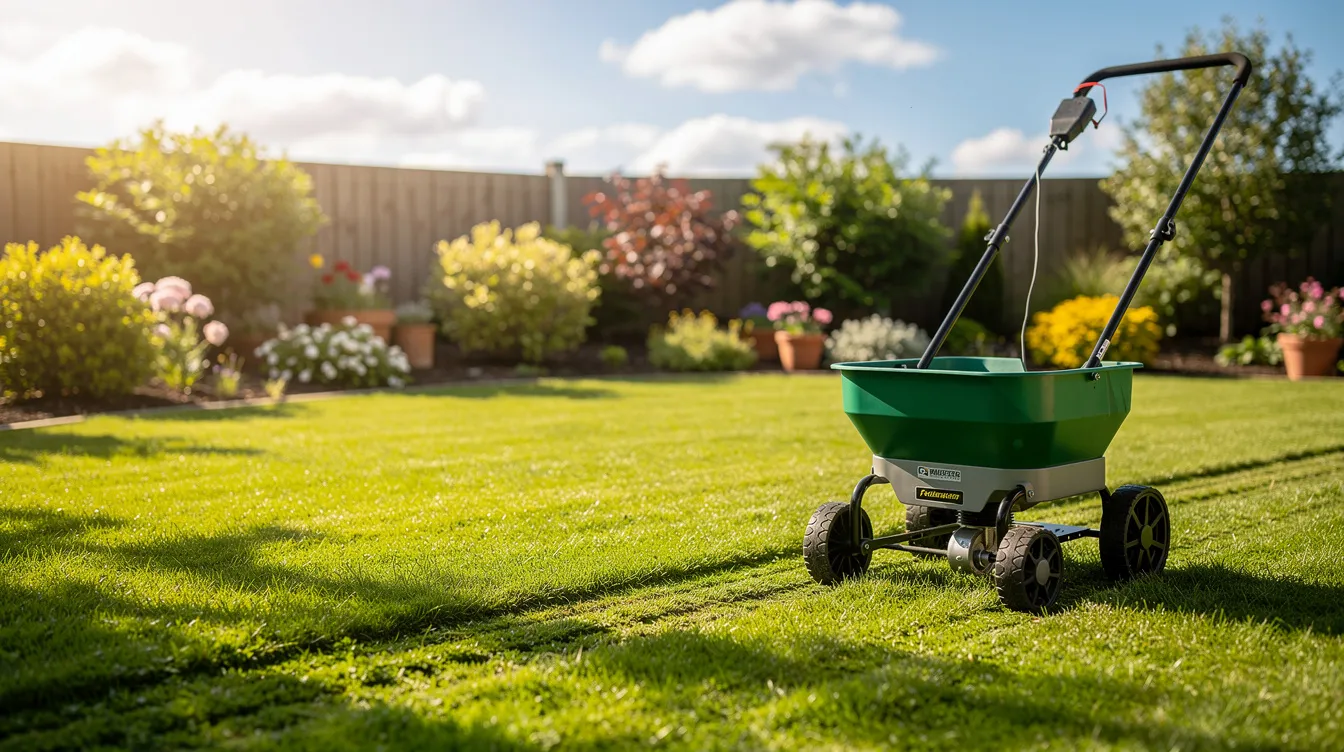
Granular fertilizer is solid pellets applied with a spreader. Granular feeds are useful for larger lawns because they are easier to apply evenly over a wide area.
Slow release granules break down gradually as moisture reaches them. Quick-release fertilizers provide fast green-up within days but easily leach out, whereas slow-release fertilizers feed steadily over 8 to 12 weeks.
Moowy slow-release granules are designed to last for about 60 days, making them ideal for busy gardeners who want a maintenance product.
Liquid feeds
Liquid fertilizer is a concentrate mixed with water for fast absorption. Liquid feeds and liquid fertilisers are good when you want a fast boost, but they usually need more frequent application.
Fast-acting lawn feeds are designed to show results within 24 hours and can keep the lawn healthy and green for up to 6 weeks, making them ideal for quick fixes before events.
Weed and feed
Weed and feed products combine fertilization with weed control, typically used from March to September, and are high in nitrogen and potassium to promote healthy growth while eliminating weeds.
Aftercut All In One is a suitable lawn feed for spring and summer, as it feeds, greens, and controls weeds simultaneously.
Some products use selective herbicides such as 2,4-D, dicamba, or MCPP to target broadleaf weeds. University extension guidance regularly advises homeowners to read labels carefully because herbicide products may not suit all grass types or newly seeded areas. You can see similar safety principles in University of Georgia Extension lawn guidance.
When to Apply Lawn and Feed
It is generally recommended to apply fertilizer 3 to 4 times a year during the active growing season between early spring and autumn for a healthy lawn.
Lawn feeds can be categorized into different types based on the season, such as spring, summer, and autumn feeds, each formulated to meet the specific needs of grass during those times.
Here is a simple schedule:
|
Season |
What your lawn needs |
Best approach |
|---|---|---|
|
Early spring |
Recovery and new growth |
Higher nitrogen feed |
|
Spring to summer |
Colour, density, weed control |
Balanced lawn and feed |
|
Late summer |
Stress recovery |
Gentle feeding and water |
|
Autumn |
Root strength before winter |
Higher potassium fertiliser |
Spring and autumn are critical application windows for lawn fertilizer, with high nitrogen needed in spring and high potassium in autumn.
Westland SafeLawn is recommended for early spring feeding due to its high nitrogen levels, which encourage new growth.
During summer, avoid feeding during heatwaves or drought unless the product label says it is safe and you can water it in properly. Well-fed lawns retain moisture better and recover faster after long dry spells, but even healthy grass can scorch if fertiliser is applied in the wrong conditions.
How to Apply It Without Damaging Your Lawn
Before applying any lawn and feed product, mow the lawn a few days beforehand, check the weather, and read the instructions. Do not guess the rate. Too much feed can scorch grass, while too little may not make a visible difference.
Follow these steps:
-
Measure the lawn so you apply the correct amount to one lawn area.
-
Choose a dry day if the product requires dry foliage, or damp grass if the label says granules must stick to weeds.
-
Use a spreader for even coverage, especially on larger lawns.
-
Water the product in if the label requires it.
-
Keep pets and children off the lawn until the product is watered in and the label says it is safe.
If you are using grass seed, check the label before applying weed control. Some pre-emergent products can stop seeding from germinating, which is helpful for crabgrass prevention but bad for new lawns.
For many years, gardeners have chased the perfect lawn with trial and error. The safer approach is simple: feed at the right time, choose the right formula, and avoid overapplication.
Choosing a Good Product
A good product should match your goal. Do you want vibrant grass, fewer weeds, moss control, or a low-maintenance plan year round?
Use this quick guide:
-
For early spring: choose higher nitrogen to promote green grass and new growth.
-
For spring and summer weeds: consider Aftercut All In One or another weed and feed option.
-
For busy schedules: choose slow release products such as Moowy slow-release granules.
-
For fast colour: choose fast-acting liquid fertilisers or other quick green-up feeds.
-
For moss: look for iron sulphate or a dedicated moss killer.
You may also see brands such as miracle gro, plus more products and other products with special offers, first order discounts, or an order sign on retail pages. Do not buy only because of price. Check the nutrient ratio, active ingredients, lawn size coverage, and safety advice.
Regular feeding prevents the need for expensive renovations or repairs due to lawn deterioration. A thin lawn often becomes a cycle of bare patches, moss, weeds, reseeding, and more repair work. Feeding at the right important times helps break that cycle.
Environmental and Safety Considerations
Lawn fertilisers are useful, but they should be used carefully. Excess nitrogen can leach into waterways, especially if applied before heavy rain. Research on residential landscapes has found that synthetic fertilizer can significantly increase nitrate leaching compared with natural areas, which is why careful timing matters. One study published through PubMed highlights the water-quality risks of over-fertilisation.
A separate turf study found that reduced nitrogen programs with humic substances maintained turf quality while improving soil biological indicators, including increases in mineralizable carbon and nitrogen. The findings suggest that smarter feeding can support healthy grass with fewer inputs, as discussed in this Agronomy turfgrass study.
That does not mean you should avoid lawn and feed completely. It means you should apply the right amount, at the right time, and only where needed.
Key Takeaways for a Beautiful Lawn
A beautiful lawn comes from consistency, not panic treatments. Feed during the growing season, choose slow release when you want steady results, and use weed control only when weeds are actually a problem.
The best lawn and feed routine will encourage healthy growth, support roots, reduce moss, and help grass thrive through summer stress and winter cold. If you want exceptional results, start with the soil, follow the label, and treat feeding as regular maintenance rather than a rescue job.
Want professional-grade lawn nutrition without the guesswork?
The GREENER Transformation Kit includes GROWTH — a granular fertiliser with mycorrhizal inoculant — alongside liquid iron, premium UK grass seed and a seaweed biostimulant. Four products, correct sequence, applied in under an hour. Your lawn gets everything it needs in one go.
Get The GREENER Transformation Kit →
28-Day Lawn Pledge — full refund if no visible improvement. No returns needed.
FAQ
Can I use lawn and feed on newly seeded grass?
Usually not straight away. Many weed and feed products are unsuitable during seeding because weed control ingredients may stop young grass seed from establishing. Wait until the new grass has been mown several times and check the label.
Is liquid feed better than granular feed?
Neither is always better. Liquid feeds act quickly and are useful for fast colour, while granular feeds are easier for steady coverage. Slow release granular products are often better for long-term maintenance.
How soon should I mow after applying lawn feed?
Follow the product instructions, but many feeds work best if you mow a few days before application and wait a few days after feeding before mowing again.
Can lawn feed help with bare patches?
Lawn feed can strengthen surrounding grass, but bare patches usually need loosening, fresh soil, grass seed, and watering. Feeding alone will not fully repair dead areas.
Should I feed my lawn if rain is forecast?
Light rain can help some granular products activate, but heavy rain can wash nutrients away. Avoid applying fertiliser before storms or prolonged rainfall.


