


Most UK homeowners can achieve a green lawn fast by focusing on the right grass type and proper care. Selecting the appropriate grass type is essential, as different varieties respond differently and can help you attain that lush, vibrant look more quickly. With the basics of water, feed, and mowing done right, you’ll see visible results within weeks—not months.
Quick wins: how to get a greener lawn in the next 2–4 weeks
Fast results come from simple actions, not spending more money on products you don’t understand.
What to do today or this week:
-
Water deeply 1–2 times per week instead of daily sprinkles
-
Apply a quick-release fertiliser if soil temperatures are above 8°C
-
Raise your mower height to at least 6cm
-
Clear leaves, debris, and anything blocking sunlight from the turf
-
Remove dead grass and moss by dethatching to let more sunlight and oxygen reach live grass, making it greener faster
-
Use perennial ryegrass seed for incredibly fast germination—just 5–10 days under ideal conditions—or choose a blend with strong creeping red fescue for a quick, dense, and durable lawn
-
Apply pre-emergent weed control or spot-treat weeds to prevent them from competing with your grass
For the best results, follow expert advice on feeding and watering routines tailored to your lawn’s needs. This advice helps you achieve a lush, healthy looking lawn quickly.
Realistic timeline: Expect visible colour change in 7–14 days. A thicker, healthier feel takes 3–4 weeks.
This approach works best from late March to October during the active growing season. Outside this window, grass is dormant and won’t respond well to feeding.
If you’d rather skip the guesswork, the GREENER Transformation Kit provides pre-measured products with step-by-step instructions—no need to research which feed or seed to buy.
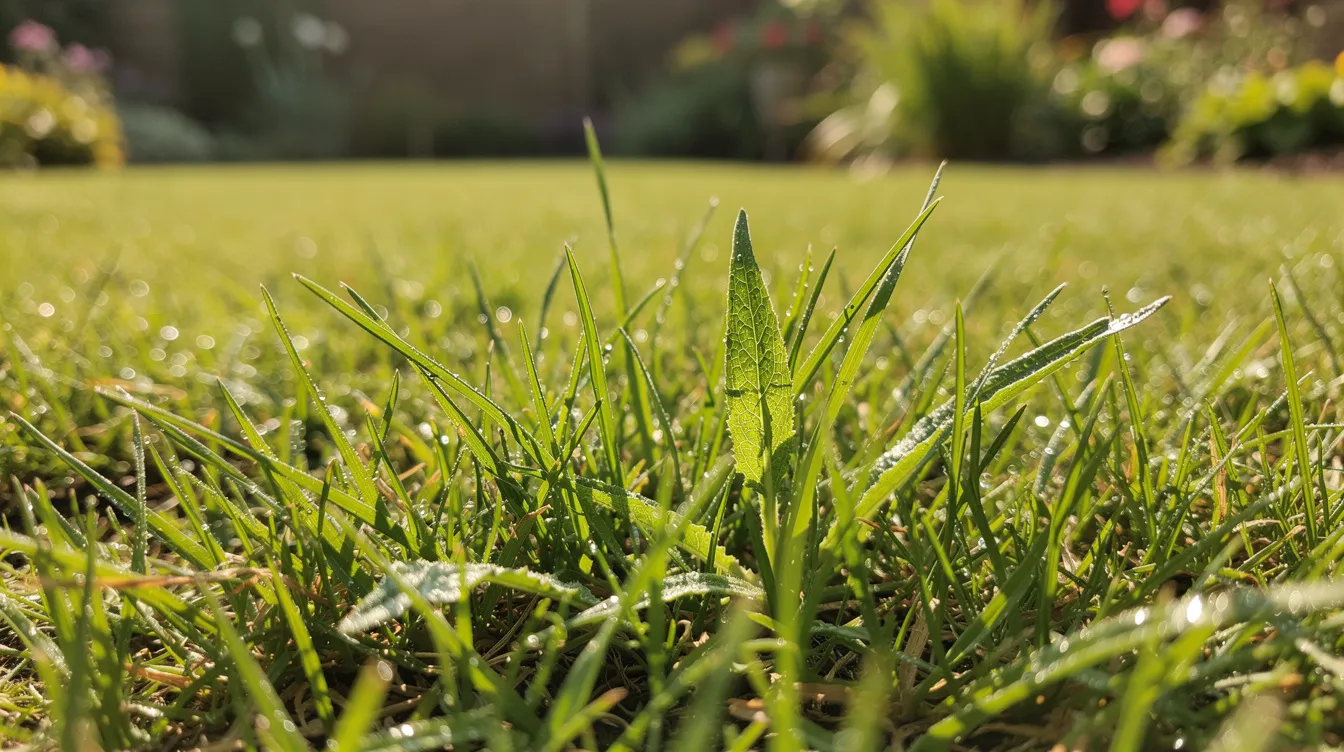
Step 1: Fix watering – the fastest way to revive tired grass
UK lawns rarely suffer from true drought. The real problem is uneven watering—odd heatwaves, compacted soil that sheds water, and frequent shallow watering that creates shallow roots.
The solution: deep and occasional watering
Instead of a light daily sprinkle, soak your lawn properly 1–2 times per week during dry spells. Aim for about 2.5cm (1 inch) of water per week, including rain.
How to test actual water delivery:
-
Place a mug or rain gauge on the lawn
-
Run your sprinkler for 20–30 minutes
-
Check how much water collected
This tells you whether you’re actually reaching deeper root growth or just wetting the surface.
Timing matters: Water early morning (5–9am) to reduce evaporation and disease risk. Avoid late evening watering in warmer months—wet grass overnight invites fungal problems.
Mistakes to avoid:
-
Constantly soggy soil (damages roots)
-
Watering during midday sun (most evaporates)
-
Relying on sprinklers that miss corners and edges
Proper watering helps your lawn survive drought stress and prolonged drought without turning brown.
Step 2: Feed your lawn – use the right fertiliser for a fast green-up
Nitrogen is what makes grass green fast. It drives chlorophyll production and gives that lush colour everyone wants. However, a deficiency in nitrogen can cause grass to turn yellow, resulting in a dull or yellow appearance. Correcting this with the right fertiliser helps restore greenness. Magnesium and iron are also essential nutrients for maintaining a lush, lawn green appearance, as they support chlorophyll production and vibrant colour. But too much nitrogen causes weak, disease-prone growth.
Understanding NPK (simplified):
-
Nitrogen (N): The colour and growth accelerator
-
Phosphorus (P): Builds strong roots
-
Potassium (K): Overall plant strength and disease resistance
Think of it as: nitrogen is the boost, phosphorus builds the foundation, potassium makes it tough.
For UK lawns in spring and summer, look for a ratio around 20-5-10. Always follow the bag’s recommended rate exactly.
Applying a slow-release nitrogen fertilizer is one of the best ways to achieve a greener lawn, as it provides a steady supply of nutrients over time.
When to apply: Only fertilize once soil is 8–10°C or warmer—typically late March to early September. Applying fertiliser to cold ground wastes product because nutrient uptake is minimal.
Slow-release vs fast-acting:
-
Fast-acting (liquid) shows results in 2 days but fades quickly
-
Slow-release (granular) takes 5–7 days but feeds for weeks
For best results, use both: a liquid feed for immediate colour, then slow release granular for sustained lawn health. Liquid iron provides a rapid, deep-green darkening effect without causing excessive growth, while ferrous sulphate can be used as a stand-alone treatment to enhance the greenness of the lawn without increasing mowing frequency.
Application checklist:
-
Apply to dry grass for even coverage
-
Use a spreader for consistent distribution
-
Water in lightly if no rain is due within 24 hours
Mistakes to avoid: Over-applying, feeding a bone-dry lawn in hot sun, using “lawn feed and weed” products at random times without checking if weeds are actively growing.
The GREENER Transformation Kit includes the right type and amount of feed for safe, fast results—no NPK calculations needed.
Boosters: iron and micronutrients for deeper green
Once basic feeding is sorted, iron acts as a “vitamin shot” for colour intensity without promoting excessive growth.
Ferrous sulphate is commonly used on UK lawns in spring and autumn. Apply liquid or soluble iron at low doses with even coverage. Keep it off patios and stone to avoid rust staining.
Other micronutrients like magnesium support chlorophyll production, but iron delivers the most visible impact.
Realistic expectations: Colour improvement appears in 3–7 days under mild, moist conditions. Boosters are optional—focus first on watering, feeding, and mowing.
Step 3: Mow properly – stop scalping the green out of your lawn
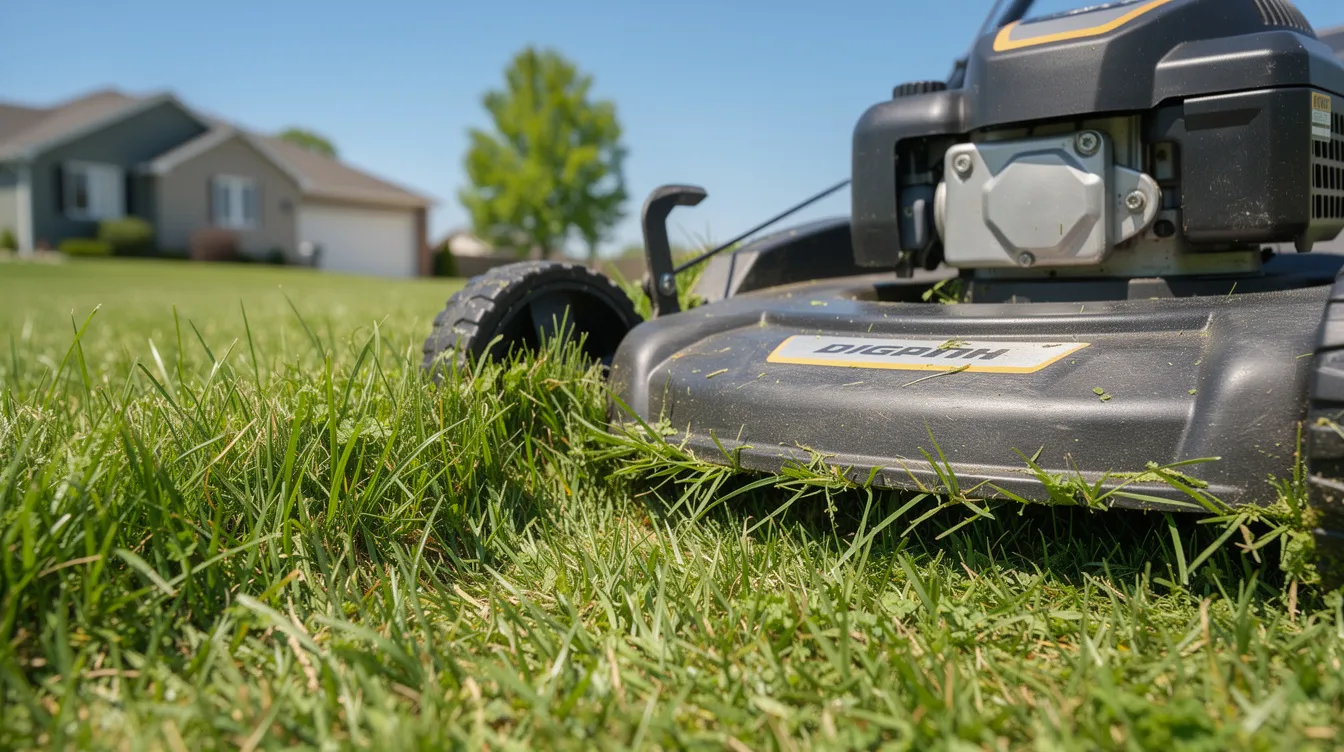
Mowing too short is one of the main reasons UK lawns look pale and patchy. Scalping removes the leaf area needed for photosynthesis, forcing the plant into stress recovery mode. To get a green lawn fast, it's essential to mow correctly, especially during summer, by following proper mowing height, timing, and technique.
The one-third rule: Never remove more than one-third of the grass blade in a single cut. In summer, mowing correctly means never removing more than one third of the grass height and keeping the blades slightly higher than in spring to help retain moisture and protect roots.
Concrete cutting heights:
-
Summer: 6–7cm
-
Spring and early autumn: 4–5cm
A higher mowing height encourages deeper roots and helps shade the soil, which reduces weed growth and moisture loss. This shade also creates a cooler microclimate, allowing grass to grow more densely and withstand drought conditions.
Sharp blades matter: Using a sharp mower blade ensures a clean cut that keeps the grass healthy and aids in its greenness. Dull blades tear grass rather than making a clean cut, leaving brown, frayed tips. Sharpen your mower blade once a year before spring—March or April.
Mowing frequency: Every 7–10 days during active growth. Less often during dry spells when growth slows.
Mistakes to avoid:
-
Dropping the mower to its lowest setting for a “bowling green look”—this makes it harder to rid your lawn of weeds and can stress the grass.
-
Mowing when the lawn is waterlogged or frosty
-
Regular mowing without checking blade sharpness
Step 4: Improve the soil so the green colour actually lasts
A quick green-up fades fast if soil is compacted or thin. Trees can contribute to soil compaction and create shaded areas, both of which impact lawn health and growth. Better soil means roots can access water and essential nutrients more efficiently. Aerating your soil is essential for improving lawn health, as it allows air, water, and nutrients to penetrate deeper into the root zone.
Soil compaction can severely limit root growth and water absorption, making regular aeration necessary, especially in high-traffic areas. Aeration should be performed at least once a year, but more frequent aeration may be needed for lawns that experience heavy use or traffic.
Simple aeration for UK gardens:
-
Use a garden fork or hollow-tine aerator
-
Spike compacted areas where kids play or cars park
-
Work the entire lawn if it feels hard underfoot
When to aerate: Autumn (September–October) or early spring (March). Avoid heatwaves or hard frost.
After aeration, top-dress lightly with compost or sandy loam to improve drainage and water retention.
Realistic expectations: Soil work doesn’t produce overnight colour but supports everything else you’ve done. It helps your lawn stay greener during dry spells and heat.
When to overseed thin or patchy areas
Overseeding directly addresses bare patches and thin areas by introducing fresh grass seed into weak spots.
Best timing in UK: April–May and September, when soil is warm and moist.
Seed selection:
-
Hard-wearing ryegrass mixes for family gardens
-
Finer fescue mixes for ornamental lawns
Simple overseeding steps:
-
Rake out dead grass, moss, and thatch
-
Spread seed evenly at 15–25g per square meter
-
Lightly rake in for soil contact
-
Keep moist for 2–3 weeks until seedlings establish
New seed can germinate and show in 7–14 days in the right conditions, but full thickening takes several weeks.
The GREENER Transformation Kit combines seed and feed in a planned sequence—ideal for beginners tackling patchy lawns.
Common mistakes that stop your lawn going green (even if you try hard)
Many homeowners do “a bit of everything” at random. This leads to poor results and wasted money. Neglecting weed control is another common mistake—without proper weed management, weeds can quickly overtake your lawn and prevent you from achieving a lush, green lawn.
|
Mistake |
Why it fails |
Quick fix |
|---|---|---|
|
Mowing too short |
Removes photosynthesis capacity |
Raise to 6cm minimum |
|
Feeding in October |
Grass is entering dormancy |
Fertilize spring and autumn only |
|
Feeding during July heatwave |
Plants may be stressed/dormant |
Wait for cooler, moist conditions |
|
Light daily watering |
Creates shallow roots |
Deep soak 1–2 times weekly |
|
Ignoring compacted ground |
Roots can’t access nutrients |
Aerate in spring or fall |
|
Using moss killer without raking |
Dead moss blocks new growth |
Rake out before treating |
You don’t need to be an expert. Following a simple, repeatable plan will outperform guesswork every time.
A simpler option: use a complete lawn care system
If juggling products, dates, and measurements feels overwhelming, a done-for-you system removes the complexity.
The GREENER Transformation Kit (£89.99) is designed to fix patchy, pale lawns in weeks. It includes pre-measured products and step-by-step instructions—no research required.
Once your lawn is transformed, the Seasonal Care Kit (£39.99 quarterly) maintains results through spring, summer, autumn, and winter without you planning a schedule.
This is an easier alternative to buying separate feeds, seeds, and treatments from different shops and hoping they work together.
Ready for a greener lawn? Start with the Transformation Kit to create your foundation, then move to Seasonal Care for year-round results. Your garden deserves better than guesswork.


