


Key Takeaways
-
Most patchy lawns in the UK can be fixed in 4–6 weeks with the right process, not random lawn products
-
The quickest patchy lawn fix follows this sequence: mow low, rake or scarify, add light top dressing, apply quality grass seed, fertilise, then water correctly
-
The best seasons for patchy grass repair in the UK are spring (April–May) and early autumn (September–early October)
-
Repairing a patchy lawn involves a combination of removing debris, addressing soil compaction, oversowing with new seed, and maintaining consistent moisture
-
Device Authority’s GREENER system provides a complete, step by step guide with all products in one box for a no-guesswork patchy lawn fix
A patchy lawn can make even the tidiest garden look neglected. The good news is that most UK lawns with bare patches, brown patches, or thin grass can be transformed into a lush green carpet in just a few weeks. This guide covers exactly why lawns become patchy, why most DIY attempts fail, and how to fix the problem properly using a simple, structured approach.
Why Lawns Become Patchy
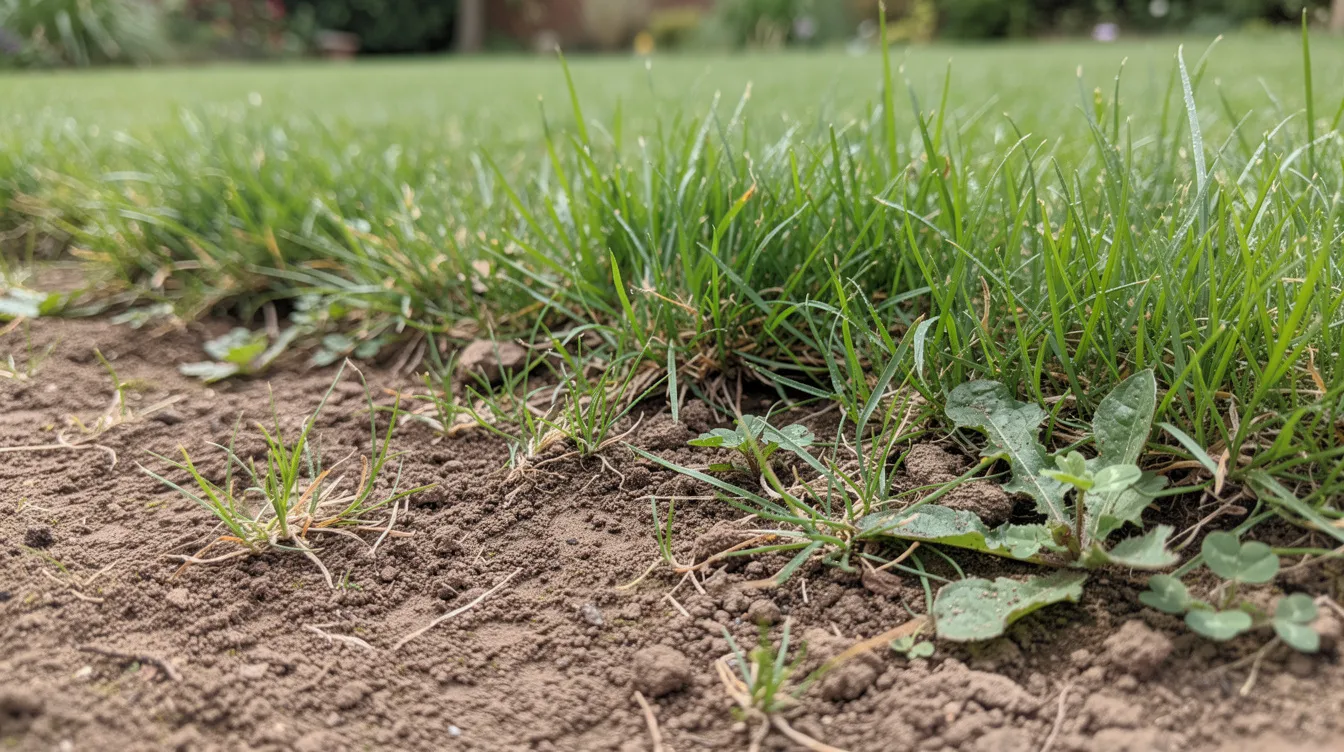
A patchy lawn typically shows as areas of bare soil, brown patches, or thin grass cover where density has dropped below 70–80%. Before reaching for any lawn seed or fertiliser, understanding the cause is essential. Treating symptoms without fixing the root problem fails roughly 80% of the time.
Moss is one of the biggest culprits in UK lawns, especially after a wet winter. The 2023–2024 season saw 20% more moss reports than average due to heavy rainfall. Moss forms dense mats that acidify soil and block light and water from reaching grass roots, leading to thin and patchy grass by late spring.
Compacted soil is another major issue. Around 60% of UK gardens have compacted clay soil that restricts roots to the top 5cm, causing weak growth and persistent bare patches in high-traffic spots. Poor drainage can lead to water pooling in low-lying areas, which also contributes to patchy grass growth. A nitrogen deficiency in the soil can result in patchy lawns, as grass requires adequate nutrients for healthy growth.
Pet damage, particularly dog urine with its high nitrogen concentration of 2–4%, burns grass and creates 30–50cm yellow-brown patches. These spread quickly if not treated. Compacted soil from freeze-thaw cycles, heavy rain, and poor drainage can also lead to patchy lawns over time.
UK weather extremes play their part too. Summer drought conditions can cause patchy areas, especially if the grass is not drought-tolerant. Waterlogging after heavy rain drowns grass roots, and frost damage leaves dead or patchy grass through March and April. Pests such as leatherjackets and beetle grubs can damage grass roots, resulting in bare spots in the lawn.
Poor seeding in previous years, using cheap lawn seed at low rates without top dressing or watering, results in thin, open swards. Fungal diseases like red thread or fusarium show as discoloured patches following stress or poor feeding. Conducting a soil test is essential before starting lawn preparation, as it provides valuable information on nutrient levels and soil health, guiding the necessary amendments for optimal growth.
Identifying the main cause guides which repair steps matter most throughout this guide.
Why Most DIY Lawn Fixes Fail
Many UK homeowners try to fix patchy lawns each spring, yet surveys show 65% attempt fixes but 70% report no lasting improvement by summer. Understanding why helps avoid the same mistakes.
Using random products without a plan is the first problem. Grabbing any grass seed or feed from garden centres often means using generic mixes with up to 50% weed-prone fillers. These yield 40–50% germination compared to 80–90% from quality ryegrass-fescue blends.
Bad timing ruins many attempts. Sowing grass seed too early in March when soil is under 10°C sees 60% failure as seeds rot. July heatwaves dry topsoil in 48 hours, with germination failure rates reaching 70%.
Many people scatter seed without fertiliser, so seedlings lack nutrients and never thicken properly. Studies show 75% of new seedlings thin out without post-seeding feed.
Poor watering habits also derail repairs. Heavy watering once a week washes 30–50% of seed away. Forgetting to water entirely lets the top 1–2cm of soil dry out, killing 90% of embryos.
Overseeding alone often fails because seed sits on top of thatch and debris with no soil contact. Overseeding is a common method to repair bald spots in lawns, where grass seed is spread across existing grass to fill in thinning areas, and it works best when at least 50% of the lawn is still healthy. Without proper preparation, patchy germination leads to more bare patches later.
Skipping preparation steps like raking, scarifying, aeration, and top dressing is omitted in 80% of DIY attempts. Structured prep boosts success rates to 85%.
Step-By-Step: How To Fix A Patchy Lawn Properly
This core step by step guide can be completed over a weekend, with visible changes in 7–28 days. The process follows a simple sequence: prepare the lawn, improve soil contact, apply lawn seed and fertiliser, then water and maintain correctly.
This guide works whether you are fixing small bare spots or a generally thin lawn, as long as at least 40–50% still has live grass. All steps suit typical UK cool-season grasses such as perennial ryegrass and fescues. For best results, start on a dry Saturday in late April or mid-September.
Step 1: Mow Your Lawn Shorter Than Usual
Mowing is the first step because shorter grass gives lawn seed more light and helps seedlings reach the soil surface. Mow the lawn slightly lower than normal, reducing from around 5cm to about 3cm height.
Collect clippings in the mower box and remove them so they do not block seed reaching the ground. Raising the mower cutting height during dry spells prevents scalping, with recommended grass height between 25mm and 50mm for regular mowing.
Avoid mowing when grass is wet or frosty, as this tears turf and worsens existing bare patches. This lower cut is a one-off preparation for seeding. Return to a higher cut once new grass is established.
Step 2: Rake or Scarify to Remove Thatch and Moss
Removing thatch, dead grass, and moss is essential because it lets new grass seed touch the soil. To prepare for overseeding, it is essential to remove weeds and thatch, as these can compete with new grass for nutrients and water, ensuring better establishment of new seedlings.
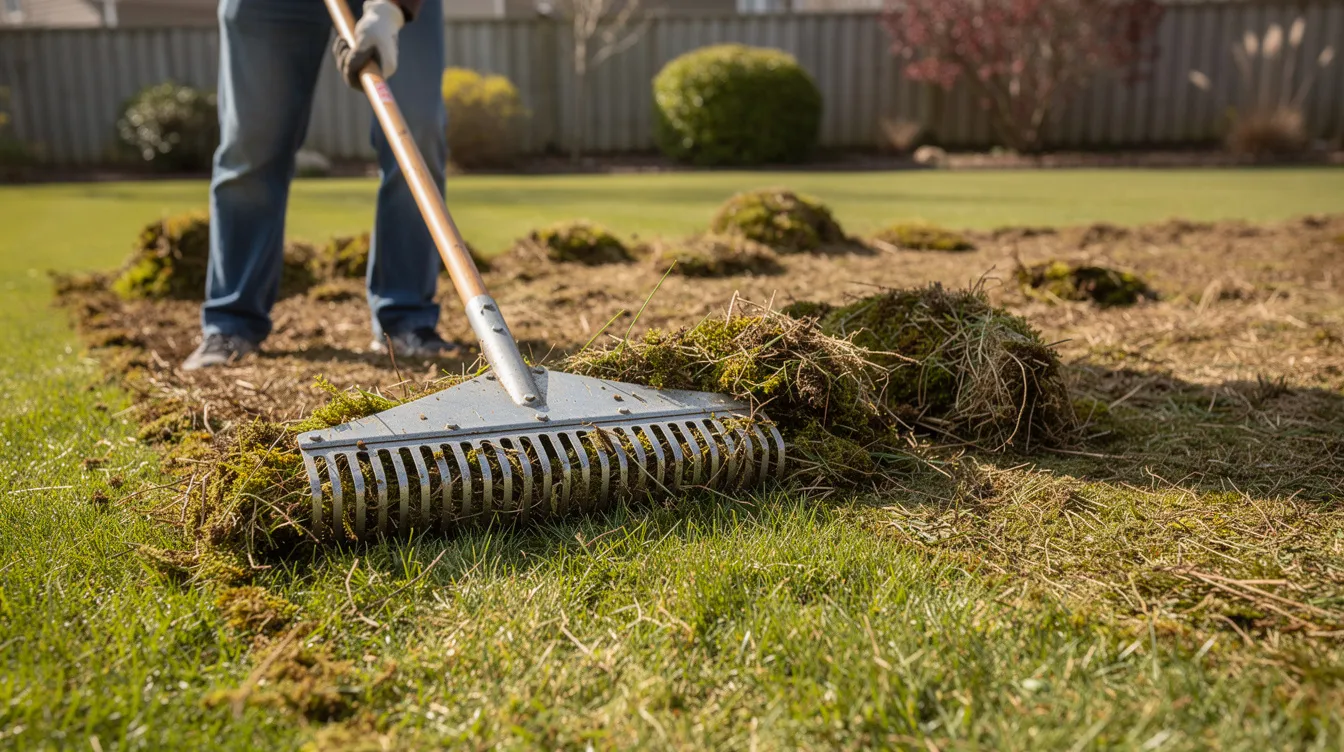
Use a spring-tine rake for small UK gardens, pulling firmly to lift dead material from brown patches and thin areas. To prepare the soil effectively, it is recommended to remove thatch if it exceeds 2cm in thickness, as this spongy layer can prevent water and nutrients from reaching grass roots.
For larger lawns or heavy moss, use a scarifier set to a gentle depth of 3–5mm to avoid ripping up healthy turf. Scarifying removes dead grass, aerating improves root health, and applying top-dressing ensures good seed-to-soil contact.
Work in two directions (north–south then east–west) to open the lawn surface evenly. Collect and remove all raked debris so bare areas are clearly exposed and ready for seeding.
Step 3: Improve Soil Contact with Aeration and Light Top Dressing
Compacted soil under patchy lawns blocks grass roots, water, and air. Loosening it helps repair last longer.
Aeration is a crucial lawn preparation technique that involves perforating the soil with holes to allow air, water, and nutrients to penetrate down to the roots, promoting healthier grass growth. Use a garden fork to spike compacted or high-traffic areas near a patio or washing line, pushing tines 7–10cm into the soil every 10–15cm. For larger lawns, a rolling or hollow-tine aerator creates many small holes across the whole lawn.
Apply a thin layer of topsoil or a specialised lawn dressing to improve soil quality. Top dressing with sandy loam or ready-made lawn top dressing fills aeration holes and bare patches. This levels small dips, improves drainage, and gives each seed a better bed to germinate.
Apply lightly, no more than 0.5–1cm deep, so existing grass tips remain visible through the layer.
Step 4: Apply Quality Grass Seed Evenly
The quality of grass seed greatly affects how quickly and thickly the patchy lawn recovers. Use a UK-appropriate seed mix with perennial ryegrass and fescues, matching sun or shade conditions across the garden.
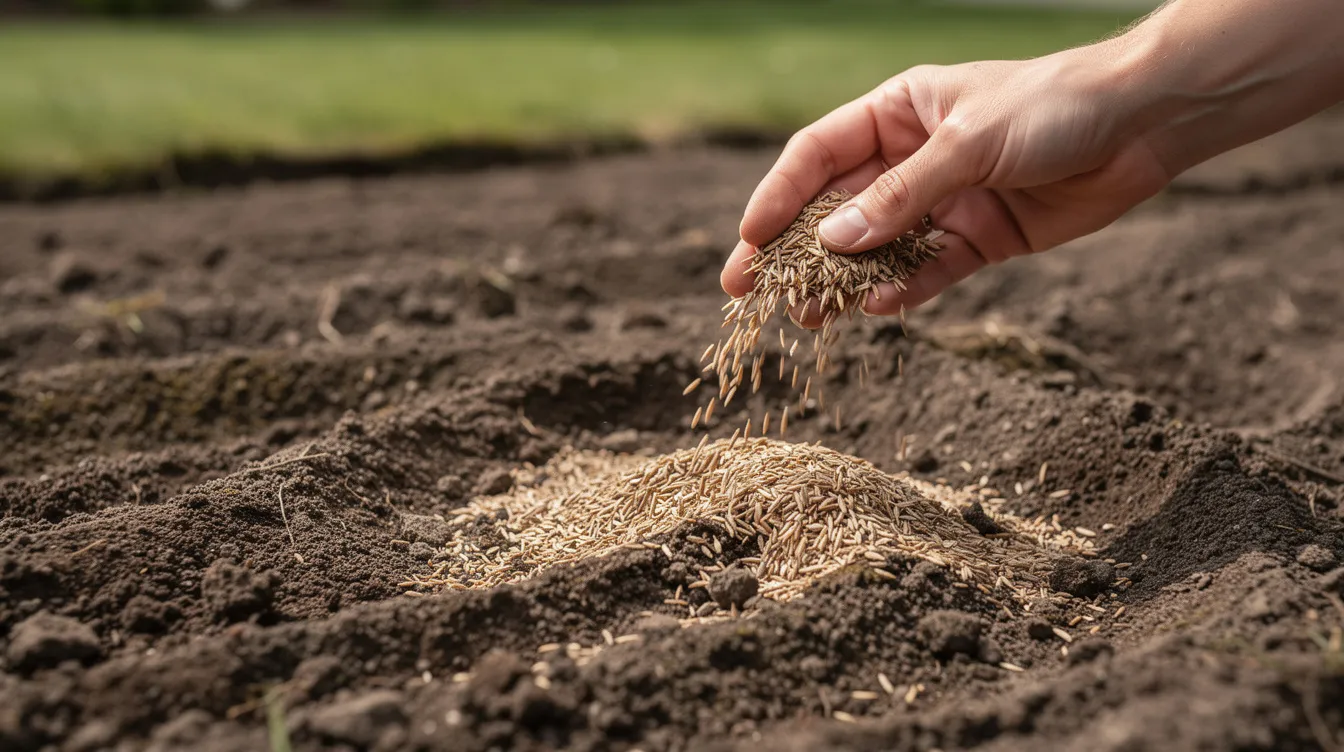
To thicken lawns and improve overall density, grass seed can be applied across the entire lawn, including thin areas. For overseeding rates, apply around 25–35g of grass seed per square metre for general patchy lawn repair, with a slightly higher rate on bare patches. A seed-to-soil ratio recommended for good coverage without overcrowding is typically 3–5 grams per square metre for light maintenance.
Use a handheld or drop spreader for even coverage on larger areas. Sow by hand for smaller patchy spots where precision matters.
Lightly cover the seed by raking after sowing so most seeds drag into contact with the top dressing and soil surface rather than sitting on debris. Seeds should remain just visible, not buried deeply, for quick and even seed germination.
Step 5: Add Fertiliser to Feed New Growth
Fertiliser gives new seedlings the nutrients they need to thicken bare patches quickly. Use a balanced, slow-release lawn fertiliser suitable for the current season and follow the bag’s UK application rate, typically 25–30g per square metre.
Applying fertiliser at or just after seeding supports root development in weeks 1–4, helping patchy grass fill out faster. Slow-release formulas cut nutrient leaching by 50%.
Avoid over-applying, which can scorch grass and worsen brown patches. Measure the area before spreading and use a spreader for even application. Avoid fertiliser overlap along lawn edges or paths.
Step 6: Water Correctly for the First 4 Weeks
Watering is where many patchy lawn fixes fail. Newly sown grass needs consistent watering, not occasional soaking.
Keep the top 1–2cm of soil slightly damp by watering lightly once or twice a day in dry weather for the first 10–14 days. In typical UK spring or autumn conditions, natural rain may help, but check daily and water if the soil surface looks dry.
Use a fine spray or sprinkler so water does not dislodge new seeds from bare patches or cause puddles that lead to fungal diseases. Gradually reduce watering frequency after seedlings reach 3–4cm tall, switching to deeper, less frequent watering to encourage deep grass roots.
Keep foot traffic to a minimum on newly repaired areas during the first 3–4 weeks to prevent damage to young grass plants.
Step 7: First Mow and Ongoing Patchy Lawn Maintenance
The first mow after seeding is a key milestone, usually around 3–4 weeks after seed germination in UK conditions. Mow when new grass reaches about 7–8cm in height, trimming back to around 5–6cm with sharp mower blades.
Cut no more than one-third of the grass height in a single mow to avoid stressing young plants and causing new brown patches. Continue with regular mowing, light feeding, and occasional raking through the season to keep the lawn thick.
Any missed bare spots can be re-seeded using the same method on a small scale, especially if identified early in active growth periods.
Best Time To Repair A Patchy Lawn In The UK
Timing affects soil temperature, seed germination speed, and overall success. The best time to repair lawns is in the spring (April–May) or early autumn (September), when the weather is damp and cool. The best time to repair cool-season lawns is in the spring and fall, as these seasons provide the most favourable conditions for growth.
Grass seed needs soil temperatures of around 8–10°C or higher to germinate, which usually occurs from mid-spring through early autumn across the UK. A good rule of thumb for lawn repair is to wait until the ground temperature reaches at least 10°C, which typically occurs after the first cut of the season when the lawn has started to grow.
Avoid repairing when frost is likely, typically before late March. Seeds can rot or fail to sprout. Extreme summer months with heatwaves and drought make it difficult to keep soil moist, slowing germination.
Autumn overseeding often produces strong results because soil is warm from summer, air is cooler, and rainfall is more reliable. For warm-season grasses, the ideal time to repair bare spots is during the summer when grasses are actively growing.
Choose a 4–6 week window within these seasons when you can commit to regular watering and minimal foot traffic.
What Results To Expect (Week 1–4)
Setting realistic expectations helps judge if repair is on track. Here is what to expect:
|
Week |
What You Should See |
|---|---|
|
Week 1 |
Seeds settling and sprouting. Fine green shoots appear in bare patches after 7–10 days if soil stays moist and warm |
|
Week 2 |
More uniform germination across thin areas. Bare patches filling in with light green new growth contrasting older grass |
|
Week 3 |
New grass reaching 5–7cm height. Lawn looking noticeably thicker. Brown patches shrinking as seedlings knit together |
|
Week 4 |
First or second mow completed. Lawn more even in colour and density. Some thinner areas may still be visible close up |
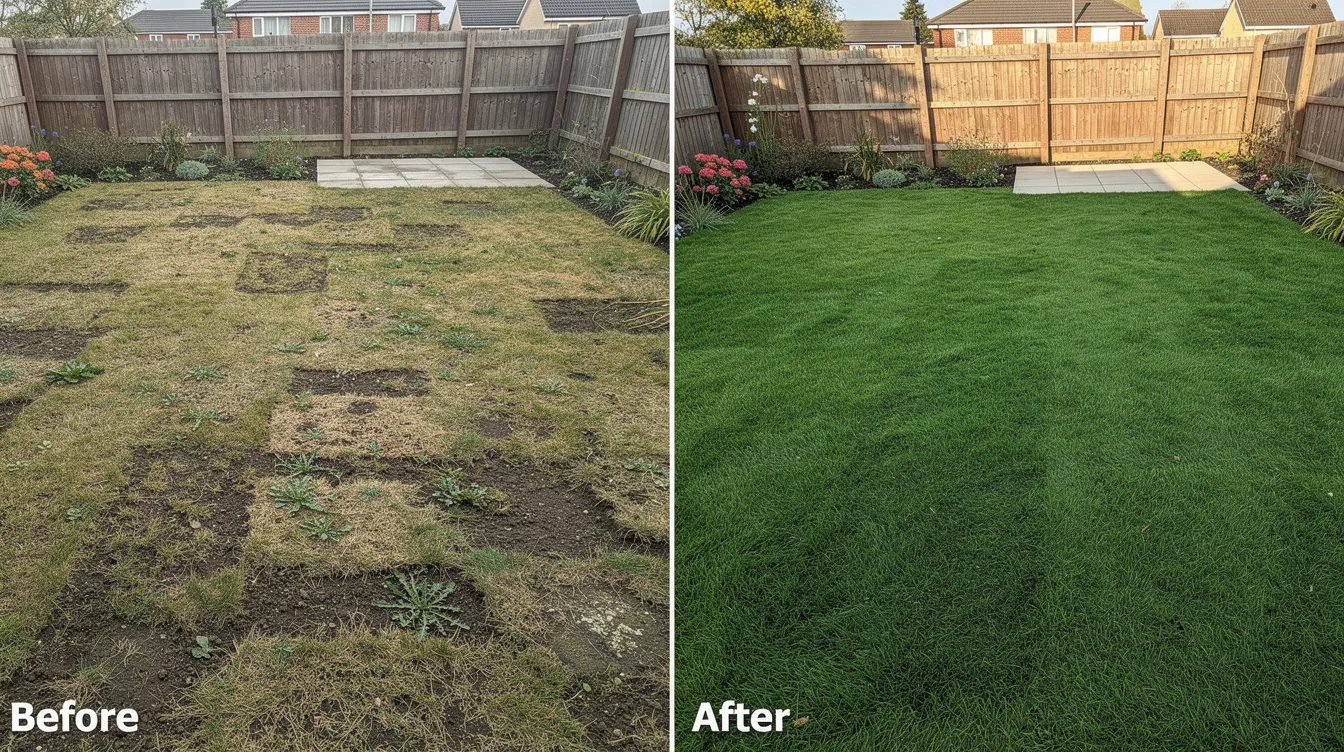
By week 4, most UK homeowners should see 60–80% improvement if they followed mowing, seeding, and watering steps correctly. Full thickening of stubborn damaged patches may take 6–8 weeks after severe damage.
Watch for yellowing seedlings from overwatering or dry cracked soil. Adjust watering and feeding rather than abandoning the repair.
Why GREENER Works Differently
Device Authority’s GREENER system offers a complete, simple way to follow the proven patchy lawn repair process without guesswork. Instead of buying separate garden products, the GREENER Transformation Kit brings everything needed into one box designed for UK lawns.
LAUNCH is a premium, fast-germinating lawn seed blend tailored to UK conditions, ideal for overseeding thin lawns and filling bare patches quickly with 5–7 day germination.
GROWTH provides seasonally adjusted fertiliser with the right nutrients at the right time to support new seedlings and revive dead-looking grass.
BOOST is a liquid biostimulant that improves root development by 25% and stress tolerance, helping new grass establish in patchy areas even in challenging soil conditions.
POWER is an iron-based treatment controlling moss and deepening lawn colour, tackling one of the main causes of patchy lawns in damp UK gardens.
GREENER gives a clear step by step guide matching this article’s process. Beginners can repair a damaged lawn in under an hour of application time. Coverage suits a typical 100m² UK garden with home delivery and simple instructions.
GREENER focuses on process as well as products, ensuring the right order of prepare, feed, seed, and boost. This is why results are more consistent than ad-hoc DIY attempts.
Final Verdict: The Easiest Way To Fix A Patchy Lawn
Most patchy lawns in the UK are fixable with proper preparation, quality grass seed, sensible feeding, and consistent watering. The key is following a clear system: mow, rake or scarify, aerate and top dress, overseed, fertilise, then water correctly for the first month.
Laying sod is one of the fastest methods to repair a lawn, providing immediate results, but it requires proper care and must be kept moist until roots establish. For most homeowners, overseeding remains the practical choice.
Homeowners who feel unsure, short on time, or tired of failed DIY attempts can rely on a complete UK-designed lawn system instead of piecing products together. Device Authority’s GREENER kits are the most straightforward way to apply this method, giving everything needed plus a simple step by step plan.
Take action in the next suitable season. Whether using the detailed process from this article or the GREENER system, you can transform a patchy lawn into a thicker, greener, healthier space in a few weeks.
FAQs
Can patchy grass recover on its own?
Mildly thin areas may thicken slightly in spring during active growth, but true bare patches rarely recover without reseeding or new turf repair. If soil is compacted, shaded, or nutrient-poor, doing nothing usually leads to more weeds and moss. Any new patch larger than a side plate or staying brown for more than 4–6 weeks in growing season should be treated using overseeding steps.
Will grass seed grow on a patchy lawn without top dressing?
Grass seed can germinate on an existing lawn if it touches soil, but success rates double when a thin layer of sandy loam or lawn top dressing is used. Top dressing fills gaps, improves seed-to-soil contact, and reduces drying. For damaged patches and thin lawn treatment, even a very light layer over the seed maximises germination and even coverage.
How long does lawn repair usually take in the UK?
Homeowners normally see clear improvement in 2–4 weeks after overseeding, with full thickening of stubborn bare areas taking 6–8 weeks. Cooler temperatures or missed watering slow progress, while good moisture and feeding speed it slightly. If nothing changes after 3–4 weeks in spring or early fall, review seed quality, soil contact, and watering routine.
Is spring the best time to repair patchy grass, or should I wait for autumn?
Both spring (April–May) and early autumn (September–early October) are excellent for patchy lawn repair. Spring repairs give faster cosmetic improvement for summer, while autumn overseeding often produces deeper root systems over winter. Choose the next window when you can commit to regular watering and minimal foot traffic for 4 weeks.
Why does my lawn keep going thin and patchy every year?
Recurring patchiness usually points to underlying issues such as persistent moss, heavy shade, compacted soil, or poor feeding and mowing habits. Check for drainage problems, pet damage, and worn routes through the yard. Using a soil test before lawn repair can provide valuable information on nutrient deficiencies and soil conditions. Following a structured system like GREENER’s prepare, feed, seed, and boost cycle each season is the easiest way to break the cycle of yearly patchy lawn problems. A power rake can help remove heavy debris and mulch buildup affecting the ground. Consider grass type and whether trees or buildings create too much shade for healthy spread and growth, as some areas may benefit from shade-tolerant varieties or alternative ground cover rather than fighting against poor appearance year after year.


