


Key Takeaways
-
Fertilise your lawn only when soil temperature is consistently above 8–10°C and the grass is actively growing, usually from late March to September in the UK.
-
Use the right fertiliser for the season: a nitrogen rich feed in spring, a balanced slow release lawn feed in summer, and a low-nitrogen, high-potassium autumn product.
-
Good lawn care matters: mowing, aeration, scarifying, weed control and moss killer help fertiliser reach the roots and work properly.
-
Most established lawns need two feeds a year, in spring and autumn; ornamental lawns may need 4–5 lighter feeds.
-
Never feed frozen, waterlogged, drought-stressed or dormant turf, as this wastes nutrients and can damage the lawn.
Introduction: Why Fertilising Your Lawn Matters
Fertilising your lawn replaces nutrients removed by mowing, rain and everyday use. Done well, it supports healthy growth, better colour and stronger recovery after wear.
Lawn fertiliser and lawn feed mean much the same thing: both supply essential nutrients such as nitrogen, phosphorus and potassium to turf. A well-fed lawn is thicker, greener and better able to prevent weeds, moss and drought damage.
This guide covers when to fertilise lawn areas, how often to feed, which product to choose, and how fertilising fits with mowing, moss control and regular maintenance.
Understanding Lawn Fertiliser & Lawn Feed Basics
Lawn fertiliser gives grass the food it needs in a typical UK garden, where nutrients are gradually lost from the soil. The NPK ratio represents the percentage of Nitrogen (N), Phosphorus (P), and Potassium (K) by weight.
Nitrogen (N), phosphorus (P), and potassium (K) are essential nutrients for lawn health, with nitrogen promoting leaf growth, phosphorus supporting root development, and potassium enhancing disease resistance. Put simply: nitrogen promotes green leafy growth, Phosphorus builds deep roots, and Potassium aids in disease resistance and heat tolerance. Potassium strengthens cell walls, which helps protect grass from disease, frost and summer stress.
Typical seasonal choices are:
-
Spring/summer: higher nitrogen, moderate phosphorus and potassium for green colour and grass growth.
-
Autumn: low nitrogen, higher potassium and phosphorus to improve root strength before winter.
Fertilisers come in two main forms: quick-release and slow-release, each serving different purposes for lawn care. Organic products help build healthy soil by feeding soil microbes, but they work best when the ground is warmer. Synthetic feeds act faster and are often more cost effective, though over fertilising can cause scorch if you use too much.
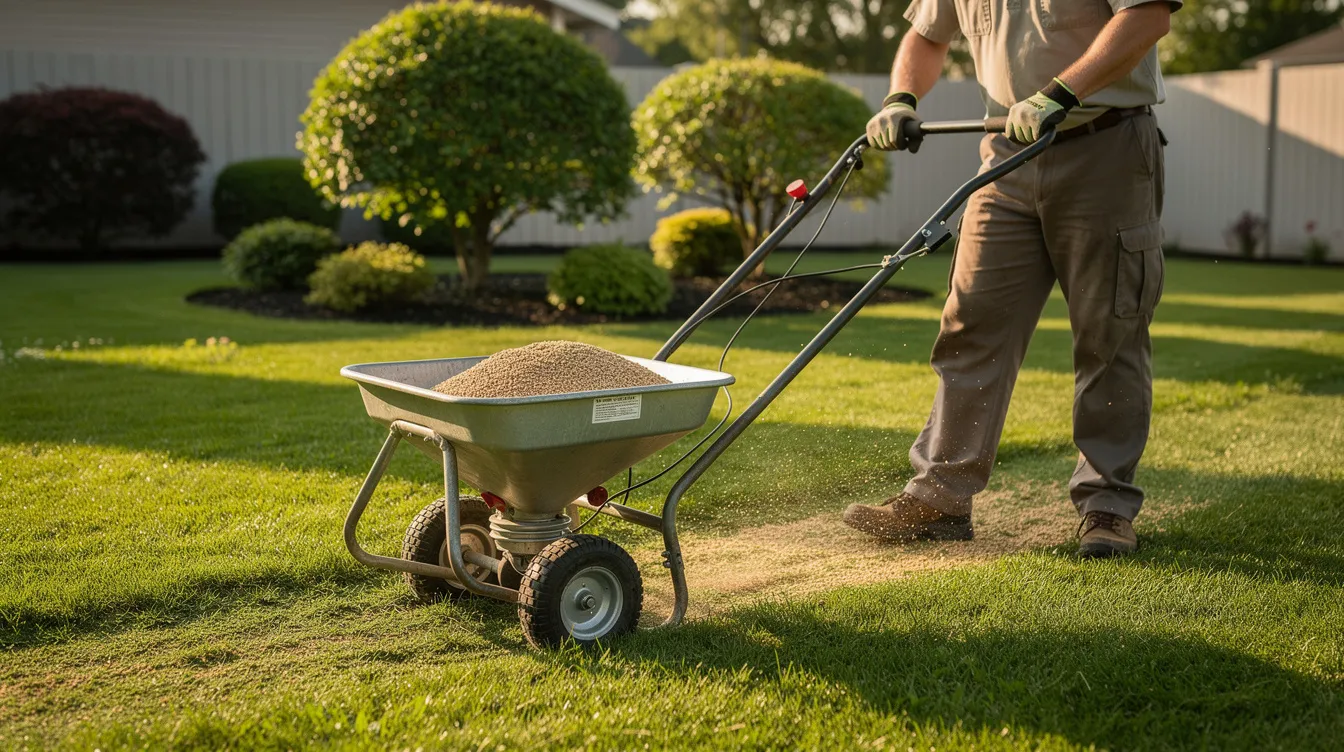
Granular feeds, liquid feeds, slow release fertiliser, quick-release products and “weed, feed and moss killer” mixes all have a place across a wide range of lawn needs. The right fertiliser depends on lawn condition, grass type, season and weather conditions. Soil testing is also worth doing first to check nutrient levels and pH. What suits your lawn depends on whether you want fast results, feeding over several months, or extra help for new turf and root growth. The best way to apply fertiliser also varies by product type: use a spreader for granular feeds and a sprayer for liquid feeds.
Check Soil Temperature and Conditions Before You Fertilise Your Lawn
Timing should follow growth, not just the calendar. Feeding dormant, diseased or stressed grass is counter-productive, so avoid scorching by skipping it in hot, dry weather when grass can turn brown.
Before applying fertiliser, ensure that soil temperatures consistently reach around 8–10°C and that the lawn shows clear signs of active growth, typically between mid-March and late April in the UK. In southern England this may be mid-March to late April; in northern England and Scotland it may be late March to early May. Your lawn treatment schedule should also reflect grass type: cool-season lawns grow most strongly in spring and autumn, while warm-season grasses need feeding in summer, with heavier nitrogen in peak heat, while cool-season turf usually responds best to a balanced or nitrogen-rich feed in spring and autumn to keep the lawn healthy.
If you do not have a thermometer, use simple cues: the lawn needs mowing weekly, new shoots are visible, and signs such as yellowing, browning, moss or thinning may indicate nutrient deficiency, though drought stress can also make grass turn brown, so wait until moisture and growth recover. Scarify before feeding so water and nutrients can reach the roots more effectively. Do not use fertilisers made for crops or other plants on lawns, as the nutrient balance can be wrong for turf.


