


Key Takeaways
-
The optimal times to feed and weed your lawn are in spring (March–April) and autumn (September–October), with most weed control running from late April through September.
-
It is usually more effective to feed your lawn and build grass density first, then spot-apply weed killers, rather than relying solely on combined weed and feed products.
-
The GREENER Transformation Kit is ideal for patchy, mossy or thin UK lawns, combining PM 51 Greenscape seed, pre-seed fertiliser with mycorrhizal inoculant, moss treatment and seaweed biostimulant.
-
Autumn application builds strong roots before winter, while spring feeding focuses on rapid green-up and recovery.
-
Always follow the manufacturer's instructions, avoid overuse of herbicides, and keep children and pets off the lawn until treatments are dry or watered in.
Introduction: Why Timing Matters For Feeding And Weeding Your Lawn
Knowing when to feed and weed grass is the difference between a lawn that thrives and one that limps through each season. Lawn feed supplies the necessary nutrients your grass needs to grow thick and green, while lawn weed control - whether by hand or herbicide - removes the plants competing for those same resources. In the UK's cool, often wet climate, getting the calendar right matters more than the amount of product you use. This guide covers exact months for feed application, when to apply weed control, and how to combine both into a simple annual plan. For lawns struggling with weeds and moss, bare patches or thinning, the GREENER Transformation Kit offers an all-in-one renovation solution built for UK conditions.
When To Feed Your Lawn For Best Results
Applying lawn feed is mainly done twice a year in the UK: early spring and early autumn, with an optional lighter summer top-up. Thin, patchy lawns often require additional nutrients to recover. Here is what each window should achieve.
Early Spring Feeding (March–April)
Wait until the grass is actively growing to apply fertiliser in early spring - typically when soil temperatures reach around 8–10°C. Mow the lawn before applying fertiliser for effective results, and give the grass its first trim of the season a day or two beforehand. Spring lawn feeds are high in nitrogen for growth, helping the lawn outcompete early weeds and repair winter damage. Apply fertiliser in early spring to promote strong leaf growth and consistent growth through April and May.
Apply granular products when the soil is moist to avoid burning the grass. If no rain is forecast within 48 hours, water the granular lawn feed in yourself. Fast-acting lawn feeds show results within 24 hours, but slow-release options reduce the risk of forcing soft, disease-prone grass blades. Lawns with bare patches after winter benefit from overseeding with PM 51 Greenscape seed from the GREENER Transformation Kit alongside this feed.
Feeding Through Summer (May–August)
Many UK lawns do not need heavy feeding in late summer. A light, slow-release granular feeds application in May or June can maintain colour, but avoid applying weed-and-feed products during hot, dry weather - fertiliser can scorch dry grass without adequate moisture. In hot spells, raise mowing height to shade roots and hold back on feed.
A liquid biostimulant like the BOOST seaweed component in the GREENER Transformation Kit supports stress tolerance without forcing excessive growth. High nitrogen content in weed and feed promotes faster grass growth, which is useful in May but risky during July heatwaves.
Autumn Application (September–October)
Autumn applications should be done in September or early October, when soil is still warm but rainfall increases. Autumn lawn feeds promote root growth and harden grass for winter. Autumn feeds are high in phosphates and potassium to promote root growth rather than lush top growth. Moss killer products contain iron to promote grass growth and can be applied now alongside feed to kill moss before winter sets in.
This is also the prime window for full lawn renovation. Scarify, treat moss, overseed and apply a pre-seed fertiliser for long-term improvement. The GREENER Transformation Kit combines POWER moss treatment, GROWTH fertiliser with mycorrhizal inoculant, and PM 51 Greenscape seed - everything needed to rebuild a tired existing lawn in one go. A proper autumn application reduces winter thinning and helps your garden lawn green up faster the following spring.
When To Apply Weed Control To Your Lawn
Successful weed control depends on weeds being actively growing, so timing differs slightly from feeding. Weeds thrive in weak, nutrient-poor lawns, which is why healthy grass growth is your first line of defence. Most selective lawn weed killers work best from late April through September, when temperatures stay above roughly 10–12°C.
Spring Weed Control (Late April–June)
Weed and feed products are best applied during spring when weeds are actively growing. Apply weed and feed in early spring, March to April, though late April to June is often more effective because pesky weeds like dandelion, clover and creeping buttercup have developed enough leaf to absorb the product. Applying weed killer is most effective on dry, actively growing weeds - avoid treating before weeds have sufficient foliage. Weed and feed products are best applied before weeds germinate and set seed, so acting in this window prevents them from spreading. Weed and feed products can kill weeds within 3–5 weeks of a successful application.
After treatment, delay mowing for three days so liquid weed killers or granular herbicide can translocate into roots. Keep pets and children off treated areas until the product label confirms it is safe.
Summer Weed Control (July–August)
Summer weed treatments can work, but avoid applying when the lawn is brown and dormant. Water the lawn a day before you apply weed control in dry spells so weeds are actively growing. Rely more on hand weeding and spot treatment during summer, especially on smaller gardens, to minimise chemical use. Regular mowing at the correct height weakens many annual weeds and prevents them allowing weeds to seed heavily. Newly seeded or recently renovated areas should not receive weed killer until the existing grass has been mowed several times.
Autumn Weed Control (September)
Early autumn offers a second chance to tackle perennial weeds that survived spring treatment. Weeds are still actively growing in September, so selective herbicides reach the roots before growth slows. Combining light weed control with autumn feeding and overseeding closes gaps where weeds would re-establish. Avoid applying most weed products after early October when weather starts to cool and the lawn is slowing down. A thick, overseeded lawn rebuilt with PM 51 Greenscape seed is far less likely to suffer significant weed pressure the following year - eliminating weeds becomes easier when healthy growth fills every gap.
Should You Weed Then Feed, Or Feed Then Weed?
There is no single rule, but for most home gardens it is more effective to feed your lawn and thicken the turf first, then tackle remaining weeds. Lawns with more weeds than grass need feeding to recover before herbicide treatments make sense. Feeding and overseeding crowds out minor weeds without chemicals, reducing how often you need to apply weed and feed.
However, if broadleaf weeds cover more than half the lawn, controlling weeds first removes competition before renovation. For pet owners and families, using weed and feed products separately on different days gives more control over safety.
Using Combined Weed And Feed Products
Weed and feed products combine fertiliser and herbicide into a single granular application. Weed and feed products fertilise grass while controlling weeds, and weed and feed can reduce the need for separate treatments - a genuine convenience. You can apply weed and feed every 6 to 8 weeks during growing seasons, though most lawns only need one or two applications per year. Weed and feed can help prevent weeds from establishing in lawns when used in the right windows.
The drawback: you may end up applying herbicide when few weeds are present, or feed products at the wrong time purely to target weeds. Limit using weed and feed to late April–May and early September for best results.
Separating Feeding And Weeding For Healthier Lawns
Applying lawn feed on its own in March–April and September–October lets you choose exactly the right nutrient balance. Weed killer can then be used only where needed, saving money and reducing environmental impact. A simple sequence in spring: feed first, wait 7–10 days, then apply a selective weed killer if the lawn is actively growing.
After heavy weed infestations are cleared, overseed bare patches promptly so grass - not new weeds - fills the space. For lawns with many bare patches after weeding, the GREENER Transformation Kit provides seed, fertiliser, moss treatment and biostimulant to close gaps quickly and build a weed free lawn over time.
Simple Seasonal Plan: When To Feed And Weed Grass In The UK
Consistently following a simple annual schedule delivers better results than irregular quick fixes with strong feed products. Below is a month-by-month outline for an average UK lawn in good shape or needing moderate improvement.
Month‑By‑Month Outline
|
Months |
Key Actions |
|---|---|
|
March–April |
First mow and first trim of the season. Apply spring lawn feed (high nitrogen). Light raking. Overseed thin patches. |
|
May–June |
Apply weed control to actively growing broadleaf weeds. Optional light feed if grass looks pale. |
|
July–August |
Raise mowing height. Spot weed only. Avoid heavy feed application. Use liquid biostimulant if needed. |
|
September–October |
Autumn application of lawn feed (high potassium). Moss treatment. Scarify. Overseed broadly. Best window for full renovation with the GREENER Transformation Kit. |
|
November–February |
Minimal intervention. Clear leaves and debris. No feeding or weed treatment - grass is dormant in winter. |
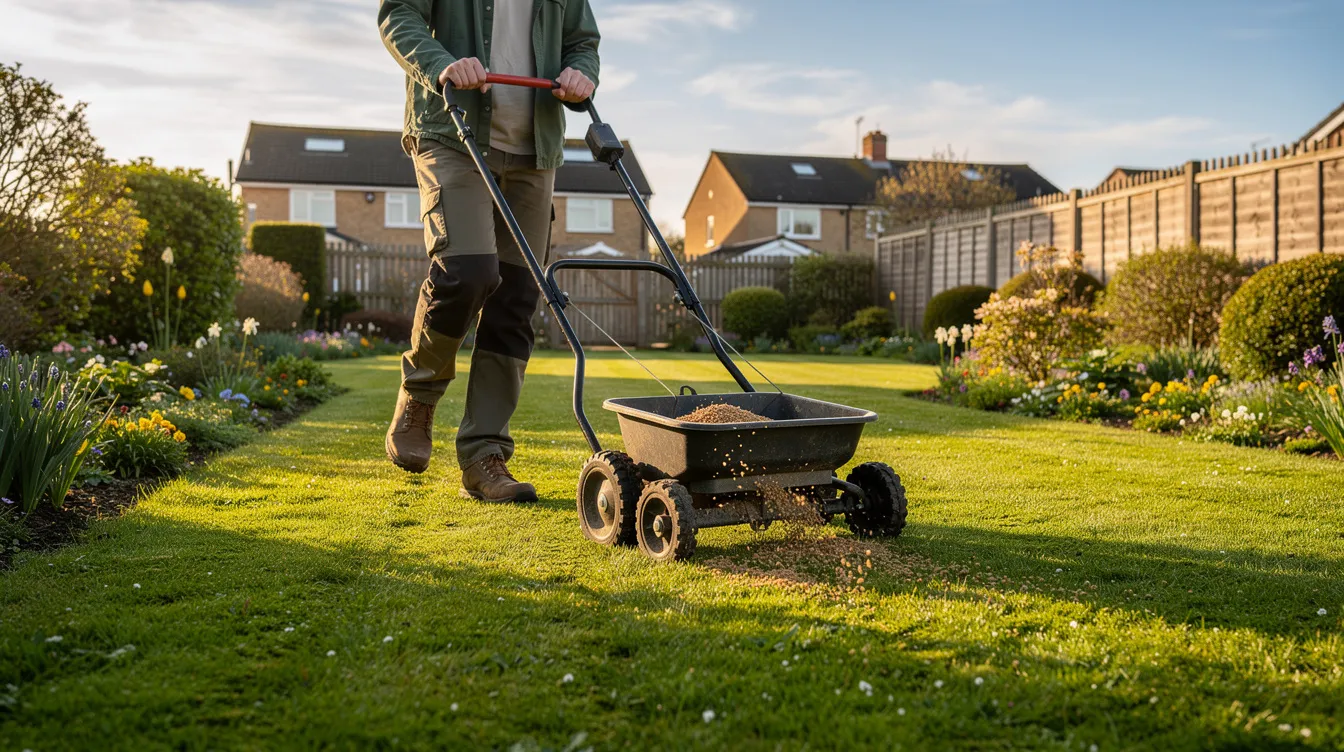
Use a spreader to apply weed and feed evenly, and apply 30–35g of product per square metre as a general benchmark. Always check the product label for exact rates. Keep a simple lawn care diary so you can repeat successful timing year after year.
Common Mistakes When Applying Weed And Feed Products
Common problems include applying lawn feed too often, using weed killer on drought-stressed or newly seeded grass, and spreading product just before an unexpected downpour washes everything away. Overuse of nitrogen leads to soft, lush grass that is vulnerable to disease and needs constant mowing.
Failing to calibrate a spreader or guessing quantities causes stripes and uneven weed control. Always check the weather forecast, measure your lawn area accurately, and stick to the rates on the packaging. Apply weed and feed in early spring or autumn - never on frozen or waterlogged soil.
Safety For People, Pets And Wildlife
Most modern lawn feed and weed products are safe when used as directed. Wait 48 hours before using the lawn after application, or until granular feeds are fully watered in and liquid treatments have dried. Store all products in original containers, locked away from children and pets. Minimise chemical use near ponds, wildflower patches and hedgehog habitats - prioritise hand weeding and overseeding in those areas. Dispose of empty packaging responsibly and never pour leftover concentrate into drains.
Conclusion: Building A Healthier, Low‑Weed Lawn Over Time
Correct timing of feed application and weed treatments leads to a greener, thicker lawn that naturally resists weeds and moss. Early spring and early autumn are the key feeding windows. Most weed control sits between late April and September, when weeds are in active growth. Combining proper feeding with overseeding and moss management is more sustainable than repeatedly relying on strong weed and feed products alone. New lawns should not receive weed killer within two to four weeks of planting - focus on gentle feeding and watering first.
For anyone dealing with patchy, mossy or tired lawns, the GREENER Transformation Kit provides a clear, step-by-step renovation path designed specifically for UK conditions. Visit the product page today to start planning your next feed and weed cycle and transform your lawn this season.
Frequently Asked Questions
How soon after applying weed killer can I feed my lawn?
Most selective weed killers require a gap of at least 7–14 days before you feed lawn weed-treated areas. Wait until the lawn looks stable and is actively growing again, then apply a balanced fertiliser. With combined weed and feed products, the timing is built in - but do not reapply either feed or weed product for several weeks afterwards.
Can I apply weed and feed to a newly seeded or newly laid lawn?
Most weed and feed products should not be used on lawns less than six months old, and never on fresh seed before germination. Herbicides damage young grass plants and may stop lawn seed from germinating. Use dedicated pre-seed fertilisers and quality seed - such as those in the GREENER Transformation Kit - for new or renovated lawns.
What is the best weed and feed product for UK lawns?
There is no single best weed and feed for every lawn, because soil, shade, use and weed types all vary. Prioritise an overall lawn care programme - feeding, overseeding, moss control and correct mowing - over chasing one miracle product. Use something like the GREENER Transformation Kit as your foundation and add targeted weed controls only where needed.
Is it okay to leave some weeds in my lawn for wildlife?
Many UK gardeners now tolerate low-growing lawn weeds like daisies and clover for bees and pollinators. Keep main play areas relatively weed-free, but allow quieter sections to be less intensely managed. A healthy, well-fed lawn still supports wildlife if mowing height is a little higher and chemicals are used sparingly.
How do I know if my lawn needs feeding or if the problem is something else?
Pale yellowish or brown grass indicates a need for feeding, as does slow growth despite adequate rain. Contrast this with localised brown patches from pet urine or compacted soil causing puddling. Start with a modest, season-appropriate lawn feed and improved cultural practices like aeration and correct mowing - seek expert advice if discoloured patches do not respond within a few weeks.


