


Every lush green lawn starts with one decision: which seeds to grow grass should you actually buy? The answer depends on far more than price. Get the species right, prepare the ground properly, and sow at the right time, and even a tired, patchy garden can be transformed within a single growing season. Get it wrong, and you'll be reseeding next year. This guide breaks down exactly how to choose, sow, and look after grass seed so your lawn delivers the results you want.
Key Takeaways
-
The best grass seed for your lawn depends on how it is used, your soil type (including clay soil), and how much light the area receives - not just marketing labels or price.
-
Overseeding an existing lawn with the right lawn seed is usually faster, cheaper, and more effective than stripping everything back and starting from scratch.
-
Core grass species for UK lawns include perennial ryegrass (wear and speed), chewings fescue (fine finish), and strong creeping red fescue or slender creeping red fescue (self-repair and shade tolerance).
-
Aim to sow grass seed between March and May or September to mid-October, when soil temperature stays above 8–10 °C for at least two weeks.
-
GREENER's Transformation Kit bundles a professional grass seed mix with tailored lawn feed and a step-by-step plan, giving you everything needed to repair, thicken, and transform a tired lawn.
Why Grass Seed Is The Smart Way To Grow (Or Repair) A Lawn
Sowing grass seed remains the most flexible and affordable route to a greener garden lawn. Compared with laying turf or total re-landscaping, seed gives you control over species, cost, and timing without heavy machinery or a skip on the drive.
-
Modern lawn seed mixtures can create hard wearing family lawns, fine close-mown showpiece lawns, or low-input slow growing grasses - simply by adjusting species and proportions in the seed mix.
-
Grass seed lets you tailor the lawn to specific conditions: heavy clay soils, shade under trees, or high-traffic areas with kids and pets.
-
Overseeding an existing lawn avoids the cost, waste, and disruption of lifting turf and usually delivers visible thickening within three to six weeks in good conditions.
-
At GREENER, we focus on making seed-based lawn transformations simple for UK homeowners - from choosing the right mix to providing the nutrition and guidance that turn effort into results.
Choosing The Best Grass Seed For Your Lawn
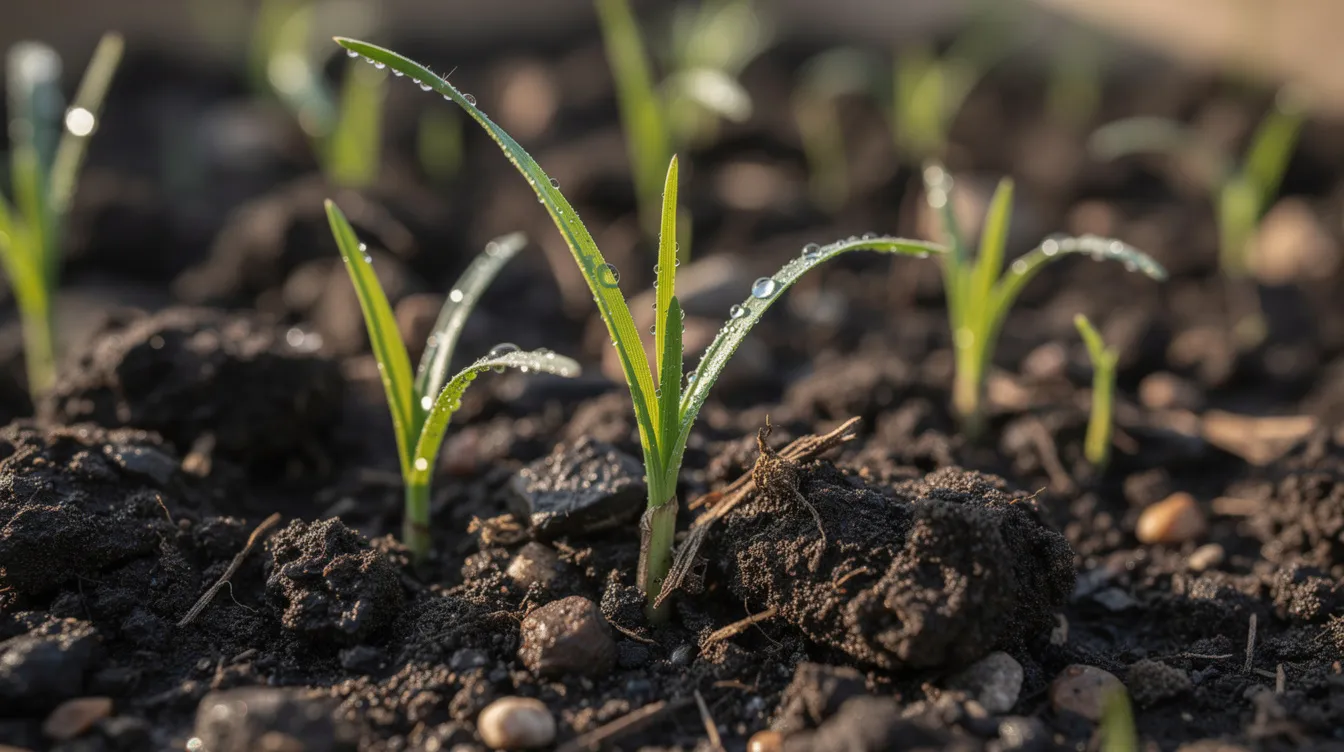
A lawn seed mixture should always be chosen based on how the lawn is used and how much sunlight it receives. Buying a generic bag labelled "multi-purpose" without checking species or percentages is the single most common mistake homeowners make.
-
Think first about use - play, pets, entertaining, low-maintenance - and only then about looks. A slightly coarser but tougher grass will outperform a fine species that cannot handle foot traffic.
-
The best lawn seed will always list grass species and percentages on the back (e.g. 60 % perennial ryegrass, 40 % chewings fescue). Mixes that hide this detail should be treated with caution.
-
Choose lawn seed mixtures bred for UK climates and close mowing, not cheap agricultural ryegrass sold as fodder, which produces coarse, pale, weed-prone lawns.
Best Grass Seed For Busy Family Lawns & Pets
-
For family gardens with heavy wear and tear, use mixes dominated by modern perennial ryegrass cultivars. Perennial ryegrass is highly wear tolerant and recovers quickly, making it the backbone of any hard wearing lawn. For family lawns, use mixes with a high percentage of perennial ryegrass.
-
A typical best mix for busy gardens is 60–80 % turf-type perennial ryegrass with 20–40 % strong creeping red fescue or slender creeping red fescue. The fescues add density and self-repairing rhizomes. Hard-wearing mixes like these are ideal for high-traffic areas.
-
These mixes tolerate mowing at around 25–35 mm and will green up quickly in spring with correct feeding and watering.
-
GREENER's Transformation Kit uses professional-grade, hard wearing cultivars chosen specifically for active UK family gardens that still want a smart, even finish.
Best Lawn Seed For Fine, Close-Mown & "Showpiece" Lawns
A fine lawn - the kind you see on bowling greens and in formal gardens - has a velvety texture, tight density, and fine blades you can feel underfoot. Achieving it demands the right species and a commitment to precise lawn care.
-
Ornamental lawns and close mowing (down to around 10–15 mm with a cylinder mower) are best served by fescue-rich mixes, especially chewings fescue and slender creeping red fescue. Luxury lawn mixes often contain chewings fescue and bentgrass such as browntop bent, which is recommended for ornamental lawns.
-
Chewings fescue is ideal for luxury lawns and tolerates low mowing without excessive browning, making it a staple in premium seed blends.
-
These lawns require sharper blades, regular feeding, more frequent mowing, and careful watering during dry spells to maintain the perfect lawn look.
-
Including a small proportion of perennial ryegrass can help with wear, but too much ryegrass will coarsen the overall texture.
Best Grass Seed Mixes For Shade & Difficult Spots
Most UK gardens have at least one shaded area - whether from fences, trees, or a north-facing aspect. Getting grass to establish in these spots requires the right grass species.
-
Shade mixes should include hard fescue and creeping fescue, along with browntop bent, for areas with fewer than four hours of direct sun. Fine fescues thrive in low-light conditions and require less water than ryegrass, making them ideal for shaded areas. Hard fescue is particularly suitable for dry and infertile conditions found under tree canopies.
-
In dappled or partial shade, a balanced mix of fine fescues and turf-type perennial ryegrass often performs best, giving both resilience and the ability to cope with light loss.
-
Under very dense shade - directly beneath mature conifers, for example - even the best grass seed will struggle, and lawn alternatives or canopy pruning may be better than repeated reseeding.
-
Rake out moss, improve airflow, and consider thinning branches before reseeding a persistently thin, shady existing lawn.
Grass Seed For Clay Soil, Sand & Other Challenging Ground
-
On heavy clay soils, choose grass species with strong root systems and tolerance of winter wet. Tall fescue is best for clay soils due to its deep roots, and it pairs well with strong creeping red fescue and ryegrass for speed of establishment.
-
On light, sandy soils that dry rapidly, drought tolerant species like slender creeping red fescue (which is drought tolerant and low maintenance) and smooth-stalked meadowgrass help maintain green cover year round between rain events.
-
Soil structure and drainage - via aeration, organic matter, and topdressing - are just as important as seed choice on problem soils.
-
GREENER's approach pairs the right seed with soil improvement and nutrition, as provided within the Transformation Kit for typical compacted, tired UK lawns.

Understanding Common Grass Seed Types (And What They Actually Do)
Here is a plain-English breakdown of the main lawn grasses used across the UK. Most "grass seeds" on the bag are actually a blend of several grass species, each chosen for wear, colour, recovery speed, and tolerance of close mowing or drought. Microtherms - cool-season grasses - are ideal for temperate climates with cold winters and moderate summers, which is precisely why they dominate UK lawn seed.
-
Look at the back of the bag for species names such as perennial ryegrass, chewings fescue, strong creeping red fescue, and browntop bent, rather than relying on marketing labels alone.
-
Within each species, named cultivars are evaluated by the BSPB Turfgrass Seed lists, but species-level knowledge is enough for most homeowners to make a confident choice.
Perennial Ryegrass
-
Turf-type perennial ryegrass is the backbone of most modern UK lawn seed mixes. Ryegrass is one of the fastest growing grass seed varieties, often germinating in just five to ten days when soil is warm.
-
It recovers quickly from divots and dog damage, making it ideal for busy gardens and sports pitches. Older agricultural types can be coarse if used in cheap mixes.
-
Improved cultivars bred for lawns have finer leaves, better colour, and can handle mowing down to around 20–25 mm while staying dense and fast growing.
Chewings Fescue
-
Chewings fescue is a tufted, fine-leaf fescue that tolerates close mowing and creates a velvety, dense sward - widely used in ornamental lawns and golf fairways.
-
It greens up relatively quickly in spring and fills gaps between ryegrass plants, improving overall density and weed resistance.
-
It prefers well-drained soils and does best when not constantly waterlogged, making drainage improvements helpful on clay soil.
Strong & Slender Creeping Red Fescue
-
Strong creeping red fescue spreads via underground rhizomes, giving lawns good self-repair and tolerance of moderate wear, especially in mixes with ryegrass.
-
Slender creeping red fescue is a finer, more shade tolerant option often used in higher-end lawn seed mixtures and golf turf where both fineness and durability are needed.
-
Including these creeping fescues in a grass seed mix improves thickness over time and helps the lawn recover from localised thinning or minor compaction.
Tall Fescue & Other Specialist Grasses
-
Tall fescue is a tougher, coarser species that excels in heavy clay soil and drought-prone banks thanks to its deep roots, but it is less suited to ultra-fine ornamental lawns because of its thicker leaf.
-
Smooth-stalked meadowgrass adds rhizomes and drought tolerance to some mixes, but germinates slower, so it is typically a minor component rather than the main grass.
-
Bentgrasses and very fine fescues dominate high-budget greens and bowling greens, but they require specialist maintenance and are rarely necessary for typical home lawns.
When To Sow Grass Seed In The UK
Timing is critical. Grass seed germinates best at soil temperatures above 8–10 °C, ideally between 10 °C and 20 °C, sustained for at least two weeks. The best months to sow grass seed are March to May.
-
The main sowing windows are spring (roughly March to May) and early autumn (September to around mid-October). Early autumn is also a good time because soil retains warmth from summer while rainfall returns.
-
In most of England and Wales, mid-April to late May and early September are usually the sweet spots. Cooler Scottish and highland areas may lag by two to three weeks.
-
Summer sowing is possible if you can water daily, but it is higher risk because shallow roots can dry out quickly.
-
Overseeding an existing lawn in early autumn often gives the best results, reducing watering demands compared to spring or summer work. Avoid late autumn sowing, when falling soil temperatures stall germination.
Preparing Soil (Or An Existing Lawn) For Grass Seed
Ideally, prepare the ground several weeks before sowing grass seed so any disturbed weed seeds germinate and can be removed before your lawn seed goes down.
-
The best grass seed cannot compensate for compacted, uneven, or waterlogged soil. Light cultivation and levelling are essential.
-
For a new lawn: remove perennial weeds and large stones, roughly level, then loosen soil to a depth of three to four inches with a fork or aerator. Incorporate organic matter on clay soil, then rake the surface to create a fine seedbed at ground level before sowing.
-
For an existing lawn: mow the lawn before preparing the ground for sowing, collect clippings, scarify or rake hard to remove thatch and moss, and hollow-tine aerate compacted areas ahead of overseeding.
-
A thin layer of suitable topsoil or compost topdressing improves seed-to-soil contact, protects seed from birds, and helps level minor hollows.
-
GREENER's Transformation Kit is designed around these preparation steps, providing guidance plus the right seed and nutrition to make them pay off.
How To Sow Grass Seed On New Ground & Existing Lawns
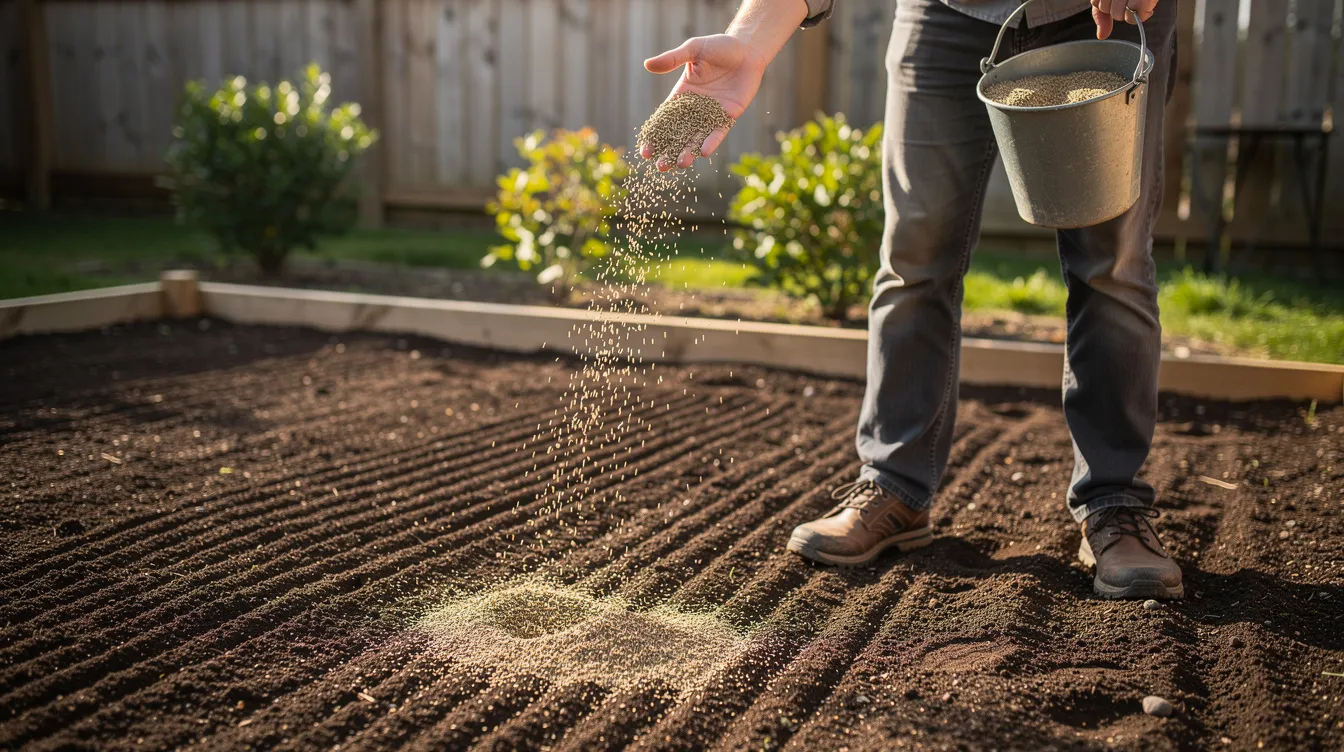
The process is straightforward if you follow a few rules. Use a spreader for even coverage of grass seed, or divide the seed into a second batch and sow in perpendicular passes. Typical UK sowing rates are around 35–50 g per square metre for new lawns and 20–30 g per square metre for overseeding.
-
Seed-to-soil contact is critical for moisture absorption during germination. Gently rake or brush seed into the top few millimetres and lightly firm the surface.
-
Seeds should be buried five to ten mm beneath the soil surface for effective germination - not left sitting on top where birds or wind can remove them.
Sowing Grass Seed On Bare Soil (New Lawns)
-
Finish soil preparation by raking level and lightly firming with your feet or a roller so footprints are shallow. Apply grass seed at the recommended rate.
-
Sow half the seed in one direction and the other half at right angles to reduce stripes and bare bands.
-
Gently rake the surface to barely cover the seed, then water with a fine spray or sprinkler so you do not wash seed into clumps.
-
In spring or early autumn, germination should begin within 7–21 days for most lawn seed mixtures, as long as the sown area is kept consistently moist.
-
The first mow should occur when grass reaches about seven to eight cm tall. Cut down to about four to five cm with a very sharp blade, removing only the top third of growth.
Overseeding An Existing Lawn
-
Mow low, scarify or rake hard to open the surface and remove dead material, aerate compacted zones, and brush away debris.
-
Apply lawn seed evenly over the existing lawn, focusing slightly higher rates on bare patches while blending into surrounding grass for a uniform look.
-
Topdress thinly - for example with a sandy loam or compost blend - after sowing, then brush it into the sward so new seed sits protected among existing grass plants.
-
Water lightly once or twice daily with a fine spray during dry spells until seedlings are well anchored, then transition to deeper, less frequent watering to encourage deeper rooting.
-
GREENER's Transformation Kit is a complete overseeding solution for tired lawns, bundling a proven grass seed mix with lawn feed and clear, step-by-step instructions.
Looking After New Grass: Watering, Feeding & First Cuts
The first eight to twelve weeks after sowing determine whether your newly sown lawns thrive or fail.
-
Consistent moisture is essential for grass seed germination. In the first two weeks, keep the top one to two cm of soil moist but not waterlogged, using short, gentle watering sessions rather than heavy soakings.
-
Avoid foot traffic until seedlings have been cut at least once, then limit heavy wear for another three to four weeks while roots develop.
-
A light, balanced general purpose fertiliser or specialist lawn feed after the first or second cut accelerates thickening, but high-nitrogen products should be applied carefully to avoid scorch.
-
Gradually lower mowing height over several cuts to the eventual maintenance height, rather than scalping new grass in a single aggressive cut.
-
GREENER's Transformation Kit includes a feeding schedule and products designed to support young grass through the winter and into the following spring, helping it outcompete weeds and moss in the crucial establishment phase.

Why Quality Seed & A Thought-Out Mix Matter
Not all grass seed is created equal. The gap between a specially formulated professional mix and the cheapest bag on the shelf shows up within weeks - and lasts for years.
-
High-quality lawn seed has higher germination rates, fewer weed seeds, and modern cultivars bred for colour, disease resistance, and tight growth habit.
-
Cheap seeds may contain coarse agricultural grasses or weeds, leading to patchy colour, broad leaves, and more long-term maintenance. You may end up fighting perennial weeds that arrived in the bag itself.
-
The best mix is not simply the one with the fanciest name, but the one whose species balance and sowing rate have been designed for the specific use case of a domestic garden lawn.
-
At GREENER, we do this design work on behalf of the homeowner - testing and refining blends in real UK gardens before including them in the Transformation Kit.
-
Choosing a trusted mix once is usually cheaper than repeatedly reseeding or resorting to expensive turf because the first attempt with bargain seed failed.
Transforming Your Lawn With GREENER's Transformation Kit
Everything in this guide - species selection, soil preparation, sowing technique, aftercare - is built into one box. If you want to skip the guesswork, the Transformation Kit is the simplest way to apply it all.
-
The Transformation Kit is an all-in-one overseeding and lawn care package that includes a professional grass seed mix, tailored nutrition, and an easy-to-follow plan.
-
The seed mix is chosen to be fast growing, hard wearing, and suitable for close mowing in typical UK gardens, while still delivering a rich green colour across a top quality lawn.
-
It is ideal for an existing lawn that is thin, patchy, or tired after years of neglect - offering a structured route from bare patches to a dense, resilient sward.
-
Visit the Transformation Kit page for full product details, coverage information, and real customer results.
-
By combining the principles in this guide with the Transformation Kit, most homeowners can see a visible improvement in lawn thickness and colour within a single growing season.

FAQ
How much grass seed do I need per square metre?
Most fine-leaved lawn seed mixes are sown at around 35–50 g per square metre for a brand-new lawn and 20–30 g per square metre for overseeding an existing lawn. Heavier sowing than recommended causes weak, spindly plants competing for light, while under-sowing leaves gaps for weeds and moss. Measure your lawn roughly and check the exact rate on your chosen grass seed or GREENER Transformation Kit packaging to avoid running short.
Can I just throw grass seed on my existing lawn without preparation?
Simply throwing seed on top of long grass or moss will produce very poor germination because most seeds will never reach soil or will dry out on the surface. Even light preparation - mowing low, raking hard, and brushing in seed - dramatically improves results and is worth the extra hour of work. The overseeding steps included with GREENER's Transformation Kit are designed to be achievable for beginners but still give professional-level take-up.
Will grass seed grow on compacted clay soil?
Seed will germinate on compacted clay, but roots struggle to penetrate, leading to thin, weak grass that fails in the first hot or wet spell. Aeration (forking or hollow-tining), adding organic matter or a suitable topdressing, and choosing species like tall fescue and strong creeping red fescue give much better performance on clay. If you are using GREENER's Transformation Kit on clay soil, focus especially on the aeration and topdressing stages to unlock the full benefit of the seed mix.
How long does it take before I can walk or play on a newly seeded lawn?
Light walking for mowing is usually fine once the grass has been cut once or twice - typically four to six weeks after sowing in warm conditions. Allow around eight to twelve weeks before full family and pet use, and avoid play on very wet days while roots are still shallow. Overseeded lawns recover faster than brand-new lawns because existing grass plants share the wear and protect the surface.
Is turf better than seed if I want fast results?
Laying turf gives instant green cover, but it still needs several weeks of restricted use before it can take heavy foot traffic, and it is significantly more expensive per square metre than seed. Well-chosen grass seed can deliver a usable, attractive new lawn within the same growing season at a fraction of the cost, with several advantages including more control over species and quality. For most domestic gardens - especially where an existing lawn is present - overseeding with a good lawn seed mix or GREENER's Transformation Kit is the smarter long-term choice.


