


Getting a thick, resilient lawn comes down to one practice more than any other: mowing correctly. Not fertiliser, not watering - lawn mowing done well is the foundation of every green lawn worth admiring. This guide walks you through the science, the timing, the gear, and the technique so you can mow the lawn with confidence all year round.
Key Takeaways
-
Correct lawn mowing is the single most important factor in building a dense, green lawn - more influential than fertiliser or irrigation. Regular mowing helps the turf thicken and crowd out weeds naturally.
-
Never remove more than one third of the grass blade in any single cut. Breaking this rule stresses grass plants, weakens roots, and opens the door to disease.
-
Mowing height must change through the year: keep it higher in summer and during dry spells, and only lower the cutting height when growth is strong and conditions are mild in spring or early autumn.
-
You should avoid mowing when grass is wet, frosty, or during extreme heat. Cutting in these conditions compacts soil, tears blades, and encourages fungal problems.
-
Choosing the right lawn mower and handling grass clippings properly - whether you mulch, collect, or compost - directly affects lawn health and how much time you spend on maintenance.
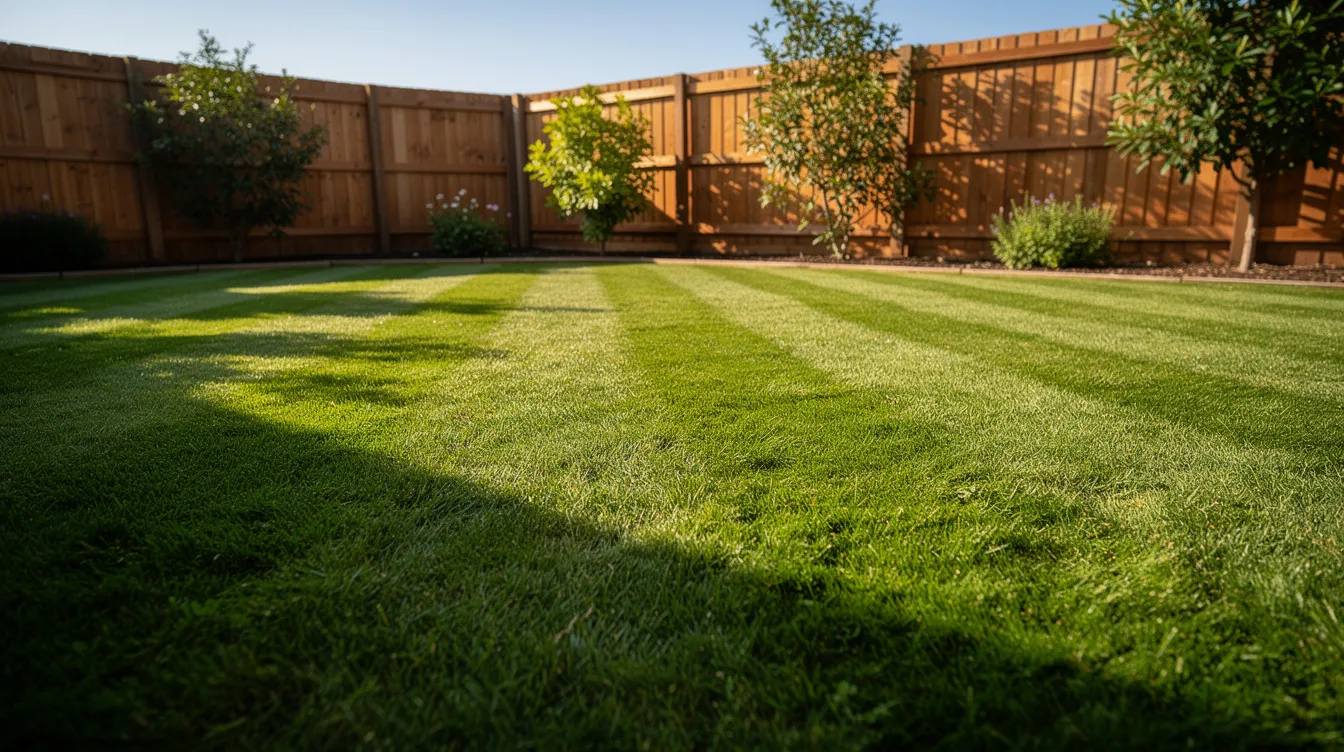
How Lawn Mowing Affects Grass Health
Mowing does far more than keep a lawn neat. Each cut stimulates lateral shoots called tillers, which thicken the turf and create a denser surface. However, how you cut grass determines whether you help or harm your lawn.
Maintaining a consistent grass height develops deeper roots, which improves drought tolerance and lets grass access moisture further below the surface. Dense turf at the correct height also shades the soil, naturally outcompeting weeds and moss before they establish. Scalping - cutting too low - does the opposite: it exposes bare soil, invites dandelions and plantain, and weakens the entire sward.
Photosynthesis explains why height matters so much. Grass blades capture sunlight to produce energy; removing more than a third of the grass at once slashes that capacity and slows recovery after wear or disease. Grass in shaded areas should be mowed taller to maximise sunlight capture where light is already limited. Mowing frequency should be adjusted based on grass growth rate rather than a fixed calendar schedule, and you should mow frequently during periods of active growth for healthy turf.
Regular mowing with sharp blades also blends different species into a more uniform finish. Dull blades tear grass rather than cut it, leaving ragged white tips that invite disease and reduce photosynthetic efficiency.
Best Times of Year to Mow the Lawn
The typical mowing season in a temperate climate like the UK runs from mid-march to late autumn, roughly late October. Adjust your start and finish dates based on local weather and soil firmness.
Early spring (March–April): Mow for the first time in march when temperatures exceed 5°C and the soil is firm and dry. The first cut in spring should be set higher than normal - use the highest setting on your mower and cut every 10–14 days. Most lawns do not need mowing when temperatures are below 4°C (39°F).
Late spring to early summer (May–June): This is when grass is growing vigorously. You may need to mow the lawn weekly, or even twice weekly for fine ornamental turf. Mow frequently during these peak growth months to keep the sward thick.
High summer (July–August): During summer, increase mowing height to reduce heat stress. Mow every 10–14 days in summer if conditions are dry, and cut grass to a height of at least 50mm (2 inches) during dry spells. During milder winters or unusually warm autumns, growth can linger longer than expected.
Autumn (September–October): Gradually raise the mowing height and gradually reduce frequency as growth slows. Stop once frosts become regular.
Winter: Only mow on dry, frost-free days if grass has noticeably grown. Keep the cutting height high and avoid walking on frozen turf.
When Not to Mow: Conditions to Avoid
Knowing when to avoid mowing is just as valuable as knowing when to cut. Mowing under the wrong conditions causes lasting damage.
Wet grass: Mow when the grass is dry to avoid uneven cuts and clogging the mower. Wet grass clumps under the deck, blades tear rather than slice, and mower wheels compact soft ground into ruts. Avoid mowing in wet or frosty conditions to prevent damage that can take weeks to repair.
Frost: Frozen grass blades shatter rather than cut cleanly, leaving yellow or brown patches. The compromised tissue is also more vulnerable to fungal diseases such as snow mould.
Extreme heat: Mowing during prolonged drought or above 25–28°C scorches freshly cut grass tips and accelerates browning.
Poor visibility or heavy rain: Slips, falls, and electrical hazards increase, especially when using a corded electric mower with a power cord trailing across a wet garden.
Top tip: if conditions are poor, delay mowing by a few days, raise the mowing height, or limit cuts to essential paths until dry weather returns.
Ideal Mowing Height and the One‑Third Rule
Different lawn types need different grass lengths. A family lawn, an ornamental showpiece, and a shaded utility area each have a distinct correct height.
As a general rule, aim for these ranges:
|
Lawn type |
Height range |
|---|---|
|
Fine ornamental turf |
10–20 mm (0.5–0.75") |
|
Standard garden lawn |
25–40 mm (1–1.5") |
|
Heavy-use or shaded areas |
40–50 mm (1.5–2") or more |
Always mow at a height of at least 25mm (1 inch), and set mower blades to at least 25mm (1 inch) high to avoid scalping. Never cut more than one-third of grass height at once - this is the one third rule, and obeying it prevents stress, preserves root depth, and reduces disease risk.
If you return from holiday to an overgrown lawn, resist the urge to cut it all at once. Raise the mower to its highest setting for the first mow, then gradually lower the height over several subsequent cuts until you reach the desired even height.
During summer droughts, raise the height to shade the soil and retain moisture. Under trees, keep the same height or go taller. On a new lawn - whether from seed or turf - maintain a higher cut until roots are fully established. Higher mowing heights suppress weed seedlings by blocking sun from reaching the soil surface, which reduces weed and disease risk significantly.
Choosing the Right Lawn Mower for Your Garden
Your mower choice should match your lawn size, surface evenness, and the finish you want - not simply price.
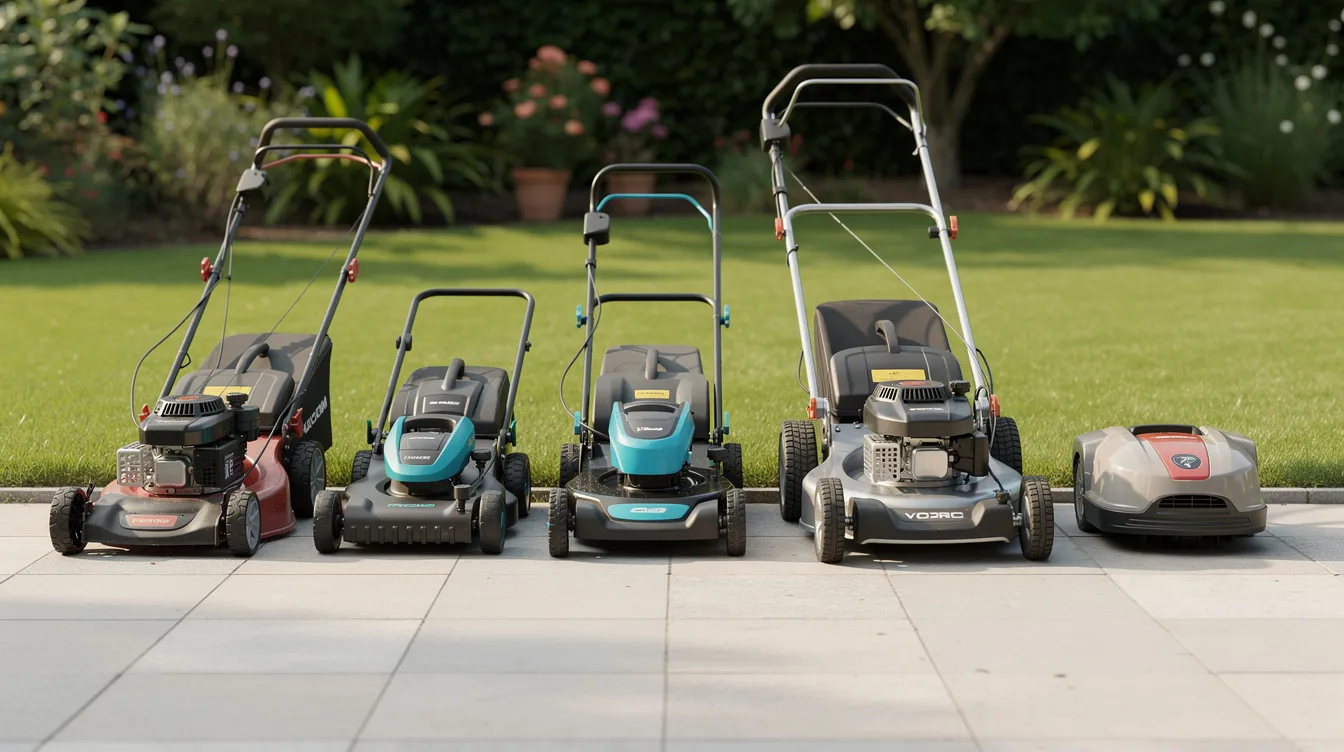
Mower types at a glance:
-
A cylinder mower delivers a precision cut on fine, low turf and produces crisp stripes. Cylinder mowers provide a high-quality finish for fine turf.
-
A rotary mower handles most general garden lawns and rougher grass with ease. Most lawn mowers sold for domestic use are rotary.
-
A hover mower floats on a cushion of air, making it ideal for uneven or sloped plots and a good option for a small lawn.
-
Ride-on lawn mowers are suitable for large lawns over roughly 1,000–1,500 m².
-
Robot lawn mowers are ideal for small or medium lawns, mowing little and often without intervention.
Power sources:
-
Electric lawn mowers suit small, medium, or large lawns. A corded electric mower works well where a power cord can reach, while cordless battery models offer more freedom.
-
Petrol lawn mowers are best for medium or large lawns where outlets are unavailable. Petrol mowers deliver more power but require fuel, oil, and spark-plug maintenance.
-
Hand push lawn mowers work well for small or medium lawns and produce zero emissions.
Consider cutting width, weight, handle adjustment, storage space, and whether a rear roller is included for a striped finish. Check safety features - blade-brake systems, childproof switches, and cable management - before purchasing.
Practical Mowing Technique and Pattern
How you mow - direction, speed, and overlap - can significantly change the quality of the good cut and the overall look of the lawn.
Before you start: walk the lawn to remove stones, toys, and branches. Check for wildlife sheltering in long grass, and confirm the mower deck and grass box are properly fitted.
Basic pattern: mow the perimeter first to create a turning strip, then work in straight lines back and forth, overlapping slightly on each pass. Change your mowing pattern each session to prevent soil compaction and stop grass leaning in one direction - try lengthways one week, at right angles the next, then diagonally.
Edges and obstacles: use a trimmer or lawn shears for borders, trees, and tight corners where the mower cannot safely reach.
Speed and pace: walk at a steady pace so the blades can cut cleanly and deliver a good cut without leaving uncut tufts. Rushing forces the mower to tear rather than slice, especially when grass is thick. Keep mower blades sharp for clean cuts every time you mow regularly throughout the season.
Handling Grass Clippings: Collect, Mulch, or Compost?
How you deal with grass clippings after each cut affects lawn nutrition, thatch build-up, and garden waste volumes.
Collecting: In spring and autumn, collecting cut grass into a grass box gives a tidier appearance, reduces thatch, and prevents soft clippings sticking to shoes and pets. This works well when growth is moderate and grass cuttings are short.
Mulching: Mulching mowers finely chop clippings and blow them back into the turf as mulch. This is most useful in late spring and early summer when the lawn is growing vigorously and can absorb the material quickly. Leaving short clippings on the lawn can return nutrients to the soil - studies show mulched clippings supply a meaningful portion of the lawn's annual nitrogen needs.
When mulching fails: on very wet grass, heavily thatched lawns, or when grass has grown too long between cuts, mulching leaves visible clumps that smother the turf. In these cases, collect and compost instead.
Composting: mix grass cuttings with dry, brown material such as shredded cardboard or leaves to prevent a slimy heap. The result is balanced compost for beds and borders.
Wildlife-friendly options: leave clippings to dry briefly in a designated area to create material for seed-eating birds, or use thin layers as mulch around trees and shrubs - but avoid thick anaerobic mats. Removing clippings from nutrient-poor wildlife areas over time can reduce soil fertility and favour wildflowers over coarse grass.
Safety and Maintenance for Your Lawn Mower
Proper mower maintenance protects both the user and the lawn, and it greatly extends the life of the machine. Clean the mower after use to prolong its lifespan - even a quick scrape of the underside makes a difference.
Pre-season checks:
-
Inspect the power cord on electric models for damage.
-
Check oil level and air filter on petrol mowers.
-
Confirm battery condition on cordless mowers.
-
Tighten screws and bolts on handles.
Sharp blades matter: inspect mower blades for nicks at the start of every season. Sharp blades make clean cuts; blunt ones leave frayed, white-tipped grass that signals poor cut quality. Arrange professional sharpening or replace blades if tips appear torn after cutting.
Safety recommendations:
-
Wear sturdy, closed-toe shoes.
-
Keep children and pets away from the mowing area.
-
Use a residual-current device (RCD) with corded electric tools.
-
Avoid loose clothing near moving blades.
End-of-season storage: drain or stabilise fuel in petrol mowers, store equipment in a dry shed to save storage space, and slightly loosen cables to prevent rust and metal fatigue over winter.
Balancing a Neat Lawn with Wildlife and Sustainability
Modern lawn care increasingly combines keeping the lawn neat with wildlife-friendly practices that support pollinators and reduce environmental impact.
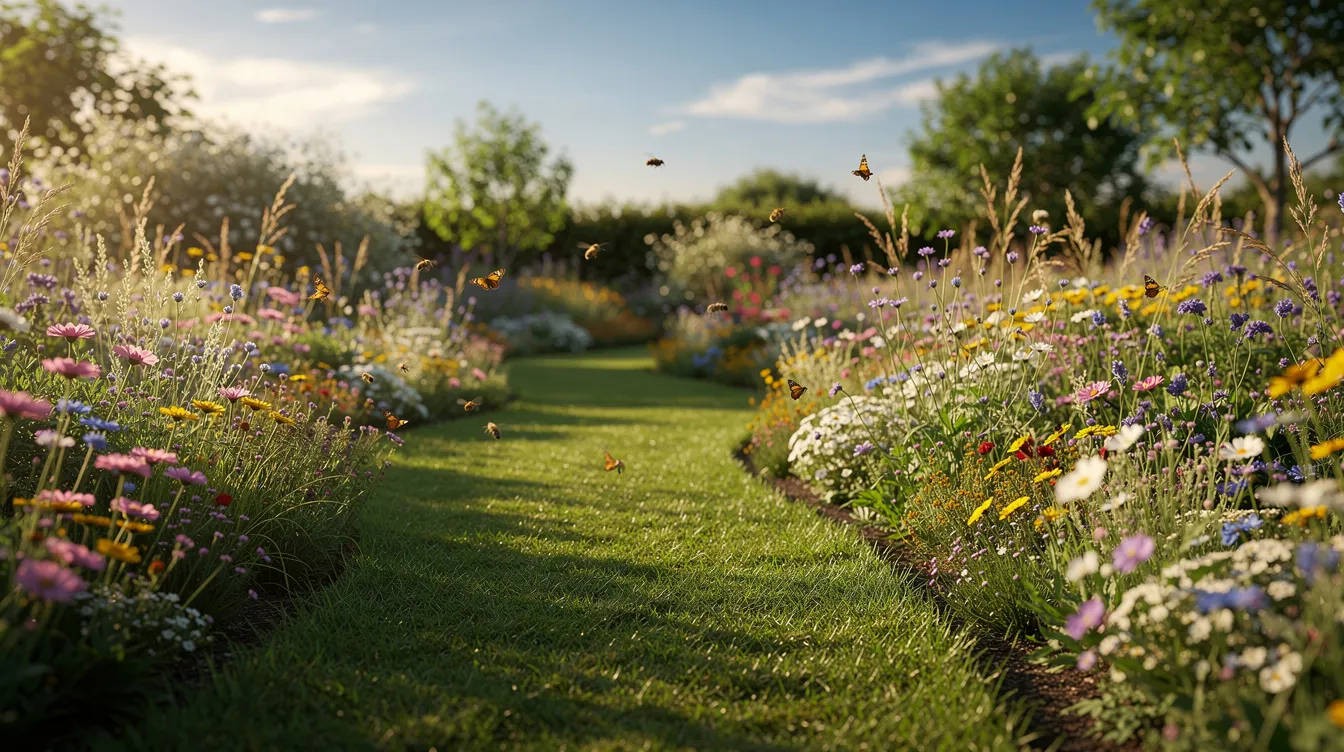
No Mow May encourages wildflowers to grow and attract wildlife by leaving all or part of the lawn uncut for several weeks in spring. Cutting grass less often helps create a flower-rich lawn, and a higher grass cut allows smaller wildflowers to thrive alongside the turf. Research shows that mowing has a strong negative impact on arthropod abundance immediately after cutting, with recovery taking weeks.
Practical compromises:
-
Leave strips of long grass along fences or under trees while keeping play areas trimmed.
-
Keep a short mowed path through longer grass so the garden remains accessible.
-
Designate a corner as a meadow area - wildflower areas can be created by reducing mowing frequency alone.
Allowing grass to grow longer supports habitats for butterflies and hedgehogs, as well as other wildlife such as ground-nesting bees. Mowing less frequently in selected zones also reduces fuel or electricity use and lowers noise. Observe which flowers and insects appear when mowing is relaxed, then adjust your routine to balance a usable lawn with improved biodiversity.
Common Mowing Problems and How to Fix Them
Many lawn issues - patchiness, uneven bands, yellowing after a cut - trace back to mowing habits rather than disease. Here are the most common problems and practical mowing tips to fix them.
Scalped patches on bumps or edges: level minor hollows with topdressing and raise the mowing height to prevent further damage. On undulating ground, a hover mower or lighter rotary can reduce scalping.
Uneven light-and-dark bands: usually caused by missed strips or inconsistent overlap, not by a roller. Adjust your walking lines and ensure each pass overlaps the previous one by a few centimetres to maintain an even height across the whole lawn.
Yellow or brown tips after mowing: a reliable sign of blunt blades or cutting in very dry weather. Sharpen or replace blades and water deeply when needed to help grass recover.
Wheel tracks and ruts: these develop from mowing when soil is soft. Rest the lawn, aerate compacted paths, and vary your mowing direction each session to spread the load.
Recovering an overgrown lawn: after holidays, follow the one third rule in stages. Set the mower high for the first cut, rake out heavy clippings, and accept that full recovery to good condition may take several weeks of gentle mowing. Gradually raise expectations - not cutting height - and the lawn will bounce back.
Frequently Asked Questions
Below are answers to common questions that are not fully covered above. Each provides specific, practical guidance you can apply straight away.
What time of day is best for mowing the lawn?
Late morning or early evening is usually ideal. By 10:00 the grass has dried from overnight dew, and temperatures have not yet peaked. Mowing between roughly 10:00 and 12:00, or after 16:00 on warm days, reduces stress on the grass and is more comfortable for the gardener. Avoid very early morning when grass is still wet, and skip the hottest part of the afternoon when freshly cut tips can scorch in direct sun.
How soon can I mow a new lawn from seed or turf?
For a seeded new lawn, wait until the grass reaches about 7–8 cm (around 3 inches) and the soil is firm underfoot before the first mow. Use the highest setting and ensure blades are very sharp to avoid pulling up young grass plants. For new turf, wait until you cannot easily lift a corner of the roll - typically 10–14 days in mild early spring weather - then mow gently on a high setting.
Can I leave grass clippings on the lawn after mowing?
A light sprinkling of short clippings is fine and returns nitrogen to the soil, especially if you mow regularly. Thick layers of long, wet grass cuttings should be raked up, as they smother the lawn and promote fungal diseases. A mulching mower lets you routinely recycle clippings without visible clumps on the surface.
What should I do if I cut the grass too short by mistake?
Raise the mowing height for all subsequent cuts and let the grass grow out for a couple of weeks before trimming again. Water deeply if conditions are dry and avoid heavy foot traffic until new growth thickens the sward. Applying a light, balanced lawn feed during the growing season helps turf recover from accidental scalping more quickly.
Is it better to mow regularly or less often but very short?
Mowing little and often is far better for lawn health. Infrequent, drastic cuts shock the grass, expose soil, and weaken the sward. Regular mowing helps encourage dense, low growth that naturally suppresses weeds, whereas severe occasional cuts lead to thin turf in poor condition. Aim for weekly mowing during peak growth and every 10–14 days when growth slows, always following the one third rule.
Connect mowing to the rest of your lawn-care plan
- Use the UK lawn care calendar to adjust mowing frequency through the seasons.
- If mowing exposes thin or bare areas, follow the patchy lawn repair guide.
- If grass remains pale despite correct mowing, diagnose it with the yellow lawn pillar.
- If the ground feels hard or drains slowly, use the complete UK aeration guide.
- Replace nutrients removed through regular cutting with help from the UK lawn fertiliser guide.


