


If you've spent summer looking at a patchy, thin, or moss-ridden lawn and telling yourself you'll deal with it, September is when to act.
Autumn is the single best time of year to renovate a UK lawn. Not spring. Not summer. Autumn.
Most people think spring is when you "do the lawn." The garden centres reinforce this — displays of seed and fertiliser appear in March. But professional landscapers know that the autumn window, from mid-August through to mid-October, consistently produces better results. The soil is warmer, the moisture is more reliable, and the grass has a full winter to root before it faces the stress of summer.
This guide covers exactly what to do and when the complete autumn lawn renovation sequence for UK homeowners.
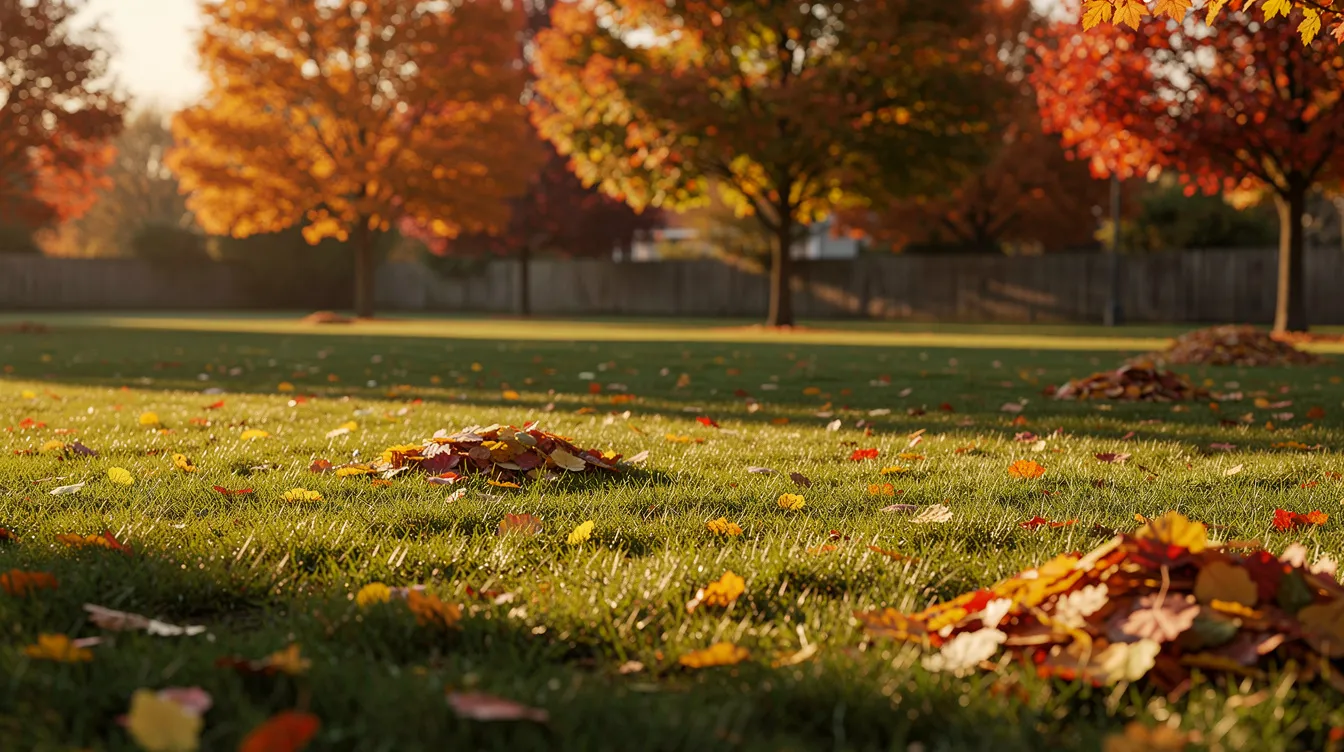
Why Autumn Is the Best Time to Renovate a UK Lawn
Understanding why autumn works better than spring helps you get the timing right within the season and explains why late September is better than early November.
Soil Temperature
Grass seed germinates reliably when soil temperature is consistently above 8–10°C. In the UK, soil temperature at 10cm depth typically reaches this threshold in April and holds through to late October or early November, depending on region and year.
The critical difference between spring and autumn is what happens after germination. Spring-sown grass germinates into increasing heat and, typically, decreasing moisture — conditions that stress young seedlings. Autumn-sown grass germinates into cooling, wetter conditions that favour steady root development without the surface stress.
Moisture Consistency
UK autumn rainfall patterns are more consistent than spring. New grass seed needs the soil to stay moist for 3–4 weeks post-germination. In spring, a dry spell in that critical window can kill a newly sown lawn. In autumn, the risk is significantly lower.
Weed Competition
Annual weeds the plants that compete most aggressively with new grass seedlings — are completing their lifecycle in autumn and not actively germinating. Spring-sown grass faces heavy weed competition during exactly the period when it's most vulnerable. Autumn-sown grass has that competition largely removed.
Root Development Over Winter
Grass sown in September and October doesn't just sit dormant over winter. The roots continue to develop underground even when top growth slows. By the time spring arrives, autumn-sown grass is substantially better rooted than anything sown in spring. The spring growth flush from an autumn renovation is noticeably stronger.
The Autumn Lawn Renovation Window: Week by Week
The UK autumn renovation window runs from approximately mid-August to mid-October. Within that window, timing varies by region, and in many areas early autumn is the safest point to start:
|
Region |
Optimal Window |
|---|---|
|
South East England |
Mid-September to mid-October |
|
South West England |
Early September to late October |
|
Midlands |
Early to mid-September |
|
North of England |
Late August to mid-September |
|
Scotland |
Late August to early September |
The earlier end of the window is preferable — not because later won't work, but because earlier gives more weeks of warm soil before temperatures drop below the germination threshold, making it the ideal time to renovate.
The practical rule: aim to have seed in the ground by the end of September. If you miss that window, you can push into October but expect slower germination and the possibility that autumn-sown grass will be better placed to grow strong when spring arrives only if it has had enough time to establish before the cold sets in.
Before You Start: Diagnosing Your Lawn
A good renovation starts with understanding what you're working with if you want a healthy lawn. The correct treatment depends on what's actually causing your lawn's problems.
Moss: The most common underlying cause of poor UK lawns. If your lawn feels spongy underfoot, has a green tinge across the surface between the grass blades, or has patches where grass is sparse but something is clearly growing, you have moss. Moss must be treated and cleared before any seeding or renovation work.
Thatch: A layer of dead organic material between the grass and the soil surface. Cut away a small section with a spade and look at the cross-section. A brown, spongy layer more than 1cm thick is excessive thatch made up of old stems, roots, and dead grass that needs removing before renovation.
Compaction: Push a garden fork into the lawn with moderate pressure. If it resists penetration below 10cm, you have compacted soil, often from repeated foot traffic or heavy lawn use, that needs aerating before seeding.
Poor drainage: If areas remain waterlogged after rain, these need addressing before renovation. A hollow-tine aerator is especially useful on heavy clay soils because it improves drainage and relieves compaction. Seed sown into waterlogged soil will rot rather than germinate.
Most UK lawns needing renovation have some combination of moss, thatch, and mild compaction. The sequence below addresses all three.
The Complete Autumn Lawn Renovation Sequence
This is the sequence that professional landscapers use. Follow it in order — the sequence matters as much as the individual steps.
Week 1: Treat Moss
The first and most important step. Apply a moss killer to the full lawn area — not just visible patches, because moss spreads beyond what's visible on the surface.
Leave the treatment for 7–14 days. You will see the moss blacken and die back. This is the intended outcome. Do not proceed to scarification until the treatment period is complete.
Why this is non-negotiable: any seed applied to a lawn with active moss fails to make contact with the soil. It sits on top of the moss layer, briefly germinates using the seed's own energy, then dies. This cycle — seed, brief germination, die-back — is the most common reason UK homeowners feel that grass seed "never works." It's not the seed. It's the moss underneath it.
Week 2: Scarify with a Lawn Scarifier
Once the moss has died back and blackened, scarify the full lawn area with a lawn scarifier to remove thatch and dead moss, improving air and water access to the soil.
Use a spring tine rake or electric scarifier set to penetrate slightly into the soil surface — you want to scratch the soil, not just skim the surface. Run in two directions: horizontal first, then vertical, to work the lawn vigorously for thorough coverage. This also improves air circulation and helps reduce fungal problems.
Rake up and remove all debris from the surface. For most lawns, this is usually needed every 1–3 years depending on condition. Your lawn will look significantly worse at this stage — bare patches, exposed soil, sparse remaining grass. This is correct. The scarification process is creating the conditions new seed needs: bare soil contact, good drainage, and removed competition.
For compacted areas: follow scarification with hollow-tine aeration if you have access to an aerator, or fork the area manually. This is particularly important in high-traffic zones and clay-heavy soils.
Week 2–3: Level and Prepare
Check the surface for uneven areas dips, hollows, and humps that have developed over time. Apply top dressing to low areas with a fine sand-and-loam mix at 2–3kg per sq m, then rake it level and firm it lightly with the back of the rake. After aeration, brush it into the aeration holes.
Remove stones, debris, and any large clumps. The aim is a smooth, even surface with good soil contact across the full renovation area.
Week 3: Grass Seed, Feed, and Boost
This is the step that separates good renovation results from exceptional ones, and it comes down to simultaneous application.
Grass seed, granular fertiliser, and liquid bio-stimulant are all applied on the same day. Not across several days. The same day.
The reason for simultaneous application: quality lawn fertilisers formulated for renovation contain mycorrhizal fungi — beneficial fungi that form a symbiotic network with grass roots and improve nutrient uptake, stress tolerance, and establishment speed significantly. For mycorrhizal fungi to support new seedlings, they need to be present in the soil at the precise moment germination occurs. Apply fertiliser a week after seeding and you miss the critical window.
Apply in this order on day one:
-
Spread lawn seed evenly across the renovation area using a spreader, at 30–40 grams per square metre; on thin or uneven areas, mix seed with top dressing for better contact
-
Apply autumn lawn feed at about a handful per square meter across the full lawn area to supply key nutrients and support root growth
-
Apply liquid seaweed biostimulant diluted in water, using a fine spray to water everything in gently
The seaweed biostimulant provides natural plant hormones (cytokinins and auxins) that accelerate cell division and improve seedling survival through the temperature fluctuations of autumn. It's standard professional practice and consistently produces faster, more even germination.
Weeks 3–7: Water and Wait
Water gently and consistently — the soil should not dry out completely at any point during the first 3–4 weeks post-seeding. Keep overseeded areas watered until seeds germinate.
In the wetter autumn months, natural rainfall will often do most of the work. Check the soil surface rather than the weather forecast: if the top centimetre of soil is dry, water with a fine spray. If there's been natural rainfall, leave it. Regularly clear leaves and debris to prevent lawn diseases. Remove fallen leaves promptly, as they block light and air, can kill grass, collect leaves to prevent fungal diseases, and weaken the sward enough to encourage moss.
Do not walk on seeded areas during this period.
Expect germination to be visible within 7–14 days. Growth will be fastest in the warmer weeks of September and will slow as temperatures drop in October and November. Slower growth in cold weather is normal — root development continues underground.
Week 6–8: First Cut
When new grass reaches 5–6cm, take the first cut with the mower blades set to around 30mm for autumn cutting. Once growth is established, you can mow about every two weeks in autumn depending on conditions. You're removing the very tips of the blades, not cutting to a normal cutting height. This triggers tillering — lateral shoot production — which is what creates thick, dense grass rather than thin, upright stems.
Do not apply weedkiller or additional treatments until the lawn has been mown at least twice.
Autumn vs Spring Renovation: The Honest Comparison
If you're considering waiting until spring, here is the direct comparison:
|
Factor |
Autumn (Sept–Oct) |
Spring (Apr–May) |
|---|---|---|
|
Soil temperature at seeding |
Warm, cooling |
Cool, warming |
|
Moisture consistency |
High — UK autumn rainfall |
Variable — spring dry spells common |
|
Weed competition |
Low — annuals completing lifecycle |
High — peak germination period |
|
Root development before stress season |
Full winter |
None before summer |
|
Results visible by |
Spring (6–8 months of establishment) |
Summer (3–4 months) |
|
Risk of failure |
Low |
Moderate (dry spells, weed competition) |
The honest answer: if your lawn needs renovation and it's currently August, September, or early October — do it now. Do not wait for spring. The results from an autumn renovation are materially better.
If it's November or later, the spring window (April–May) is your next opportunity.
What Products to Use for Autumn Lawn Renovation and Autumn Lawn Feed
Product quality matters more in autumn than in spring, because the narrowing temperature window means you need seed that germinates reliably and fertiliser that supports establishment as grass growth slows in cooling conditions.
Moss killer: a liquid iron sulphate-based treatment or purpose-formulated lawn moss killer applied to the full lawn in week one. Applied too late in the season and it won't have time to work before seeding.
Grass seed: a perennial ryegrass or fescue-based mix specifically suited to UK conditions. Autumn seeding favours fescue-rich mixes, which are more tolerant of cool, wet conditions than ryegrass-dominant mixes. Avoid cheap seed with high annual ryegrass content, it germinates fast but doesn't persist.
Granular fertiliser: for renovation, choose autumn lawn fertilisers that are typically higher in potassium and phosphates to support root development rather than soft, leafy growth. A standard NPK fertiliser is better suited to established grass maintenance than supporting new seedling establishment.
Liquid bio-stimulant: seaweed extract, applied on seeding day. Particularly important in autumn because it improves cold tolerance in new seedlings.
Fix Your Lawn This Autumn With the GREENER Transformation Kit
The GREENER Transformation Kit is a complete four-product lawn renovation system built around the exact sequence in this guide. Designed by a professional landscaper with over 20 years of experience. Everything you need in one box, calibrated for the UK's autumn renovation window.
POWER: Moss killer and lawn treatment. Applied first in week one to clear the moss that prevents seed from establishing. This is the step most garden centre products skip.
LAUNCH: Professional-grade perennial ryegrass seed formulated for UK conditions. Not the annual varieties that thin out by year two. A genuine perennial mix that establishes and returns season after season.
GROWTH: Granular fertiliser with mycorrhizal fungi. Applied simultaneously with seed on day one of growth. The mycorrhizal network supports root development from the moment germination begins, the detail that makes the difference between thin regrowth and a thick, rooted lawn.
BOOST: Liquid seaweed bio-stimulant. Applied on seeding day to accelerate germination and improve cold tolerance in young seedlings through the autumn temperature drop.
Four products. One box. The correct sequence. Applied in under an hour.
Results visible in 4 weeks. Available for lawns from 100m² to 500m². Backed by a 60-Day Money Back Guarantee.
The best lawns next spring start in September.
Get the Transformation Kit — Fix Your Lawn This Autumn →
Autumn Lawn Renovation: Frequently Asked Questions
Is September or October better for lawn renovation in the UK?
September is generally better. Soil temperatures are warmer in September than October, giving new seed more weeks of optimal germination conditions before the temperature drops. In most of the UK, seed sown in mid to late September is reliably established before the first frosts. October is workable, but later in the month carries increasing risk of germination being interrupted by cold.
Can I renovate my lawn in November?
It's not recommended. UK soil temperatures typically drop below the reliable germination threshold (8–10°C) in November in most regions. Seed sown in November may sit dormant over winter and germinate in spring — but it's vulnerable during that period and results are inconsistent. If you've missed the autumn window, wait for April–May.
Do I need to remove all the existing grass before renovation?
No. Scarification removes dead material and thatch and exposes bare soil without requiring complete removal of existing grass. Seed sown into a scarified lawn germinates in the gaps and over bare areas. Existing healthy grass is left in place and contributes to the recovered lawn. Only in cases of complete lawn failure, where virtually no viable grass remains — is full removal advisable.
How long does autumn lawn renovation take to complete?
The active work takes approximately one hour spread across two to three applications: moss treatment in week one (15–20 minutes), scarification and clearing in week two (the most labour-intensive stage, typically 30–60 minutes depending on lawn size), and seeding, feeding, and bio-stimulant application in week three (20–30 minutes). After that, watering and patience.
Will renovated grass survive a UK winter?
Yes — established autumn-sown grass is frost-tolerant and will continue root development through winter even when top growth slows or stops. Grass blade growth slows significantly below 5°C but roots continue developing at lower temperatures. The risk is not cold itself but waterlogging — if your lawn has drainage issues, address those before renovating. Avoid walking on frozen grass, as it can bruise the blades and damage the crown.
When can I start mowing after autumn renovation?
When the new grass reaches 5–6cm, typically 5–8 weeks after seeding depending on temperature and weather conditions. Use the highest mower setting for the first two cuts. Do not cut in frosty conditions or when the grass is waterlogged. Avoid walking on frozen grass, as it can damage newly established turf.
Can I use a lawn renovation kit on a new build lawn?
Yes — new build lawns are one of the most common renovation candidates. Builder-laid turf is typically low quality, laid over compacted subsoil, and often develops significant moss and bare patches within the first year or two. The autumn renovation sequence works well on new build lawns, though you may also need to address the compacted subsoil with a hollow tine aerator before seeding to improve aeration, as it creates wider holes than a fork. Some new build lawns benefit from a sand topdressing after scarification to improve drainage, and autumn is also a good time to prepare soil for a new lawn.
What if the weather turns cold before my seed has germinated?
Germination will slow significantly below 10°C and may pause below 8°C. Seed that hasn't germinated yet will sit dormant rather than die — as long as it isn't waterlogged. If a cold snap arrives 1–2 weeks after seeding, the seed will resume germination when temperatures recover. If germination was already underway, young seedlings are vulnerable to hard frost cover with horticultural fleece if a frost is forecast in the first 2–3 weeks after seeding.


