


A patchy lawn is one of the most common problems UK homeowners face — and one of the most frustrating, because it seems like it should be easy to fix.
You buy some grass seed. You scatter it. You water it in. And six weeks later, the patches are still there.
The issue is almost never the lawn itself. It's the sequence. Most people apply the right products in the wrong order or skip the single most important step entirely.
This guide explains why UK lawns go patchy, what's actually causing it, and the correct method to fix it. Not a partial fix. A proper one.
Why Your Lawn Is Patchy: The Real Causes
Before fixing a patchy lawn, you need to know what's causing it. The treatment differs depending on the root problem and applying the wrong fix makes things worse, not better.
1. Moss
This is the underlying cause of most patchy UK lawns, and it's consistently underdiagnosed.
Moss thrives in the UK's climate — cool temperatures, high rainfall, shaded gardens, and compacted or poorly-drained soil all encourage it. In a mossy lawn, the grass isn't just competing with weeds; it's competing with a dense, moisture-retaining mat that physically prevents grass roots from establishing.
When you scatter seed over a mossy lawn, the seed lands on top of the moss, not on soil. It may briefly germinate, then die within weeks because the roots have nowhere to go.
How to tell: press your hand flat on the lawn surface. If it feels spongy rather than firm, you have a significant moss layer underneath the visible grass.
2. Thatch Buildup
Thatch is the layer of dead organic material, dead grass stems, root debris, old moss, and lawn clippings that accumulates between the grass blades and the soil surface. A thin thatch layer (under 1cm) is normal and beneficial. Anything thicker creates a barrier that prevents water, nutrients, and new seed from reaching the soil, and this debris can smother grass and cause wilting.
Heavy thatch produces patchy growth, poor colour, and lawns that dry out quickly even in wet weather.
How to tell: cut away a small section of turf with a spade and look at the cross-section. A brown spongy layer between the grass and the soil is thatch.
3. Soil Compaction
Compacted soil — one of the most common causes of patchy grass, especially in high-traffic areas with heavy foot traffic, clay-heavy soils, and new build gardens — restricts root growth and drainage. Grass in compacted soil grows thin and patchy, struggles to recover from summer drought or winter waterlogging, and doesn't respond well to seeding or feeding.
How to tell: push a garden fork into the lawn with moderate pressure. In compacted soil, you'll feel significant resistance and the fork will penetrate less than 10cm. Loosening the soil improves drainage and encourages new root development before reseeding.
4. Shade
Grass requires a minimum amount of sunlight to photosynthesise and grow. Lawns under trees or beside structures often develop persistent bare patches not because of a soil problem, but because the light simply isn't sufficient for most grass varieties.
How to tell: observe the patchy areas across a full day. If they're consistently shaded for more than 60–70% of daylight hours, shade is the primary cause. If the area stays shaded, use a shade-tolerant lawn seed mix.
5. The Wrong Products, Applied in the Wrong Order
Even in lawns without significant moss, thatch, or compaction, patchy results often come down to product selection and sequence, and lack of nutrients can also lead to thinning patches even when the basic steps seem right.
Seeding without feeding means the new grass doesn't have the nutrients it needs for root development. Feeding with a standard fertiliser at the wrong time provides nutrients to weeds and moss, not the new grass. Using annual grass seed that germinates fast but doesn't persist means the patches return the following year.
This is the category most people fall into, they've done everything roughly right, but the details were off. Effective repair means fixing the root cause, not just reseeding the visible patches.
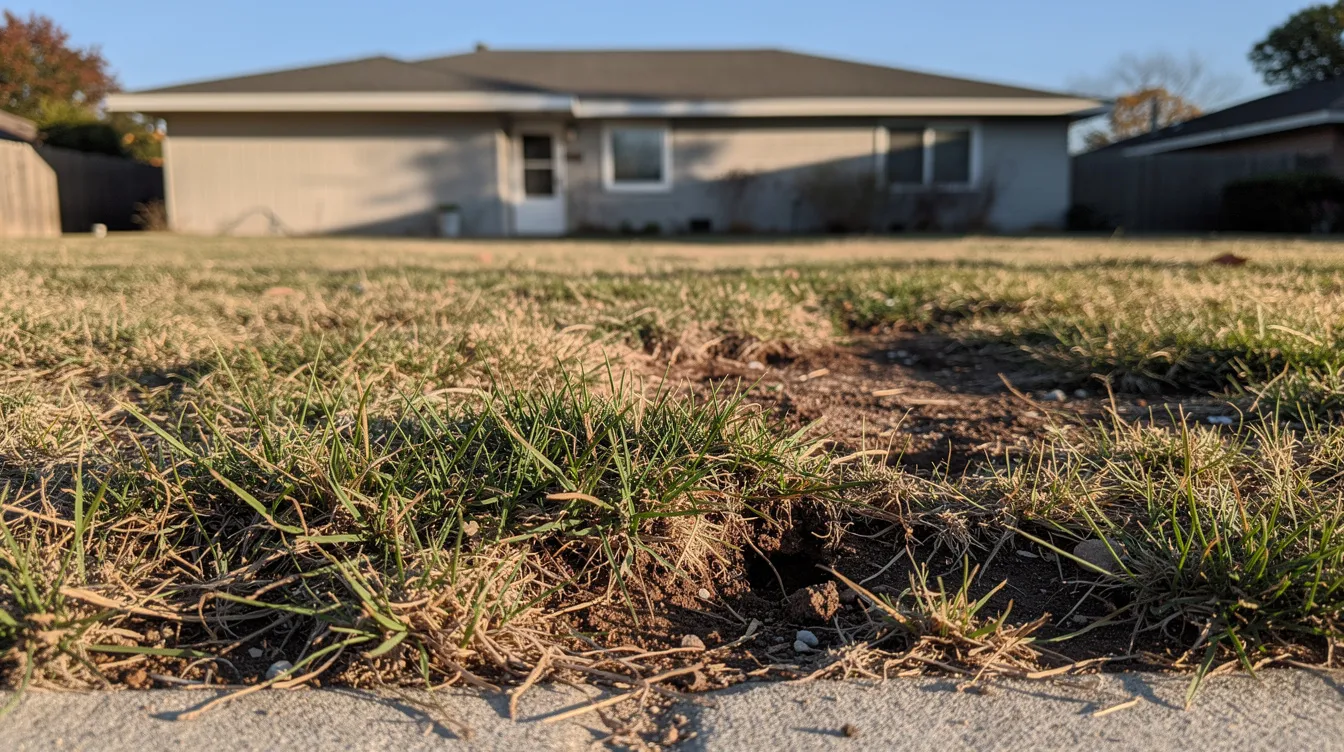
Will Patchy Grass Fill In On Its Own?
Occasionally, yes — but rarely in the way you'd hope.
Certain grass varieties spread through horizontal stems (stolons or rhizomes) and can gradually fill bare patches if conditions are right. However, this process is slow (a full growing season at minimum), and it only works if:
-
The bare patches are small (under 15–20cm across)
-
The surrounding grass is a spreading variety
-
The soil is in reasonable condition
-
There's no moss or heavy thatch present
In most UK lawns with significant bare patches or patchiness spread across the lawn, natural fill-in won't produce a satisfactory result. The timeline is too slow, and the underlying causes (moss, thatch, compaction) prevent natural recovery anyway.
The practical answer: don't wait. The correct fix, done once properly, takes 4–6 weeks. Waiting for natural recovery takes a full season at minimum and often doesn't work.
When to Fix a Patchy Lawn
Timing matters significantly, and in the UK the best times to repair lawn patches are spring and autumn. The two best windows are:
Early to mid-autumn (mid-August to mid-October) — the best window. Soil temperatures are still warm from summer, moisture is more consistent, and there's less competition from weeds and annual grasses. Grass sown in autumn has time to establish before winter and comes into full growth in spring.
Mid to late spring (April to May) — the second window. Soil is warming, days are lengthening, and conditions support germination. Spring-sown lawns face more weed competition and need more consistent watering than autumn-sown grass.
Grass seed germinates best when soil temperatures are around 10–16°C.
If you're outside these windows, the best decision is often to wait. A correctly-timed repair in September will always outperform a rushed job in July.
How to Fix a Patchy Lawn: The Correct Sequence
This is where most guides go wrong — not in what they recommend, but in the order they recommend it.
The sequence matters more than the individual products. Follow this exactly.
Step 1: Treat Moss First (Week 1)
This step is non-negotiable and it's the one most people skip.
Apply a moss killer and lawn treatment product to the full lawn — not just the patchy areas, because moss is rarely limited to the visible patches. Follow the product instructions for dwell time, typically 7–14 days.
You will see the moss blacken and die back. This is correct. Do not proceed to the next step until the moss treatment period is complete.
Why this matters: any seed applied to a mossy lawn cannot make proper contact with the soil. The seed sits on the moss layer, briefly germinates using the seed's own energy reserves, then dies. This is the cycle that produces the pattern of "seed worked for a few weeks then died."
Step 2: Scarify and Clear (Week 2–3)
Once the moss has died back, scarify the lawn to remove dead moss, thatch, and debris, helping air and light reach the soil.
Use a scarifier (electric or manual) set to scratch the soil surface. Run it across the lawn in two directions — horizontal then vertical — for thorough coverage. Rake up and remove all debris from the surface.
Your lawn will look considerably worse at this point. Bare soil and sparse grass are normal outcomes of proper scarification. You're not damaging the lawn — you're preparing it. New grass needs bare soil to germinate into, not a surface covered in dead organic matter.
For compacted areas, fork lightly or use a hollow-tine aerator before proceeding as part of the repair process. This is particularly important in high-traffic areas and clay-heavy soils.
Step 3: Level the Surface
Check for uneven patches — dips, hollows, or humps that have developed over time. Apply top dressing to low areas with a fine-grade lawn dressing or sandy topsoil and rake level; adding topsoil improves the seedbed for better grass growth. Firm lightly with the back of the rake to create a smooth, consistent surface.
Remove any remaining stones or large debris.
Step 4: Seed and Feed Simultaneously (Week 3)
Grass seed and a germination-supporting fertiliser must be applied on the same day. Reseeding is generally preferred by UK gardeners because it is cost-effective and works well for most patchy areas. Not seed first, then fertiliser a week later. Not fertiliser first, then seed. The same day.
The reason: quality lawn fertilisers contain mycorrhizal fungi — a network of beneficial fungi that form a symbiotic relationship with grass roots and dramatically improve nutrient uptake and stress tolerance. For mycorrhizal fungi to support new seedlings, they need to be present in the soil at the moment of germination. Apply fertiliser too late and you miss the window.
Apply seed at the correct rate for your lawn size using a spreader for even coverage; pre-germinating it before sowing can improve establishment and speed up early growth. Apply granular fertiliser at the same time. Both go down together.
For patchy areas rather than full lawn renovation, focus application on the bare patches but treat the full lawn with fertiliser to support existing grass simultaneously.
Step 5: Apply Liquid Biostimulant — Same Day as Seeding
On the same day you seed and fertilise, apply a liquid seaweed biostimulant diluted in water, using a fine spray.
Seaweed extract contains natural plant hormones (cytokinins and auxins) that stimulate cell division, improve root formation, and increase stress tolerance in seedlings. It accelerates the germination process and improves seedling survival rates, particularly during the temperature fluctuations common in UK spring and autumn.
This is the step that most DIY approaches miss. It's standard practice in professional lawn care. The difference in germination rate and early establishment is material.
Step 6: Water Consistently for 3–4 Weeks
New seed and newly sown grass need consistent moisture to germinate, root, and establish. The soil should not dry out completely at any point during the first 3–4 weeks.
Water gently and frequently rather than deeply and infrequently — a fine spray rather than a heavy soaking prevents seed displacement and reduces the risk of soil capping (a hard surface crust that inhibits germination).
In dry periods: water regularly, morning and evening, to prevent it from drying out. In wet periods: if there is enough rain, check that the soil isn't waterlogged but otherwise allow natural rainfall to do the work.
Do not walk on seeded areas during this period.
Step 7: First Cut at 5–6cm
When new grass reaches 5–6cm in height, take the first cut on the highest mower setting available — you're removing the very top of the blade, not cutting short. This encourages the grass to tiller (send out lateral shoots) and thicken rather than growing straight up.
Do not apply weedkiller or additional treatments until the lawn has been mown at least twice.
The Best Products for Fixing a Patchy Lawn
Product quality matters — particularly for grass seed and fertiliser, where the consumer-grade options available in garden centres differ significantly from professional formulations.
Moss treatment: Needs to be effective across the full lawn area, not just the visible patches. Liquid iron sulphate-based treatments are effective but stain hard surfaces; purpose-formulated lawn moss killers are more practical.
Grass seed: Use a perennial ryegrass or fescue-based mix formulated for UK conditions. Avoid cheap mixes with annual ryegrass — they germinate fast but don't persist. Check the seed mix breakdown before buying; any reputable product will list the varieties. Lawn seed establishes gradually and can take several months to fully mature even if germination is quick.
By contrast, new turf provides instant results and an instant fix for damaged areas.
Fertiliser: Must contain mycorrhizal fungi if applied at germination stage. Standard NPK fertilisers without mycorrhizal support are better suited to feeding established grass than supporting new seedlings.
Bio-stimulant: Liquid seaweed extract. Applied at seeding time, not as a standalone treatment.
If you'd rather not source four separate products from different suppliers and work out the correct rates for each, the GREENER Transformation Kit contains all four in professional formulations, calibrated for the correct application rates, with step-by-step sequencing built in.
Fix Your Patchy Lawn With the GREENER Transformation Kit
The Transformation Kit is a complete four-product lawn renovation system designed by a professional landscaper with over 20 years of experience. It's built around the exact sequence described in this guide.
POWER: Moss killer and lawn treatment, applied first in week one. Clears the underlying moss that prevents seed from establishing.
LAUNCH: Professional-grade perennial ryegrass seed formulated for UK conditions. Not the annual varieties from garden centres a genuine perennial mix that establishes and returns year after year.
GROWTH: Granular fertiliser with mycorrhizal fungi, applied simultaneously with seed on day one of growth. Supports root development from the moment germination begins.
BOOST: Liquid seaweed bio-stimulant, applied on the same day as seeding. Accelerates germination and improves seedling survival through the critical early establishment period.
Four products. The correct sequence. Applied in under an hour.
Results are visible in 4 weeks. Available for lawns from 100m² to 500m². Backed by a 60-Day Money Back Guarantee.
Fix Your Patchy Lawn With the Transformation Kit →
Frequently Asked Questions
Why does my lawn keep going patchy even after I reseed?
The most common reason is that the underlying cause, usually moss, wasn't treated before seeding. Seed scattered over moss or heavy thatch can't make proper contact with the soil and fails to establish. Treating moss first, scarifying thoroughly, then seeding is the sequence that breaks the cycle.
Will patchy grass fill in on its own without reseeding?
Occasionally, in small patches and with spreading grass varieties but the process takes a full growing season at minimum and only works if there's no moss or thatch preventing natural recovery. For most UK lawns with significant patchiness, active repair is faster and more reliable.
What's the best grass seed for repairing patchy areas in the UK?
A perennial ryegrass or fescue blend formulated for UK conditions. Perennial ryegrass germinates quickly (7–14 days), is hard-wearing, and establishes reliably in UK climate conditions. Avoid cheap seed mixes with high annual ryegrass content, they look good briefly and then thin out.
Can I fix patches in summer?
It's possible but not recommended. Summer heat dries the soil faster than new seedlings can establish, and without consistent watering twice daily the success rate drops significantly. If your lawn is patchy in summer, plan for an autumn repair in August–October — the best window of the year for UK lawn renovation.
How long does it take to fix a patchy lawn?
Germination is typically visible in 7–14 days. Meaningful coverage in patchy areas develops over 4–6 weeks. A fully established, thick lawn takes 8–12 weeks from seeding. Autumn-sown lawns may slow in cold weather but the roots continue developing underground and growth resumes strongly in spring.
Do I need to remove existing grass before reseeding patchy areas?
For isolated patches, no — scarify the area to remove dead material and expose bare soil, then seed directly. For widespread patchiness affecting most of the lawn, a full renovation approach (treating the whole lawn, not just patches) produces better results than attempting to address individual areas.
Why is my lawn patchy in spring specifically?
Spring patchiness that appears or worsens after winter typically indicates one or more of: moss that has expanded over winter taking advantage of stressed grass, waterlogging damage in low-lying areas, frost heave disturbing shallow-rooted grass, or the failure of autumn-applied seed that didn't establish before the cold. In most cases, treat moss first, then overseed in April–May.
Is a patchy lawn caused by dog urine?
Concentrated dog urine can scorch grass, causing yellow or brown patches — typically circular, with a greener ring around the outside (from diluted nitrogen) and sometimes leaving bare spots. These patches are distinct from the irregular patchiness caused by moss or thatch. For dog urine patches: flush the area with water immediately after the lawn is used, and reseed once the soil nitrogen levels normalise (2–3 weeks). A moss treatment isn't needed for urine patches unless moss is also present.


