


Reseeding grass lawn areas is one of the simplest ways to turn a thin, tired yard back into a thick, green space. Instead of stripping everything out, you add new seed to the existing lawn, repair bare areas, and help the existing grass recover. Here’s the practical process, from choosing the right seed to aftercare.
Key Takeaways
-
Reseeding a grass lawn means spreading fresh grass seed into an existing lawn to repair bare patches, thicken thin areas, and avoid starting a completely new lawn.
-
The best time in the UK is spring and autumn: mid-spring, especially April to May, or early autumn from late August to mid-October, when soil temperatures are above 8–10°C.
-
The core process is: assess the existing grass, remove weeds, remove moss, remove thatch, aerate, choose the right seed mix, sow, add top dressing, and water daily until established.
-
Lawn overseeding usually shows visible improvement within 3–6 weeks, but full thickening can take a full growing season.
-
Keep off the lawn for 2–3 weeks, keep the soil moist but not waterlogged, and delay mowing until the new grass reaches about 5–8 cm.
What Does Reseeding a Grass Lawn Mean?
Reseeding means adding fresh grass seed to an existing lawn. It is different from full renovation, where you strip back to bare soil and grow a new lawn from scratch. Overseeding is one of the most effective ways to restore a thinning or patchy lawn, improving density, color, and resilience without starting over.
Reseeding is often used for more damaged areas, while lawn overseeding is lighter and more regular. Overseeding helps to counter the natural thinning of lawns caused by foot traffic, drought, shade, soil compaction, and seasonal change. It also improves appearance, helps grass outcompete weeds, and keeps the lawn in good shape.
Common causes of thinning include pets, heavy use, poor soil, moss, thatch, drought, and compacted ground. If weeds outnumber grass, or more than 50–60% of the whole lawn is bare patches, starting again from bare earth may be the better option.
When Is the Best Time to Reseed a Lawn?
Timing matters because grass seed needs warmth, moisture, and stable weather, so choosing the right time helps it germinate well. The ideal times in the UK are spring, around March to early May, and late summer to early autumn, from late August through September.
Ideal timing for overseeding in the UK is early autumn, late August to mid-October, or mid-spring, April to May. Reseeding or overseeding your lawn is best done in mid-spring or early autumn when soil temperatures are between 10 °C and 20 °C and rain is frequent. The best time to overseed a lawn in the UK is during spring or autumn, as these seasons provide mild conditions and adequate moisture for seed germination. In these favourable conditions, grass seed typically begins to germinate within 7 to 21 days.
Autumn is the ideal window for reseeding because the soil is warm, moisture is plentiful, and weed competition is lower. Soil temperatures during spring and autumn are typically above 13°C, which supports reliable germination of grass seed. Avoid summer high heat unless you can use a sprinkler and water daily, because dry soil can stop seed before it starts. Also avoid frozen, waterlogged winter soil.
Choosing the Right Grass Seed for Your Existing Lawn
Choosing the correct seed mix is essential to complement your existing lawn rather than introducing grasses that struggle in your garden’s conditions. Before buying, inspect your existing grass: look at grass blades, colour, texture, and whether the lawn is fine or coarse.
When selecting grass seed, consider the specific conditions of your lawn, such as sunlight, moisture levels, and the intended use of the area, so you can choose the right grass plant for those conditions. For most family gardens and high-use lawns, a seed mix containing perennial ryegrass offers excellent durability and wear tolerance. For shade, drier spots, or a fine ornamental lawn, fescue-based mixes are often better; tall fescue can also suit tougher, drier areas.
Choose a quality seed mix labelled for lawns, not agricultural grass. The best seed packet should show suitability for full sun, shade, or heavy wear. The right seed keeps colour and texture consistent across the lawn. It should also suit your garden as a whole, not just one isolated patch.
Preparing Your Existing Lawn for Lawn Overseeding
Soil preparation is crucial for successful overseeding, and it is recommended to ideally start preparing the lawn 1-2 weeks before sowing seeds. Good prep is hard work, but it is what separates patchy results from thick growth.
First, cut the existing grass short, around 3–4 cm, and collect debris and clippings. Use a rake while scarifying to remove thatch and moss and loosen the top layer for better seed-to-soil contact. This opens the soil surface so new seed can reach the ground. Next, remove weeds by hand, or use a lawn-safe weed killer beforehand if needed, following the label directions. If you are killing off a larger area with a covering, seal the edges well so grass and weeds cannot grow through. Aerate compacted ground before reseeding. Aeration alleviates soil compaction, improves drainage, and helps new roots grow deeper.
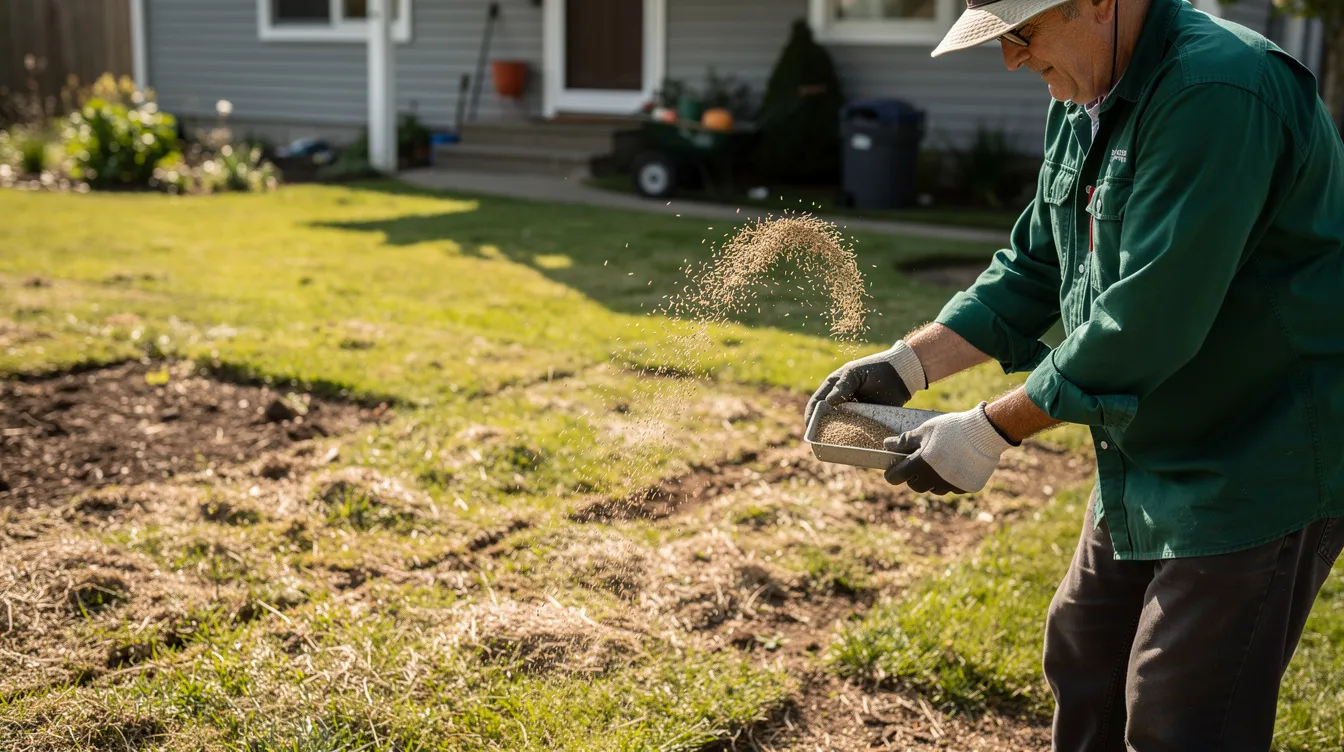
When sowing, spread the seed evenly at the recommended rate per square metre, and if possible use a seed spreader in a cross-hatch pattern for even coverage. Keep the depth very shallow, with only a light covering rather than burying seed deeply. After that, top-dress lightly; on a dry day you can brush in a thin layer, and a mix with a little sand can help level minor unevenness. Lightly covering the seed also helps stop birds from eating it.
Aftercare matters just as much. Apply a quick-release fertiliser before overseeding to support germination and strong roots. Keep the soil moist but not waterlogged until the seed germinates and seedlings are established. If there has been little or no rain, water daily until the lawn is established. Keep foot traffic off the area for 2–3 weeks, and make the first cut at about 50mm once the new grass is strong enough to mow.


