


How to Repair a Patchy Lawn: The Complete UK Guide
A patchy lawn is one of the most common garden problems in the UK — and one of the most frustrating, because it often gets worse before it gets better when you try to fix it.
This guide covers the actual causes of patchy grass, why most repair attempts fail, and the correct sequence for getting a lawn back to full coverage. Whether your lawn has bare patches, thin areas, yellowing, or general poor growth, the same principles apply.
We'll be direct: if you follow the right process in the right order, most UK lawns show visible improvement within 2–4 weeks. If you skip steps or use the wrong sequence, you can spend months and significant money without progress.
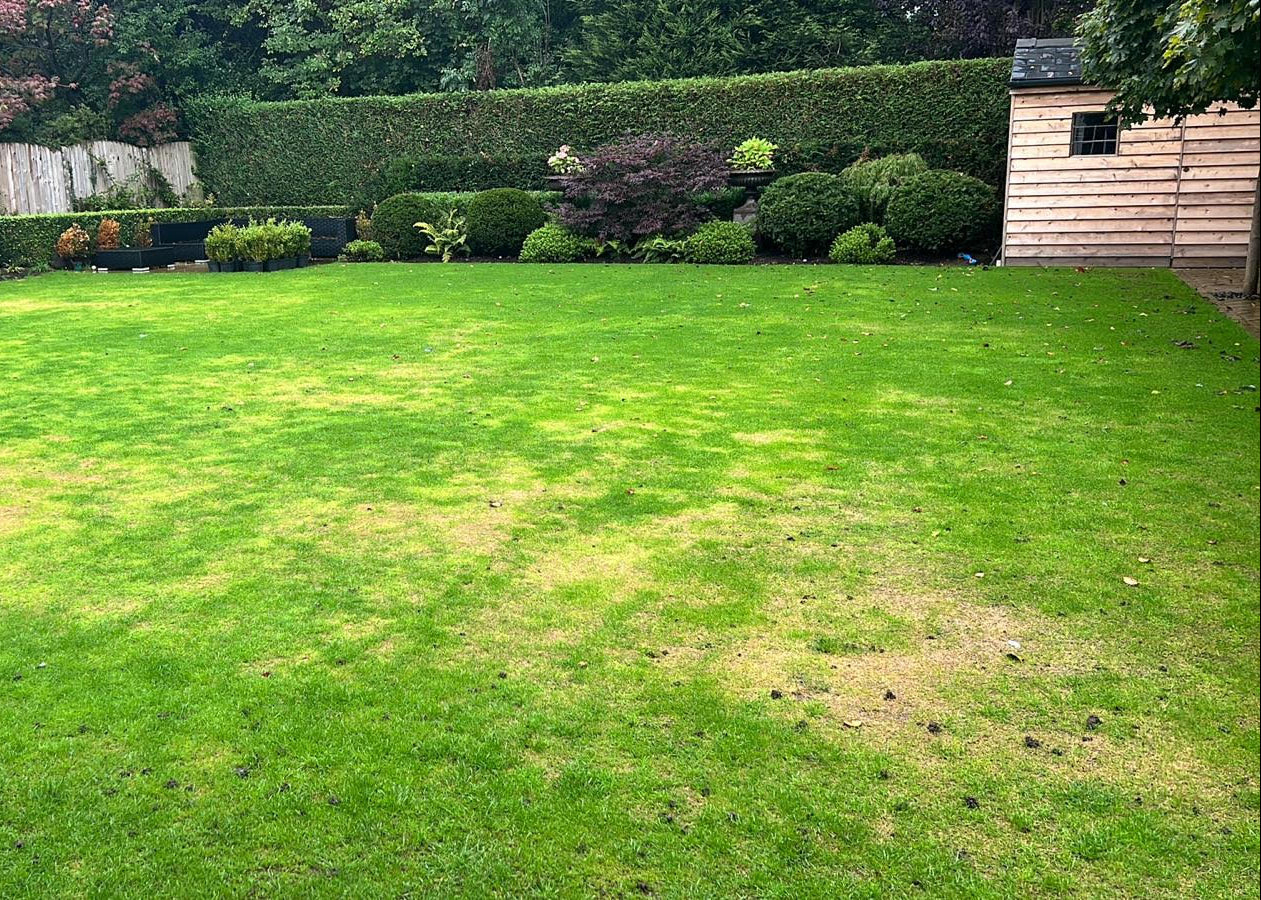
Why UK Lawns Go Patchy
Before you can fix a patchy lawn, you need to understand what caused it. There are six common causes in UK gardens, and they each require slightly different treatment:
1. Moss Invasion
Moss is the most common cause of patchiness in UK lawns. It thrives in the damp, acidic conditions that UK weather creates — particularly after winter and in shaded areas. Once established, moss outcompetes grass for water and nutrients, leaving bare patches when it dies back in spring.
Signs: Green, spongy mat-like growth. Brown patches after cold snaps where moss dies back.
2. Thatch Buildup
Thatch is a layer of dead grass, roots, and organic matter that builds up at soil level over time. A thin layer of thatch (under 1cm) is normal, but heavy thatch prevents water and nutrients reaching the soil. Grass thins and eventually dies in heavily thatched areas.
Signs: Spongy underfoot. Water sitting on the surface rather than absorbing. Yellowing despite regular watering.
3. Compaction
Heavy foot traffic, particularly on clay-heavy UK soils, compacts the soil and prevents root development. Grass in compacted areas grows thin and weak, eventually dying back to bare soil.
Signs: Hard ground, especially on worn paths. Poor drainage. Grass looking stressed in specific traffic areas.
4. Drought or Heat Stress
UK summers are increasingly warm and dry. Grass goes dormant under heat stress, turning yellow-brown. This often looks like permanent damage but is usually recoverable — grass roots frequently survive even when the top growth dies back.
Signs: Brown patches appearing in summer. Lawn recovers in edges and shaded areas after rain but not in full-sun zones.
5. Shade
Grass requires direct light to photosynthesise effectively. Areas under trees, along fences, or beside tall hedges frequently thin out as the season progresses. Standard grass varieties are not shade-tolerant.
Signs: Thinning that gets worse as summer progresses. Patches that track the shade pattern of nearby structures.
6. Soil Nutrient Deficiency
UK soils, particularly in newer-build properties where topsoil is often minimal or disturbed during construction, frequently lack the nutrients grass needs. Yellowing that doesn't respond to water is often a nutrition problem, not a water problem.
Signs: Yellow-green colour across a broad area. Poor growth response to rainfall. Weak, thin blade growth.
Diagnosing Your Lawn Problem
You don't need to be an expert to identify the most likely cause. Ask yourself:
- Is there visible moss? If yes — treat moss first before anything else.
- Is it spongy underfoot? Likely thatch — scarification before reseeding will help.
- Are patches on high-traffic routes? Compaction — aeration first.
- Did the patches appear in summer? Likely drought stress — may self-recover with water and fertiliser.
- Are patches under trees or beside fences? Shade — shade-tolerant seed varieties needed.
- Yellow colour everywhere rather than patches? Nutrition deficiency — fertiliser is the starting point.
Not sure? The free GREENER Lawn Diagnosis takes four questions and tells you exactly what your lawn needs.
Why Most Patchy Lawn Repairs Fail
The most common reason lawn repairs don't work is sequence. Not product quality — sequence.
Here's what typically happens: a homeowner notices bare patches, buys grass seed, scatters it, waters it, and waits. The seed germinates partially, but growth is thin, uneven, and often dies back within weeks. The problem is that the seed went into unprepared soil — possibly mossy, possibly compacted, possibly nutrient-deficient — without the conditions needed to establish.
Grass seed is the third step in a proper lawn renovation, not the first. Applying it first is like painting over mould — the underlying problem reasserts itself and your effort is wasted.
The correct order is: treat problems → prepare soil → seed → support establishment.
The Correct Repair Sequence for a Patchy UK Lawn
This is the process professional landscapers use. You can complete the full application yourself in under an hour.
Step 1: Treat Active Moss (Day 1–2)
If there's any moss in your lawn — even if it's not the main problem — treat it before doing anything else. Applying iron sulphate kills active moss within 24–48 hours, driving visible darkening and die-back. This clears the ground for new grass and improves colour in existing grass rapidly.
Do not scarify before treating moss. Scarifying while moss is alive spreads it further. Kill it first, then remove it.
Products to use: Liquid iron sulphate concentrate, diluted to manufacturer specification and applied by watering can or sprayer across the full lawn.
Step 2: Scarify if Needed (Days 3–7)
If your lawn has significant thatch (spongy feel, more than 1cm buildup), scarify after the moss has died back. Remove the dead material with a rake or powered scarifier. This opens up the soil and removes the layer that blocks water and nutrients.
For lawns without significant thatch, skip this step. Over-scarifying a thin lawn makes it worse.
Step 3: Apply Pre-Seed Fertiliser (Day 7–10)
Before seeding, feed the soil rather than the grass. A granular fertiliser with nitrogen, phosphorus, and potassium — ideally one that includes mycorrhizal inoculant — applied before seeding gives new grass roots the nutrients and root-building biology they need to establish quickly.
Apply evenly across the full lawn, including patches. Water in lightly.

Step 4: Overseed (Day 10–14)
Now seed the lawn. Overseeding means applying grass seed across the full lawn, not just bare patches — this thickens existing growth as well as filling gaps. For UK lawns, use a UK-formulated seed blend designed for British soil temperatures, not imported varieties.
Apply at the recommended rate, rake lightly into the surface, and keep consistently moist for 7–14 days during germination.
Expect to see new shoots within 7–14 days in spring and autumn conditions. Summer germination is slower but still achievable in properly prepared soil.
Step 5: Apply Biostimulant (Day 14–21)
Once new growth is visible, apply a liquid seaweed biostimulant across the full lawn. This supports root development, improves tolerance to heat and wear, and helps new grass establish stronger through its first growing season. Think of it as the finishing treatment that makes everything else work harder.
Step 6: Aftercare
Water consistently for the first four weeks. Do not mow new grass until it reaches 8–10cm in height. Avoid heavy foot traffic on newly seeded areas for 4–6 weeks.
What to Expect Week by Week
- Days 1–2: Colour change visible if iron was applied. Lawn looks darker and richer.
- Days 7–14: New shoots appear in patchy areas. Germination is visible.
- Week 3: Coverage improving noticeably. Lawn filling out.
- Week 4: Transformation clear — thicker coverage, better colour, healthier finish.
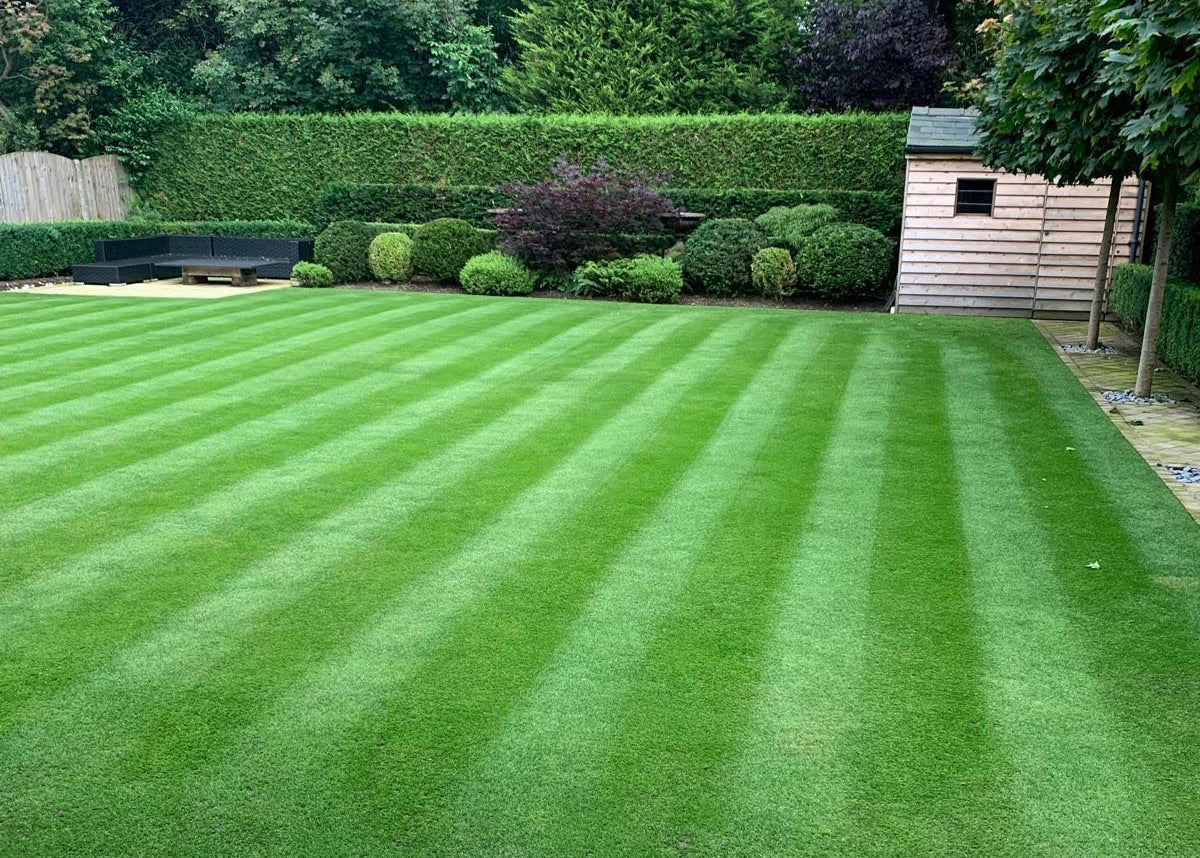
Best Time to Repair a Patchy Lawn in the UK
The two strongest windows for lawn renovation in the UK are April–May and September–October. Soil temperatures above 8°C are needed for reliable germination, and these periods combine warm soil with adequate rainfall and less harsh heat stress.
That said, the kit works in any period when the lawn is actively growing. Summer renovations are achievable — growth is faster above 15°C — though you'll need to water more consistently to support new grass through drier conditions.
If you're reading this in June, you still have a window. The cut-off for summer results is typically late June — seed applied before then germinates and establishes before the hottest weeks, giving you a transformed lawn before autumn.
Keeping Your Lawn Healthy After Renovation
Once your lawn has recovered, the goal shifts to maintenance. A few principles that apply to every UK lawn:
- Mow at the right height. Never remove more than a third of the grass blade in a single mow. Cutting too short stresses grass and encourages moss.
- Feed seasonally. Spring feeding supports growth. Autumn feeding builds root strength for winter. Summer feeding risks scorching in dry conditions.
- Aerate annually. A simple hollow-tine aerator or garden fork applied once a year prevents compaction from building up.
- Water deeply, not frequently. Occasional deep watering encourages deep root growth. Frequent shallow watering produces shallow roots that struggle in dry spells.
For ongoing seasonal care, the GREENER Seasonal Care Subscription delivers the right products at the right time of year — so you never miss a treatment window.
Fix Your Patchy Lawn This Season
The GREENER Transformation Kit contains all four products needed for a complete renovation — in the correct pre-measured quantities, with a step-by-step guide. Apply in under an hour. Results in 2–4 weeks.
Covers up to 100m². Backed by the 60-Day Lawn Pledge.
Fix My Lawn — From £64.99Fast UK delivery · No experience needed · 60-Day Lawn Pledge


