


Key Takeaways
-
The best time for sowing grass seed in the UK is mid-April to late May or early September to mid-October; early autumn is often best because the soil is warm and damp.
-
Aim for 8–10°C soil temperatures for at least two weeks, measured about 5 cm below the soil surface, with no frost, storms, or hot weather forecast.
-
Good germination depends on seed-to-soil contact, a firm but crumbly surface, and keeping the soil moist, not waterlogged, for 2–3 weeks.
-
A new lawn needs full seedbed preparation; overseeding an existing lawn needs mowing, scarifying, moss removal, and exposed soil.
-
First mowing should wait until grass seedlings reach about 7.5–8.5 cm; use sharp blades and cut only the top 1 cm.
When to Sow Grass Seed
When you plant grass seed, timing is the first big decision. In the UK and similar climates, grass seeds usually germinate in 7–21 days when nights stay at or above 6–7°C and do not drop below freezing. For optimal germination, grass seed should be sown when temperatures are consistently between 8-10 degrees Celsius for at least two weeks without adverse weather conditions.
Use a soil thermometer or a reliable local weather forecast, not daytime warmth alone. Avoid sowing grass seed if the next 14 days show frost, heavy rain, storms, or prolonged dry heat, which can wash away, rot, or dry out seed. Summer is generally considered the worst time to sow grass seed due to high temperatures and dryness, which can lead to seed failure, although it can be done with proper care.
Sowing grass seed in spring
Sowing grass seed in spring is also a good option, as it combines warmth, sunshine, and rainfall, allowing the lawn to establish before summer. Mid-April to late May usually works well, especially for a new lawn you want to use later in the season. Delay if the ground is waterlogged after snow or rain.
Spring is also useful for overseeding an existing lawn after winter damage and moss removal. If late May or June turns dry, water regularly, especially on sandy soil that cannot hold moisture for long.
Sowing grass seed in autumn
The best time to sow grass seed in the UK is typically in early autumn when the soil is warm and damp, providing ideal conditions for germination. Autumn sowing usually means fewer weeds, steadier rainfall, and stronger roots before winter.
Sow early enough for green shoots to be mown once or twice before frost, ideally giving 6–8 weeks of growth. Avoid late autumn sowing on heavy clay if the ground is wet, because walking and digging can make compacted soil worse.
Choosing the Right Grass Seed Mix
Not all lawn seed mixtures behave the same. Choose a seed mix based on lawn use, soil, shade, and maintenance, not just price. Check the label for species percentages, sowing rates, and any added fertiliser or soil improver; fresh certified seed gives better germination than old seed.
Matching seed mix to lawn use
Multi-purpose lawn seed is formulated to withstand heavy use, making it suitable for family lawns that experience a lot of foot traffic from children and pets. These mixtures often include perennial ryegrass, a fast germinating grass type that is ideal for challenging conditions, making it suitable for quick patches and overseeding.
Luxury lawn seed mixes typically do not contain ryegrass and are designed for ornamental lawns, requiring more maintenance but providing a lush appearance. Wild or meadow-style mixed seed can suit a front garden where pollinators matter more than a formal, beautiful lawn.
Considering soil and light conditions
Shady lawn seed is specifically designed for areas with limited sunlight, thriving in drier conditions and providing a lush lawn in shaded gardens, especially under trees or beside buildings. For dry, south-facing areas, choose drought-tolerant species with deeper roots. Clay soil may need compost, sand, aeration, and careful preparation so grass can thrive through wet winters.
Preparing the Lawn Area Before Sowing
Preparation is what separates patchy turf from a dense lawn. To prepare your lawn for sowing grass seed, clear the area of any vegetation and debris, including old plants and weeds, to create a clean seedbed. Remove perennial weeds such as docks and dandelions before cultivation.
The aim is a level, firm but not compacted soil surface, free from stones, large stones, and debris, with fine soil in the top 2–3 cm. Incorporating a pre-seeding feed into the soil before sowing grass seed can provide essential nutrients that promote healthy growth and establishment of the new lawn.
Preparing a new lawn from bare soil
Creating a new lawn means removing old turf, plants, and weeds, then working the soil to 10–15 cm depth. Digging or rotovating the soil helps break up compaction and allows water to penetrate, which is essential for healthy grass root development.
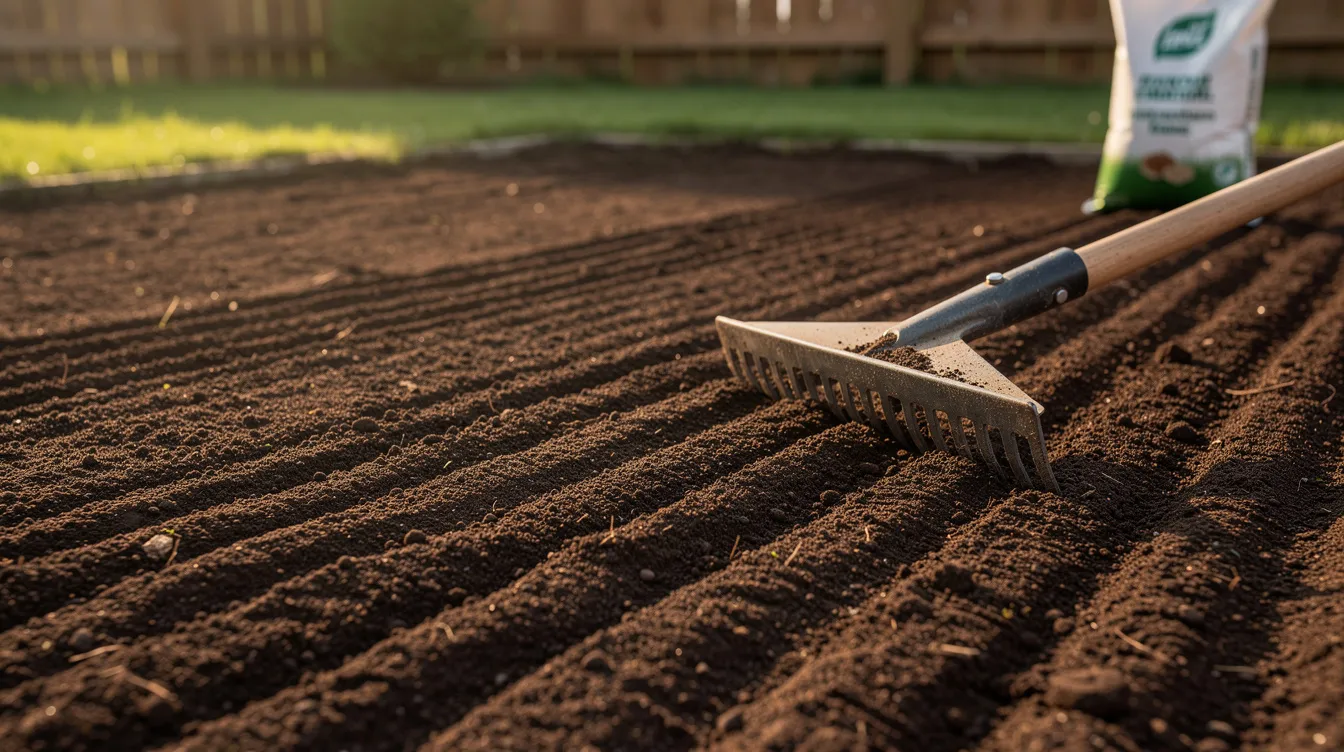
Raking and leveling the soil surface is crucial to ensure an even seedbed, which helps prevent issues during mowing and promotes uniform grass growth. Firm the whole area by treading heel-to-toe, then lightly rake again so the top layer is crumbly. Let soil settle for several days or up to three weeks before sowing.
Preparing an existing lawn for overseeding
Overseeding is best when the existing lawn is thin but still mostly present. Mow short without scalping, collect clippings, then rake or scarify out moss, thatch, and dead grass so lawn seed reaches the soil surface.
On compacted areas, spike or hollow-tine aerate before overseeding. Brush in a thin topdressing of loam, sand, and compost to fill hollows and improve seed contact.
How to Sow Grass Seed Step by Step
Accurate sowing gives great results. The recommended sowing rate for grass seed is 25 to 30 grams per square meter to avoid overcrowding, which can lead to weak plants and increased susceptibility to disease; this is roughly the same per square metre, but always follow the packet.
Divide the seed and the lawn into sections. If using a spreader, start at about a one-third open setting and apply the seed in several passes for even coverage. Seed must be laid on bare soil, not long grass or thatch. When sowing grass seed, it is important to lightly run a rake over the surface after sowing to keep good seed-to-soil contact.
This process also depends on aftercare, not just sowing. Keep the soil moist until the grass is growing strongly rather than relying only on rainfall.
Wait to apply lawn feed until the grass is fully established. For the first mow, choose a dry day. In the first six months, remove weeds by hand or use a selective weed control product once the lawn is fully established.


