


Most people think about fixing their lawn in spring. By the time they're standing on a patchy, tired lawn in September wondering what to do, they've usually missed the best window of the year without realising it existed.
Here's the timing reality, why autumn is actually one of the strongest windows for lawn repair in the UK, what independent gardening authorities say about it, and how to choose a kit that works with the season rather than against it.
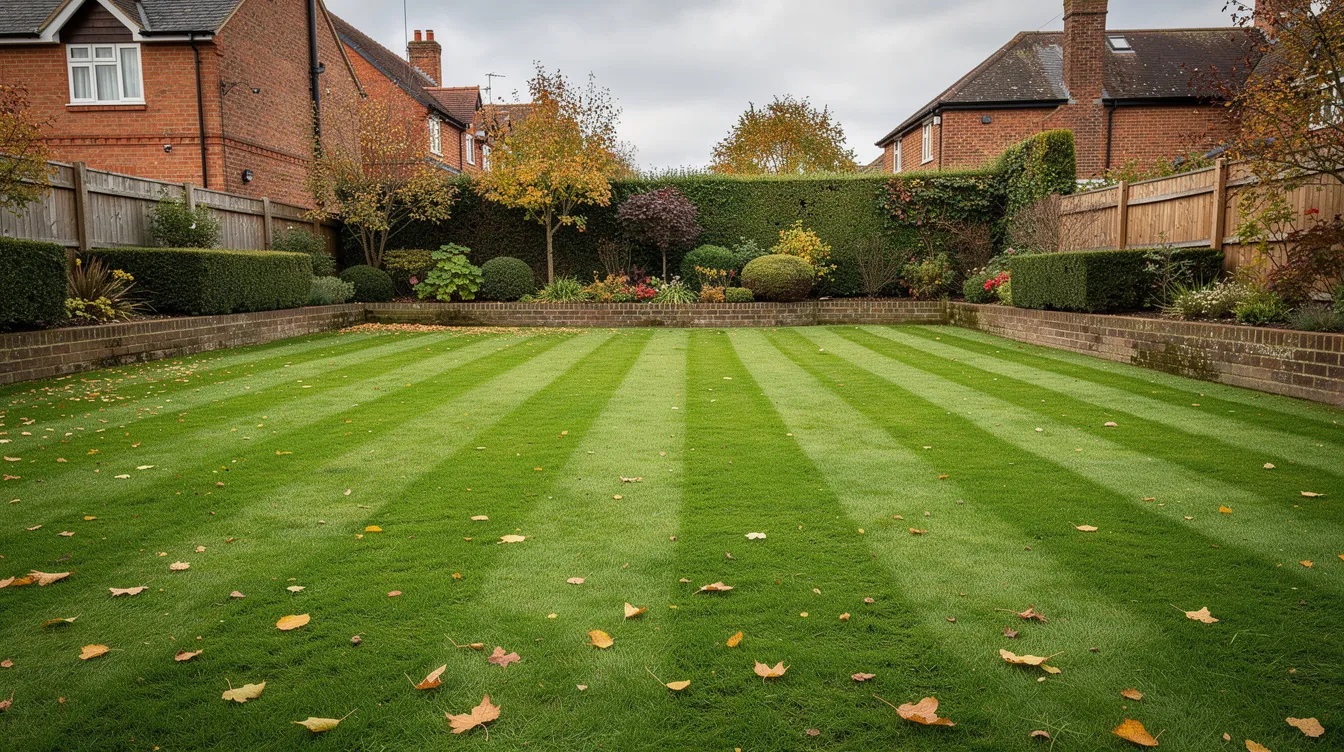
Why autumn is a genuine opportunity, not a compromise
Grass seed and lawn treatments need warm soil to work. Not warm air, warm soil. The GREENER Transformation Kit is formulated to work whenever soil temperature is above 8°C, which in the UK typically means April through October.
That means early and mid autumn still sits inside the effective window, while the ground holds onto summer warmth even as the air cools. This isn't just our own framing. The RHS's guide to starting a lawn from seed makes the same point: early autumn is often the better option for sowing because the soil is still warm enough for grass seed germination, while cooler air and more reliable rainfall help seedlings establish before the first hard frosts. In UK terms, that makes September to October the key sowing window, and if rain does not arrive soon after applying feed or seed, watering it in helps maintain the moisture those treatments rely on. Their dedicated autumn lawn care advice goes further, treating autumn as a primary maintenance season in its own right, not an afterthought to spring.
The practical takeaway: if your lawn has looked patchy, thin, or mossy all summer and you've been putting it off, autumn is not a consolation prize. It's a legitimate, well-suited window, provided you act while soil is still warm rather than waiting until the first frost.
Check if your lawn is still in the effective treatment window
What actually goes wrong when people leave it too late
The lawns that struggle most going into winter are usually the ones where the owner waited for "better weather" that never quite arrived, then applied treatment too close to the first cold snap for the grass to establish properly.
Seed needs time to germinate and root before growth slows for winter. Applying too late means the lawn goes into the coldest months with shallow, undeveloped roots, exactly the condition that makes a lawn look patchy and weak again by spring. The RHS's own repair guidance is blunt about this: spring and autumn are the two windows when damaged lawns recover well, and everything outside those windows is working against the plant's natural growth cycle rather than with it. See their full repairing lawns guidance for the detail.
The fix isn't complicated: treat while soil is still warm, not after it's cooled. If you're unsure whether your specific lawn and region are still inside that window, our free 60-second diagnosis quiz gives you a plan matched to your conditions rather than a generic date on a calendar.
What to look for in an autumn lawn repair kit and autumn lawn feed
An autumn lawn repair kit is most suitable for lawns with moss or patchy grass that need repair, rather than lawns with no real underlying issues. A few things matter more than they do in spring:
-
Moss treatment first. Autumn's damp conditions are exactly when moss thrives. The RHS's dedicated guide on moss in lawns confirms moss favours damp, poorly drained, shaded and compacted ground, all of which describe a typical UK autumn lawn. A kit that leads with a proper moss treatment, rather than skipping straight to seed, matters more now than at any other point in the year.
-
A UK-specific seed blend. Generic seed mixes aren't bred for UK autumn conditions. The right seed mix depends on lawn conditions, and a blend formulated for fast establishment in cooling, damper soil should also include hardwearing cultivars suited to the UK climate to give seed a real chance before growth slows for winter.
-
Autumn lawn feed. The right lawn feed matters more in autumn because there's less remaining growing season to correct a slow start: an autumn lawn feed is high in potassium and phosphates, encourages root growth through winter, and avoids high-nitrogen formulas that push frost-vulnerable leafy growth.
What's in the GREENER Transformation and lawn renovation kit for an autumn application
The Transformation Kit is built around this exact sequencing problem:
-
POWER (liquid iron sulphate): applied first, suppresses moss and active weeds and visibly darkens grass within 24-48 hours. In an autumn lawn renovation kit, iron sulphate is the moss-control component you want. Given autumn's dampness, dealing with moss before it spreads further is the priority step, matching the RHS's own moss guidance.
-
LAUNCH (premium grass seed): a UK climate blend applied at seeding, formulated for fast, even establishment during the cooler, wetter conditions the RHS identifies as favourable for autumn sowing.
-
GROWTH (granular mycorrhizal fertiliser): applied alongside LAUNCH, this feeds new roots from the moment of germination rather than after, which matters when there's a shorter growing window left before winter. The mycorrhizal fungi also help improve uptake of nutrients while new grass establishes.
-
BOOST (liquid seaweed biostimulant): applied immediately after seeding to support stress tolerance and root anchoring while the seedling establishes.
The full kit starts at £89.99 for lawns up to 100m², with sizes up to 500m² available, and is backed by the 60-Day Lawn Pledge: visible improvement or a full refund. If you want to see exactly what that improvement looks like stage by stage, our week-by-week transformation timeline covers day one through week four in detail, and many lawns show a clear transformation in about 4 weeks.
A simple way to think about the decision
|
|
Treat now, in autumn |
Wait until spring |
|---|---|---|
|
Soil temperature |
Still warm enough to work |
Uncertain, depends on how early spring arrives |
|
Moss |
Treated before it spreads over winter |
Has all winter to spread further |
|
Root development time |
Several weeks before dormancy |
None until spring restarts |
|
Lawn condition by next summer |
Established, ahead of the season |
Starting from patchy again |
Waiting until spring doesn't reset the clock to zero. A lawn that goes into winter thin and mossy usually comes out the other side thin and mossy, just for another few months. If you're weighing this up because you're planning to sell, our guide on lawn kits before a house sale covers the tighter timeline version of the same problem.
How this compares to buying products separately
A common autumn approach is picking up a DIY lawn pack as separate components — often grass seed, topsoil and autumn lawn feed — or buying a moss killer, seed and fertiliser separately at a garden centre, without a coordinated plan. The risk isn't that any individual product is bad, it's that autumn leaves very little room for error on sequencing, so a complete kit should also include moss treatment and grass seed in the right order. Seeding into unsuppressed moss wastes the seed. Feeding before seed has germinated wastes the fertiliser. With a shorter growing window than spring, a coordinated system where the order is already decided for you removes the single biggest way autumn lawn repair goes wrong, especially when it comes with clear application instructions.
What if you're already late in the season?
If you're reading this in late October or November, don't assume you've missed the window entirely, but do prioritise differently. Soil above 8°C is what matters, not the calendar date, and UK autumns vary year to year. In that scenario, applying POWER on its own for moss suppression and colour improvement is worth doing even if a full reseed is pushing it. The free diagnosis quiz will flag if your specific conditions and lawn size suggest holding the seeding stage until spring while still tackling moss now.
FAQ
Is it too late to fix my lawn in autumn?
Not if soil temperature is still above 8°C, which typically holds through October in most of the UK. Before repairing, mow the lawn, clear debris so it does not block light, and use a rake to expose bare soil for better seed contact. The later into autumn you go, the more important it is to act promptly rather than wait for a clearer window. Spread grass seed evenly over the prepared area and keep it consistently watered after sowing for reliable germination.
Will grass seed germinate in autumn UK weather?
Yes, provided soil is still warm and moisture is adequate, which autumn conditions usually provide. The RHS's own guidance on sowing from seed rates early autumn as one of the two best sowing windows of the year. LAUNCH, the seed blend in the Transformation Kit, is formulated for UK climate conditions specifically, not a generic warm-season blend. If you're applying autumn lawn feed, do it just before rain is forecast and use roughly a handful per sq m as a simple guide rate. A moisture-retaining medium such as coir can also help seed germination in autumn conditions.
Should I deal with moss before or after seeding in autumn?
Before. Autumn's damp conditions favour moss growth, so treating it first with an iron sulphate product like POWER, then seeding into the cleared area, gives seed the best chance rather than competing with moss for space and light. If you cannot easily see soil between the grass blades, scarifying is usually needed first. This removes thatch so water can penetrate and seed can reach the surface more effectively.
What if I'm in Scotland or the North, where it's already colder?
GREENER is formulated for UK conditions across all regions. In colder or heavier-soil areas, it also helps to aerate patches of compacted soil before seeding; for small areas, use a garden fork to make holes at least 5cm deep so air and water can move more freely to grass roots and help prevent winter waterlogging. Results may take slightly longer to appear in cooler northern areas, but the same core approach, moss treatment before seeding, and acting while soil is still warm, applies throughout the UK.
What happens if I apply it and don't see results?
The 60-Day Lawn Pledge covers this: follow the guide, apply in order, water as directed, and if you don't see visibly thicker, greener grass, you get a full refund. After aerating, a light top dressing can also help improve soil structure, texture and drainage; as a guide, apply around 2–3kg per sq m as part of the process.
Would I be better off with an ongoing subscription instead of a one-off kit?
If you'd rather not think about seasonal timing every year, our Seasonal Care Subscription applies the right treatment automatically across spring, summer and autumn to help keep a healthy lawn in good shape, including periodic aeration every 2-3 years rather than waiting for obvious damage. The diagnosis quiz will tell you which fits your situation better.


