


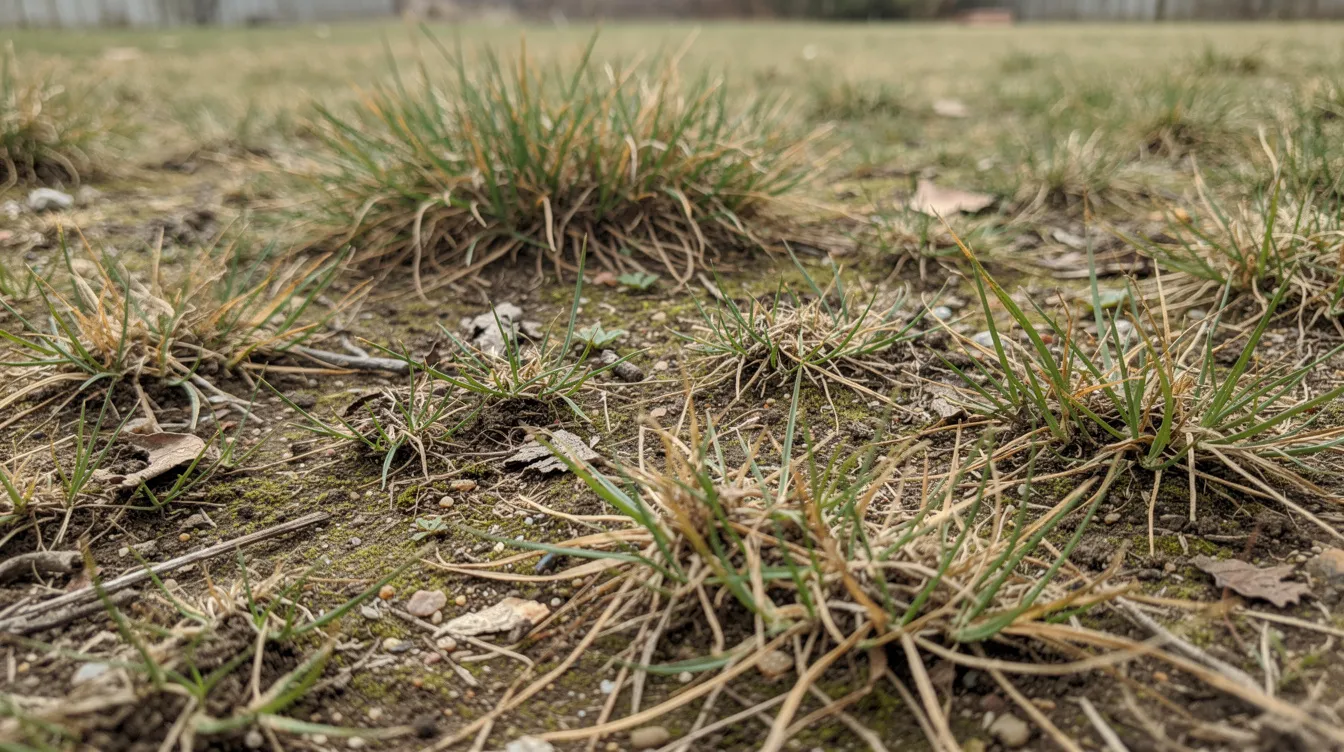
Your lawn has bare patches. You've tried seed. You've tried feed. You may have even tried one of those all-in-one bag products from the garden centre.
And it still looks patchy.
The problem isn't effort. It's that most lawn repair kits and the approach most people take are built around the wrong sequence. You're applying the right products in the wrong order, or missing a critical first step entirely.
This guide covers what to look for in a lawn repair kit, why most options fall short, and what the correct approach actually looks like if you want a thick, green lawn rather than another disappointing spring.
Why Most Lawn Repair Attempts Don't Work
Before comparing kits, it's worth being clear about why patchy lawns are so hard to fix — and why the usual approach fails. Heavy foot traffic is one of the most common causes of patchy areas and bare spots, which is why proper diagnosis matters before repair and why effective lawn repair kits in the UK focus on patching bare spots.
The Moss Problem
Thin or damaged patches are not always just moss: shade often leaves grass sparse, dog urine from pets can scorch it into yellow spots, compacted organic debris can smother growth until it wilts, and drought can create large, widespread bare areas. Even so, the majority of patchy UK lawns have an underlying moss problem. Moss thrives in our climate — cool temperatures, high rainfall, and shaded gardens create perfect conditions for it, and damage from pests can make those weak areas worse. The problem is that moss doesn't just look bad: it actively prevents grass from recovering.
Scatter seed over a mossy lawn and the seed lands on the moss layer, not on soil. It doesn't germinate properly. What does germinate dies within weeks because the roots can't establish.
The fix: moss must be treated and cleared before any seed goes down. This is not optional. It's the step that determines whether everything else works.
Most lawn repair kits skip this step entirely.
The Sequence Problem
Even in kits that include moss treatment, the instructions often get the order wrong — or don't explain why the order matters.
The correct sequence is:
-
Treat moss first (week 1)
-
Scarify and clear the dead matter
-
Apply seed and fertiliser simultaneously (week 3)
-
Apply liquid biostimulant on the same day as seeding
Once the area is cleared, prepare the exposed soil properly; Royal Horticultural Society guidance is to turn the surface over lightly and add compost if needed before seeding, rather than rushing the process or trying to cover seed on unworked ground.
Each step depends on the previous one. Fertilising before clearing moss wastes product. Seeding before treating moss means the seed can't make soil contact. Applying fertiliser weeks after seeding misses the critical germination window when mycorrhizal fungi can support early root development.
Sequence is the difference between a lawn that recovers and one that doesn't.
The Wrong Products
Garden centre products are designed to be broadly applicable and shelf-stable. That means compromises — grass seed varieties that germinate quickly but don't persist, fertilisers without the mycorrhizal fungi that support germination, and moss treatments that aren't strong enough for a seriously mossy UK lawn.
Professional results require professional formulations, applied in the right order, because the wrong products usually mean the wrong seed mixture for the site conditions too; the Royal Horticultural Society advises choosing an appropriate seed mix, and effective UK repair kits typically pair fast-acting lawn seed with fertiliser rather than relying on generic shelf-stable blends.
What to Look for in a Lawn Repair Kit
If you're evaluating lawn repair kits, here's what actually matters:
1. Moss Treatment Included — and Applied First
Any kit that doesn't include a moss killer, or that tells you to apply seed before treating moss, is not a complete lawn repair solution. It's a seeding kit. There's a significant difference.
Look for a kit that explicitly tells you to treat moss first and explains why. For lawn patch repair, a complete kit should use an all-in-one blend of premium grass seed, feed, and water-retaining mulch rather than a basic scatter-only approach.
2. Professional-Grade Grass Seed
The grass seed in budget kits is often an annual ryegrass variety — it germinates fast and looks good in week three, then thins out and doesn't return the following year. You want perennial ryegrass or a quality fescue blend — varieties bred for the UK climate that establish year after year. Seed format matters too: for example, some coated Lawn Repair Sticks have a higher germination rate than traditional seeds and contain 5-20 grass seeds each, which can make sowing lawn seed more reliable and help protect it from birds after you sow.
Check the seed mix on any kit you're considering. If the product doesn't tell you what's in the seed, that's a red flag.
3. Granular Fertiliser With Mycorrhizal Fungi
Standard fertilisers feed grass that's already growing; while some consumer kits, such as Quick Seed Pro, include seed, fertiliser, and organic substrate, fertiliser quality still matters because not all feeds support germination equally or deliver the right nutrients. A germination-supporting fertiliser with mycorrhizal fungi actively supports root development from the moment the seed germinates. This is particularly important in the UK's variable spring and autumn conditions.
If the kit doesn't include mycorrhizal fungi in the fertiliser, you're getting a weaker result than you should.
4. A Biostimulant
Liquid seaweed biostimulants are standard in professional lawn care. They accelerate cell division, improve stress tolerance in new seedlings, and support root formation. Applied on the same day as seeding, they give new grass the best possible start.
Most consumer kits don't include this. It's one of the reasons professional lawns look different to DIY ones.
5. Clear Sequencing Instructions
A good lawn repair kit doesn't just tell you what to apply — it tells you exactly when, in what order, and why. If the instructions are vague or just say "apply in spring," that's not enough guidance to get consistent results.
The Main Options for Lawn Repair in the UK
Garden Centre All-in-One Products
Products like Miracle-Gro EverGreen Complete 4-in-1 or Patch Magic are the most widely available option. They're designed as single-application convenience products — one product, scatter and water.
The reality: these products prioritise convenience over effectiveness. They typically combine weedkiller, fertiliser, and seed in a single application, which creates a fundamental conflict: weedkiller active ingredients inhibit seed germination. You're applying two things that work against each other in a single product.
They also contain no moss treatment stage, meaning a mossy lawn won't be properly prepared for the seed to take.
Fine for minor top-up of an otherwise healthy lawn. Not sufficient for genuine lawn repair or renovation.
DIY Individual Products
Buying moss killer, grass seed, and fertiliser separately from a garden centre gives you more control over what goes into each stage — but it requires knowing which products to choose, in what formulations, and how to sequence them correctly.
The main problems: it's expensive to buy separately (three or four products from a garden centre adds up quickly), the quality of consumer-grade individual products varies significantly, and most garden centre staff won't be able to tell you the correct sequence.
This is the approach that leads most people to conclude "I've tried everything and nothing works."
Professional Lawn Treatment Services (GreenThumb, etc.)
Services like GreenThumb send a trained operative to treat your lawn on a seasonal schedule. The results can be good, but the cost is significant — typically £200–£500+ per year depending on lawn size, and you're on a recurring contract.
You also have no control over what's applied or when, and you're dependent on visit scheduling that may not align with optimal treatment windows.
The alternative: the same professional results, done yourself, in under an hour, at a fraction of the cost.
A Complete Lawn Renovation Kit With Correct Sequencing
The most effective option for genuine lawn repair is a kit that includes every product needed, in the correct professional formulations, with clear instructions on the exact sequence to follow.
This is what GREENER was built around.
The GREENER Transformation Kit: A Complete Lawn Repair System
The GREENER Transformation Kit is a four-product lawn renovation system designed by a professional landscaper with over 20 years of experience. It includes everything needed to take a patchy, mossy, bare lawn to thick green grass, in the correct sequence.
What's in the Kit
POWER — Moss Killer and Lawn Treatment
Applied in week one, before any seeding. POWER treats moss across the full lawn area, breaking down the organic matter that prevents seed from making soil contact. This is the step most kits skip and the reason most reseeding attempts fail.
LAUNCH — Professional Grass Seed
A perennial ryegrass mix formulated for UK conditions. Applied in week three, after the lawn has been cleared and prepared. Not the annual varieties you find in garden centres — a genuine professional-grade seed that establishes and returns year after year.
GROWTH — Granular Fertiliser With Mycorrhizal Fungi
Applied on the same day as LAUNCH — simultaneously, not before or after. The mycorrhizal fungi in GROWTH actively support root development from germination day one, giving new seedlings the best possible start. This is the product that makes the difference between thin, patchy regrowth and thick, dense grass.
BOOST — Liquid Seaweed Biostimulant
Applied on the same day as seeding. BOOST accelerates cell division, improves stress tolerance in new seedlings, and supports early root formation. The finishing step that professional lawn care operatives use and most DIY products don't include.
What Makes It Different
Most products give you one thing and tell you it'll fix your lawn. The Transformation Kit gives you the complete system — every product, in the right formulation, in the right order.
The sequence is built into the kit. You don't need to figure out what to buy next or when to apply it. Open the box, follow the steps, and apply in under an hour.
Coverage and Pricing
The Transformation Kit is available for lawns from 100m² to 500m².
|
Lawn Size |
Kit |
|---|---|
|
Up to 100m² |
1-box kit |
|
Up to 200m² |
2-box kit |
|
Up to 300m² |
3-box kit |
|
Up to 500m² |
4-box kit |
Not sure what size your lawn is? Measure the length and width in metres and multiply. For irregular shapes, divide into sections and add them together.
Results are visible in 4 weeks. The kit is backed by a 60-Day Money Back Guarantee — if you follow the sequence and don't see results, you get your money back.
Fix Your Lawn With the Transformation Kit →
How to Use a Lawn Repair Kit: The Correct Sequence
Regardless of which kit you use, the sequence below is what professional lawn care actually looks like. Follow this and you'll get results. Skip steps and you won't.
Week 1: Treat Moss
Apply your moss killer to the full lawn area. Leave it to work for 1–2 weeks. You'll see the moss blacken and die back — this is exactly what should happen.
Do not seed during this period. The moss treatment needs to complete its job before you introduce new seed.
Week 2–3: Scarify and Clear
Once the moss has died back, scarify the lawn to remove dead matter and expose bare soil. Run a scarifier or stiff rake in two directions — horizontal then vertical — to thoroughly clear the surface.
Rake up and remove all debris. Your lawn will look significantly worse at this stage. That's normal — you're clearing the way for new growth.
Lightly fork or aerate compacted areas to improve drainage before seeding.
Week 3: Seed, Feed, and Boost All on the Same Day
This is the step that most people get wrong by splitting it across days or weeks.
Apply your grass seed at the correct rate for your lawn size. Apply granular fertiliser with mycorrhizal fungi on the same day — not before, not the following week. The mycorrhizal fungi need to be present in the soil at the moment of germination.
Apply your liquid biostimulant on the same day, watered in gently with a fine spray.
Weeks 3–7: Water Consistently
New grass seed needs consistent moisture. Water morning and evening in dry spells. Don't allow the soil to dry out completely during the first 3–4 weeks.
Do not walk on the seeded area.
Week 5–6: First Cut
When the new grass reaches 5–6cm, set your mower to its highest setting and take a light first cut. Remove no more than the top third of the blade, and only mow again as needed. Although the first cut comes within weeks, lawn seed takes several months to become fully established.
Do not apply weedkiller or additional treatments until the lawn has been mown at least twice.
Common Questions About Lawn Repair Kits
How long does a lawn repair kit take to show results?
Under the correct conditions — right timing, correct sequence, consistent watering — germination is typically visible within 7–14 days and meaningful coverage within 4–6 weeks. Full establishment takes 8–12 weeks.
When is the best time of year to repair a lawn in the UK?
The best windows to repair lawns are spring and autumn, running from March in spring through to early autumn (mid-August to mid-October), with mid to late spring typically falling between April and May. Autumn is generally better — soil temperatures are still warm, moisture is more consistent, and there's less weed competition. Avoid midsummer and frost periods.
Can I repair a patchy lawn without digging it up?
Yes, in most cases. If you need an instant fix for a small damaged area, turf can be the quicker option. A lawn renovation approach — treating moss, scarifying, and overseeding — can transform a patchy lawn without removing the existing turf. You're using hard-wearing grass seed to fill thin or bald spots and thicken what's already there, though some products can also be sown more heavily for a new lawn.
Do I need special tools?
A scarifier (electric or manual) is strongly recommended for any meaningful lawn repair. A lawn spreader helps with even seed and fertiliser distribution. Beyond that, a watering can or hose with a fine spray setting is all you need.
Will the new grass match my existing lawn?
A quality UK grass seed mix will produce grass that integrates naturally with most existing lawns. Exact matching isn't possible — different varieties establish at different rates and shades — but in practice the difference becomes invisible within a full growing season.
What if the lawn is more than 50% bare?
Treat it as a full renovation rather than a repair. Follow the same sequence but scarify more aggressively to expose as much bare soil as possible. Apply seed at the higher end of the recommended rate. Consider top dressing with a thin layer of fine compost after seeding to improve seed-to-soil contact.
What to Avoid When Buying a Lawn Repair Kit
All-in-one products that combine seed and weedkiller these create a chemical conflict that reduces germination rates. Avoid them for any meaningful lawn repair.
Kits without moss treatment incomplete solutions that skip the most important first step.
Annual grass seed germinates fast, looks good briefly, then thins out. Not what you want in a perennial lawn.
Products without clear sequencing instructions if the instructions just say "apply in spring," that's not enough guidance to get consistent results.
Cheap fertiliser without mycorrhizal fungi you're missing the ingredient that makes the biggest difference to root development and early establishment.
The Honest Summary
Most patchy lawns in the UK are patchy for two reasons: underlying moss that was never properly treated, and seed applied without the supporting products needed for it to establish.
A lawn repair kit that addresses both — moss treatment first, then simultaneous seeding and feeding with professional-grade products — will produce results that single products and garden centre kits can't match.
The GREENER Transformation Kit is built around this exact sequence. Four products, one box, the correct order. Designed by a professional landscaper, applied in under an hour, results visible in 4 weeks.
Get the Transformation Kit — Fix Your Lawn Properly →
Backed by a 60-Day Money Back Guarantee. Available for lawns from 100m² to 500m²
Lawn kit comparisons and buying guides
Best lawn care kits compared — a broader comparison of UK kit options.
What to look for in a lawn treatment kit — ingredients, sequence and coverage.
Lawn treatment kit versus fertiliser — when a bag of feed is not enough.
DIY lawn kit versus garden-centre products — cost, convenience and consistency.
Are lawn transformation kits worth it? — an honest value assessment.
GREENER results week by week — what changes to expect after application.


