


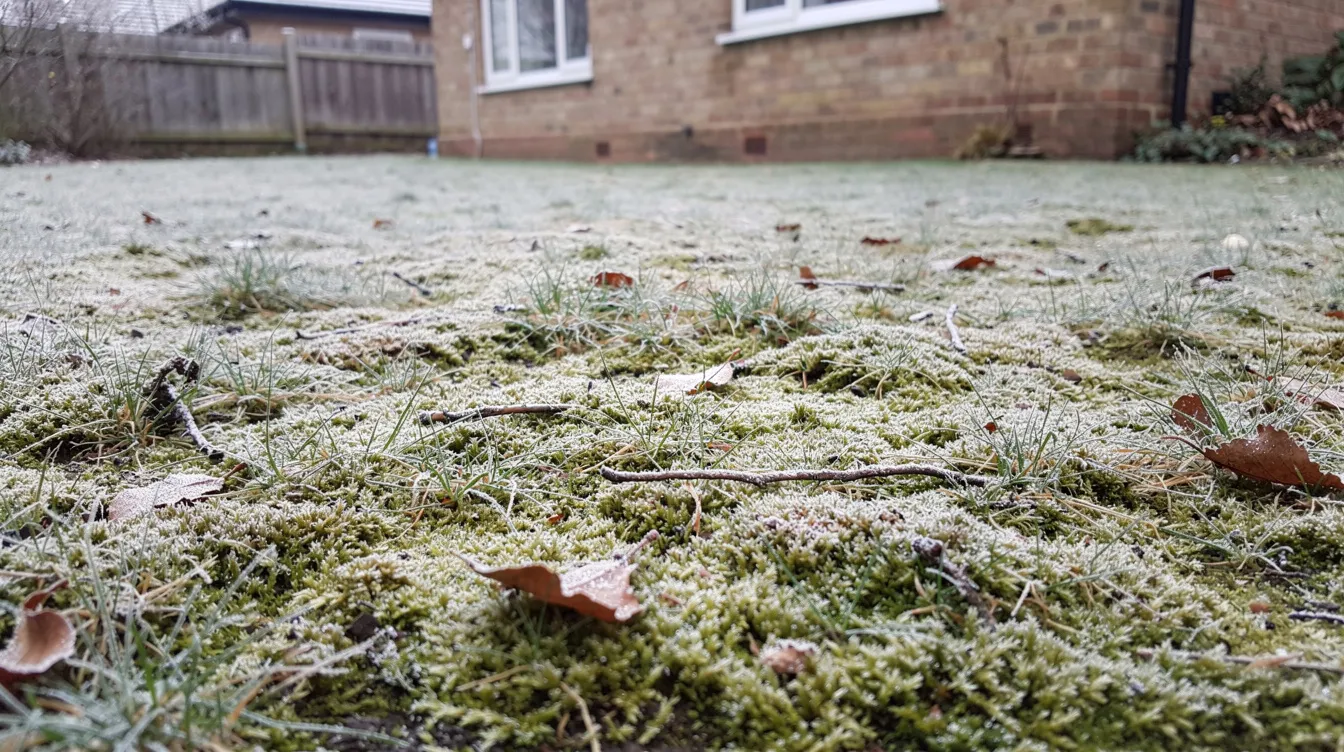
If your lawn seems to be turning green with the wrong kind of green as the weather cools, that's not a coincidence and it's not bad luck. Winter is genuinely moss's best season, for reasons that have nothing to do with what you did or didn't do to your lawn this year, and everything to do with how moss and grass respond completely differently to the same conditions.
Why winter specifically favours moss over grass
Grass and moss are built for opposite jobs. Grass needs reasonable light, warmth and active root growth to compete, all of which drop off sharply once autumn turns into winter, which is exactly why lawns naturally slow down and stop growing over the colder months. Moss doesn't have that problem. It stays active through the cool, wet winter months, and damp, shady, poorly drained lawns suit it extremely well. According to the RHS, low winter sun and shade from trees help keep moisture on the turf, and moss thrives in the same shaded, damp, compacted or poorly drained conditions that grass actively struggles with, which is why the two so often swap places as the seasons change: moss growth is favoured when grass growth slows or stops.
That's the real mechanism. It isn't that moss "appears" in winter so much as that winter removes grass's main competitive advantage over it, at the exact time of year moss's preferred conditions show up.
The part that catches people out: moss is a symptom, not the actual cause
It's worth being clear about this, because it changes what actually needs treating. Moss doesn't create a weak, patchy or compacted lawn. It moves into one that's already thin, shaded, waterlogged or compacted, because those are the conditions it's built to exploit. A thick, healthy, well-drained lawn is far harder for moss to get a foothold in, because healthy grass growth helps prevent it from establishing in the first place. The common causes are usually moisture, shade, weak grass and compaction, and nutrient-deficient or acidic soil can leave lawn grasses too thin to compete, making it harder to maintain healthy grass.
That matters a lot this particular winter. A large number of UK lawns went into fixed, well-established but drought-stressed conditions in the second half of 2026 rather than their usual autumn thickness. As covered in UK Lawn Drought 2026: A Realistic Look at the Growing Season, significant parts of England were still in formal drought as late as September, and a lawn that's thinner and more stressed going into winter than usual is exactly the kind of lawn moss finds easiest to move into once cooler, wetter weather arrives. If your lawn survived the summer's drought but never really recovered its density, this winter is a genuinely higher-risk one for moss taking hold, not an unlucky exception.
When lawn moss treatment actually works, and when it doesn't
Because moss is most visible in winter, it's tempting to treat it the moment you notice it, but timing matters more than urgency here. An iron sulphate-based moss killer is used to kill moss and is best applied in autumn or spring when conditions allow. It is effective at killing moss in lawns and helping prevent regrowth, but existing moss usually turns black within days and can be raked out after about 14 days. That means treatments need to be watered in and given time to work, so they’re far less effective, and can be a wasted trip out into the cold, on lawns that are frozen solid or sitting under standing water. The two genuinely reliable windows are autumn, before the ground fully freezes or waterlogs, and again in early spring, once conditions ease but before grass growth properly restarts. If you're dealing with visible moss in the depths of winter itself, the more realistic plan is usually to note where it is and treat it properly as soon as conditions allow, rather than forcing an application into frozen or sodden ground.
Treating the moss on its own isn't the end of the job either, which is the same logic covered in Sequenced Lawn Care: Why We Don't Sell You One Product and Hope: moss has to be dealt with first because it's occupying space grass needs, but the actual fix is what happens next, filling the space moss leaves behind with new growth, so moss can regrow within weeks if the underlying conditions are not improved after treatment.
What this means for your lawn and how to prevent moss this winter
If you're seeing moss appear or spread as the weather's turned, that's the expected pattern, not a sign of doing something wrong. The more useful question isn't "why is there moss" so much as "why did this particular lawn end up favourable to moss this year", shade, compaction, drainage, or, more specifically, soil compaction that limits drainage, prevents water from moving through, and starves grass roots of oxygen, or, for a lot of gardens this year, a drought-thinned lawn going into fewer months of density than usual. Treating moss at the right time of year, then rebuilding what's underneath it, is what actually breaks the cycle rather than just clearing the surface symptom until it returns. To prevent moss coming back, that means addressing the environmental conditions underneath the surface problem with aeration, because it improves soil drainage and reduces moss growth, and with better drainage overall, which helps support a healthy lawn and is crucial if you want to stop future spread.
The Lawn Transformation Kit is built around exactly that order, POWER to deal with moss first, then LAUNCH and feed to rebuild what's underneath it, rather than a single moss treatment on its own.
FAQ
Does moss actually grow more in winter, or does it just become more visible?
Both, genuinely. Moss in the lawn thrives in damp, shaded conditions, especially in winter, so it keeps spreading while grass is dormant; moss keeps growing through cool, damp winter conditions that suit it, while grass slows down or stops, so moss isn't just easier to spot against dormant grass, it's also actively spreading during exactly the months grass can't compete with it.
Is moss the cause of a patchy lawn, or a result of one?
A result. Moss in your lawn is often a symptom of conditions favouring its growth over grass. Moss moves into lawns that are already thin, shaded, compacted or poorly drained, because those conditions favour it over grass. Treating the moss without addressing why the lawn was vulnerable to it in the first place tends to mean it comes back. Heavy winter rains and poor drainage can create waterlogged, shaded areas where grass is weak and a moss problem develops more easily.
Can I treat lawn moss in the middle of winter?
You can, but timing matters: iron sulphate can effectively kill moss in lawns when conditions are suitable. Moss treatments need to be watered into the soil to work properly, so they're far less effective on frozen or waterlogged ground. Once treatment has worked, scarifying or using a rake helps remove moss by lifting out dead moss and thatch, which improves lawn health and helps prevent regrowth. Autumn and early spring are the two genuinely reliable windows; treating visible winter moss properly as soon as conditions ease is usually more effective than forcing an application into frozen ground.
Why might my lawn be more at risk of moss due to acidic soil this winter specifically?
If your lawn was affected by this year's drought and didn't fully recover its thickness going into autumn, it's carrying less natural resistance to moss than usual, since weak or sparse grass is more susceptible and gives moss more space and less competition to establish in over winter. To help stop this from allowing moss to take hold, mow at a slightly higher setting rather than too short, and prune trees to open up shady areas so grass can compete better.
In short
Moss isn't a winter accident, it's what happens when grass loses its seasonal advantage and moss's preferred conditions, cool, damp and shaded, take over instead. It's a symptom of an underlying weakness rather than the weakness itself, which is why treating it properly means dealing with moss first and then rebuilding the lawn underneath it into a stronger lawn with healthy grass growth, because that is what helps get rid of moss for good and prevent moss growing year round, not just clearing the surface and hoping it stays away. For a lot of UK lawns still recovering from this year's drought, that combination is worth taking seriously this winter rather than waiting for spring.


