


Getting your lawn through spring and summer in top condition doesn’t have to be complicated. This guide gives you a clear, UK-focused approach to spring summer fertiliser—covering when to feed, what to use, and how to avoid the mistakes that leave so many lawns looking patchy and pale by August.
GREENER’s approach is built around a simple system: Transformation treatments to reset tired lawns, then Seasonal Care with GROWTH (spring), POWER (summer) and BOOST (top-ups). It’s designed for real British weather—the kind that gives you three seasons in one week.
By the end of this page, you’ll know exactly how to choose and apply a spring summer lawn fertiliser for a greener, thicker lawn without the guesswork.
Why Spring and Summer Feeding Matters for UK Lawns
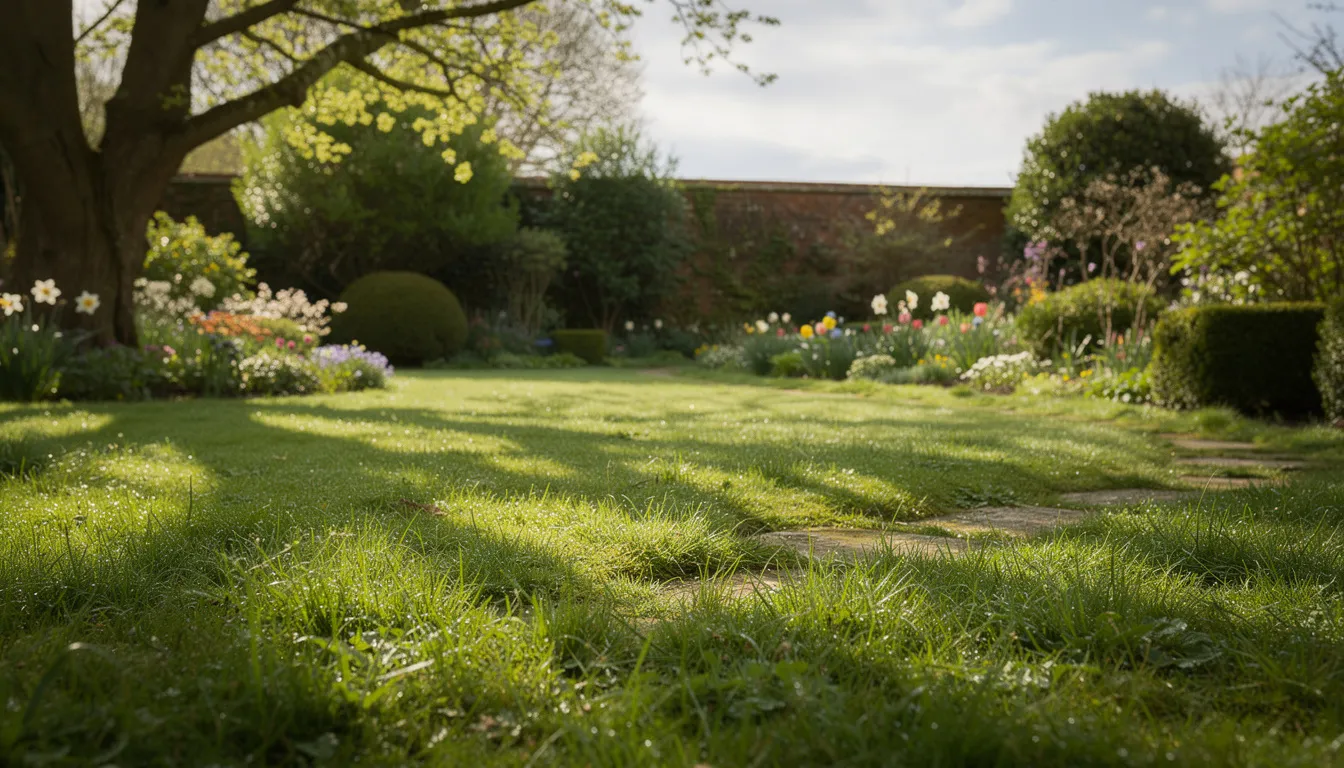
UK lawns wake up in March and April as the weather warms, then peak through to August and September. This makes fertiliser timing critical—feed too early and nutrients wash away; feed too late and your grass misses its main growth period.
The main benefits of proper spring and summer feeding:
-
Faster green-up after winter dormancy
-
Stronger roots before summer heat and drought arrive
-
Better recovery from wear (think kids, dogs, and weekend barbecues)
-
Reduced moss and weeds over time as grass thickens
In practical terms, aim for your first spring feed between late March and early May, with follow-up applications through June, July and August depending on how your lawn responds and what the weather delivers.
Think of lawn fertiliser as food for your grass. The nutrients it contains—primarily nitrogen, phosphorus and potassium—fuel leafy growth, root development and overall resilience. Underfeeding leads to pale, patchy grass that struggles to compete with moss and weeds. Overfeeding creates the opposite risk: soft, weak growth that scorches in hot weather or succumbs to disease.
GREENER products and schedules are built around typical UK patterns: mild, wet springs followed by mixed summers with dry spells and heavy showers. This isn’t a one-size-fits-all approach—it’s tuned for British conditions, backed by over 30 years of GREENER lawn care experience.
Choosing the Right Spring Summer Fertiliser
Not all spring summer fertilisers are equal. Pick based on your existing lawn’s condition, not just the product label.
Understanding NPK
Every lawn feed displays three numbers—the NPK ratio. These represent:
-
N (Nitrogen): Drives leafy growth and that deep green colour
-
P (Phosphorus/Phosphate): Supports strong root development
-
K (Potassium): Builds stress tolerance and disease resistance
A typical spring mix might be 10-4-4: higher nitrogen for fast green-up after winter, with moderate phosphate and potash for balanced support. A summer feed often shifts to something like 12-2-8: slightly less nitrogen to avoid stressing the grass in heat, more potassium to toughen it against drought and foot traffic.
Quick-Release vs Slow-Release
|
Type |
Best For |
Risk |
|---|---|---|
|
Quick-release |
Fast green-up, renovation, quick boost |
Higher scorch risk if over-applied |
|
Slow-release |
Steady feeding over 6-12 weeks |
Slower visible results |
|
Quick-release fertilisers deliver a rapid green-up—ideal when you’re renovating a tired lawn or need visible results for an event. Slow-release formulas feed steadily, reducing the risk of burning and cutting down on how often you need to apply. |
|
|
Mineral vs Organic Options
Mineral (synthetic) fertilisers work fast and deliver precise nutrient ratios. Organic or organic-based fertilisers release nutrients more slowly and feed soil life over time, improving structure and water-holding capacity. Organic options are often safer around pets and children, though they may have a natural odour during the first few days.
GREENER’s GROWTH (spring) and POWER (summer) fertilisers are carefully balanced blends tuned to UK lawns—designed to deliver results without the guesswork.
When choosing, consider:
-
Shade levels (shaded lawns need different care than sun-baked ones)
-
Soil type (heavy clay holds nutrients differently to sandy soil)
-
Traffic level (kids, dogs, entertaining)
When to Apply Spring and Summer Fertiliser in the UK
The typical UK fertiliser window runs from March to August, with flexibility for Scotland, the North of England and coastal areas where spring arrives later.
Month-by-Month Overview
|
Period |
Focus |
Notes |
|---|---|---|
|
March–April |
First spring feed |
Wait until grass is actively growing and you’re mowing weekly |
|
May–June |
Second spring or early summer feed |
Maintains momentum before peak summer |
|
July |
Top-up if needed |
Use slow-release to avoid heat stress |
|
August |
Late summer feed |
Prepares lawn for autumn recovery |
|
The key indicator for feeding isn’t the calendar—it’s your lawn. If you’re mowing regularly (about once a week), your grass is actively growing and ready for nutrients. If growth is sluggish, wait. |
|
|
Weather safety rules:
-
Avoid feeding during frosts or when frost is forecast overnight
-
Don’t apply in drought conditions (nutrients won’t reach roots efficiently)
-
Skip feeding if very heavy rain is forecast that day—granules dissolve too quickly and nutrients wash away
If you’re in the South of England, a first spring feed around early April is ideal. In cooler northern regions or Scotland, mid to late April is safer. Coastal areas often sit somewhere in between.
GREENER’s GROWTH fits the early spring to early summer period, while POWER is designed for mid-summer resilience when heat and wear become the main challenges.
How Much Spring / Summer Fertiliser Do You Need?
Getting quantity right saves money and prevents overfeeding—one of the most common causes of lawn problems.
Measuring Your Lawn
Calculate your lawn’s area in square metres:
Length × Width = Area (m²)
For irregular shapes, break the lawn into rectangles, calculate each, then add together. For example: an 8m × 10m lawn = 80m².
Calculating Application Rate
Check the product label for the recommended grams per square metre. A typical rate might be 25g per m². For a 100m² lawn, that means:
100m² × 25g = 2,500g (2.5kg) per application
Stick to the manufacturer’s rate. More is not better—excess nitrogen causes scorch and encourages soft, disease-prone growth.
GREENER gives clear, simplified coverage guidance with bag sizes matched to common lawn sizes, keeping the maths easy, and our GREENER Garden Kit FAQs answer the most common questions about how and when to use them.
If you’re planning a full season—perhaps using GROWTH in spring followed by POWER in summer—calculate your total needs at the start of the season. This helps with planning and ensures you don’t run short mid-summer.
How to Apply Spring and Summer Fertiliser (Step by Step)
Even coverage matters more than the “perfect” product. Most lawn problems—stripes, scorched patches, uneven colour—come from poor application, not the fertiliser itself.
Preparation
-
Mow 2–3 days before applying fertiliser
-
Rake out debris and any surface moss
-
Check the weather—aim for dry grass with moisture in the soil, ideally with light rain forecast within 24-48 hours
Application Methods
|
Lawn Size |
Recommended Method |
|---|---|
|
Under 50m² |
Hand spreading with scoop and bucket |
|
Over 50m² |
Rotary or drop spreader |
|
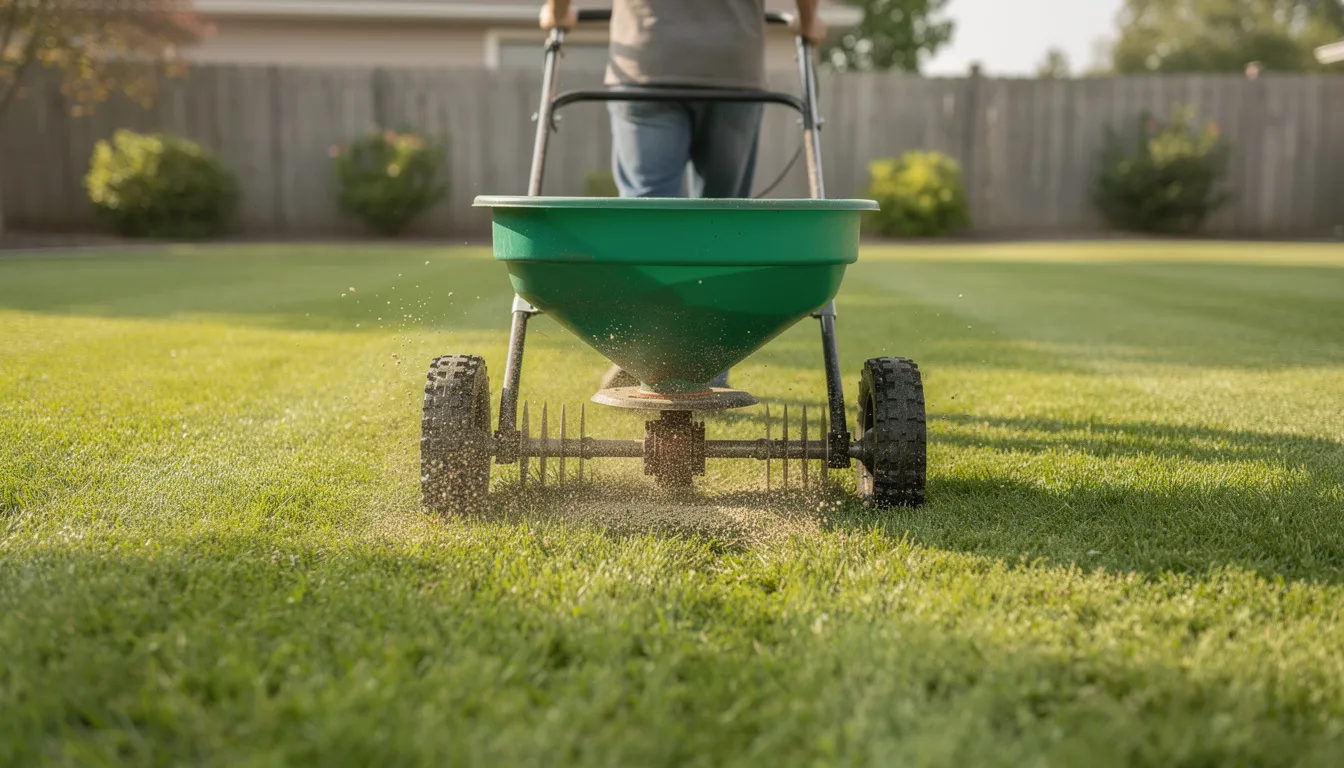
For larger lawns, a spreader ensures even distribution. Calibrate it according to the fertiliser’s recommended settings before you start. |
|
Pro tip: Apply half the dose walking north to south, then the other half walking east to west. This cross-pattern technique dramatically reduces streaking.
Watering In
Apply to dry grass when the soil has moisture. After spreading:
-
Water in lightly with a watering can or sprinkler
-
Or time your application just before steady rainfall (not a storm)
-
Ensure granules are fully dissolved and nutrients reach the roots
Safety
-
Keep granules off patios, decking and paths—sweep any spillage back onto the lawn
-
Store products away from children and pets until the lawn has been watered and dried
-
Wash hands and tools after use
The GREENER system works with standard domestic spreaders and includes clear settings and guidance to make DIY application straightforward, whatever your experience level.
Spring vs Summer Fertiliser: What Changes and Why?
Spring feeds focus on kick-starting growth after winter dormancy. Summer feeds shift focus to resilience—helping your lawn handle heat, foot traffic and intermittent drought.
The NPK Shift
|
Season |
Typical NPK |
Primary Goal |
|---|---|---|
|
Spring |
10-4-4 |
Leafy growth and root support |
|
Summer |
12-2-8 |
Stress tolerance and healthy growth |
|
Too much nitrogen in high summer—especially during a heatwave—can stress your grass. The plants push out soft, lush growth when they should be conserving energy. A more balanced, controlled-release summer fertiliser is safer and delivers better results. |
|
|
Reading Your Lawn
|
Symptom |
What It Means |
Action |
|---|---|---|
|
Pale, thin grass in April |
Needs stronger spring boost |
Apply GROWTH with higher nitrogen |
|
Lawn looking stressed in July |
Focus on resilience, not lushness |
Apply POWER with slow-release nutrients |
|
GROWTH is your go-to for strong spring recovery. POWER is your summer defence against wear, heat and the inevitable holiday neglect when nobody’s around to water. |
|
|
Combining the right fertiliser with good mowing practice, sensible watering, occasional aeration and topdressing multiplies the effect—especially during peak growing months.
Dealing with Common Spring/Summer Lawn Problems
Fertiliser alone won’t fix every issue, but the right feed at the right time is a key part of solving patchiness, moss and thinning.
Patchy or Thin Lawns
Combine a spring fertiliser with overseeding bare areas in April or May. Use grass seed suited to your conditions (shade-tolerant varieties for darker spots), keep the surface moist until seedlings establish, and avoid heavy traffic on new growth.
Moss
Moss thrives in shade, compaction and poor drainage. A moss killer provides short-term control, but long-term success requires tackling the causes:
-
Aerate compacted areas
-
Scarify to remove thatch
-
Improve drainage where possible
-
Feed with a balanced fertiliser to help grass win back space
Weeds
Dense, well-fed grass naturally resists many weeds by outcompeting them for light and nutrients. If using weed treatments, time your fertiliser application around these for maximum recovery—typically feeding a week or two after weed treatment gives grass the best chance to fill gaps.
Summer Stress
Brown or straw-coloured patches during hot, dry spells are often dormancy rather than death. Help your lawn through by:
-
Watering gently in the early morning
-
Raising your mowing height
-
Avoiding strong feeds during the hottest weeks
-
Being patient—most lawns recover when rain returns
GREENER’s Transformation services combine treatments, aeration and fertilising to reset very tired lawns before moving to lighter Seasonal Care with GROWTH, POWER and BOOST.

Organic and Eco-Conscious Options for Spring and Summer
Many UK homeowners want greener lawns without compromising on environmental responsibility or safety around pets and children.
What Makes a Fertiliser Organic?
Organic or organic-based fertilisers derive nutrients from plant or animal materials rather than synthetic manufacture. They typically:
-
Release nutrients more slowly
-
Support beneficial soil organisms
-
Improve long-term soil structure and water-holding capacity
-
Contain natural ingredients like seaweed, bone meal or composted plant matter
Realistic Expectations
Organic feeds often green more gently than synthetic alternatives—you won’t see overnight results. However, they build soil health over time, improving your lawn’s resilience season after season. Application frequency is typically every 8-12 weeks rather than monthly.
Best Practice
Combine eco-conscious fertilisers with good cultural practices:
-
Use a mulching mower to return nutrients to the soil
-
Water efficiently—early morning, deeply but infrequently
-
Reduce overall chemical inputs across your garden
GREENER continually refines its system to balance performance with sustainability, choosing formulations that work effectively in UK conditions with minimal waste. The highest quality results come from products designed with both your lawn and the environment in mind.
Your Simple Spring Summer Fertiliser Plan
With a clear plan, spring and summer fertilising becomes a straightforward routine—not a guessing game.
Sample UK Schedule
For a broader, year-round view of what your lawn needs beyond feeding, see our UK lawn care calendar.
|
Timing |
Product |
Purpose |
|---|---|---|
|
March–April |
GROWTH |
First spring feed, kick-start recovery |
|
May–early June |
GROWTH or BOOST |
Maintain momentum, fill gaps |
|
Late June–July |
POWER |
Summer resilience, stress protection |
|
August (if needed) |
BOOST |
Top-up before autumn preparation |
|
Adjust slightly for your local climate. Scotland and the North typically run 2-3 weeks behind southern England. Coastal areas often fall somewhere in between. Watch your lawn and local weather rather than following dates rigidly. |
|
|
Track Your Progress
Take before-and-after photos each season. This helps you spot what’s working, identify problem areas, and tweak timing and application rates year on year. Most delivery issues and coverage problems become obvious in photos before they’re visible to the eye.
Getting Started
Your lawn transformation doesn’t require a green-fingered background or a service company visit. With the right products, clear lawn care guides and a simple schedule, achieving a healthy lawn is genuinely achievable.
Visit GREENER to explore the full GROWTH, POWER and BOOST system, check your delivery date availability, or book expert help if you’d prefer not to DIY, or learn more about garden care subscriptions in the UK. Whether you’re fixing a problem lawn or maintaining one you’re already proud of, the right spring summer fertiliser makes all the difference.


