


New Lawn Fertiliser: How to Feed a Brand‑New Lawn for Strong, Lasting Grass
Getting a new lawn off to the right start comes down to one thing most people overlook: what you feed it, and when. The wrong fertiliser at the wrong time can leave you with patchy, pale grass - or worse, scorched seedlings that never recover. This guide covers everything UK homeowners need to know about choosing and applying new lawn fertiliser, from understanding NPK ratios to building a first-year feeding schedule that actually works.
Fast answers: when and how to fertilise a new lawn
If you're sowing lawn seed or laying turf in spring or early autumn 2026, here's the short version. You have two ideal windows to fertilise a new lawn:
-
3–7 days before sowing seed or laying turf - apply a starter fertiliser directly to prepared soil.
-
6–8 weeks after germination, once new grass has been mown once or twice - apply a light follow-up feed.
The fertiliser you choose matters just as much as the timing. A dedicated new lawn fertiliser with higher phosphorus for roots and moderate nitrogen is far safer than a high-nitrogen weed & feed product, which can damage young grass. Regular fertilisers can damage new grass due to their high nitrogen levels, pushing soft, vulnerable growth that struggles to survive.
At GREENER, we've built our lawn care advice around helping people avoid exactly these kinds of mistakes. Our Lawn Transformation Kit includes the granular lawn feed needed for both new lawns and established grass, along with grass seed and clear instructions to walk you through each stage.
See the full Lawn Transformation Kit here

Why a new lawn needs a different fertiliser
An existing lawn and a new lawn have fundamentally different needs. A mature sward benefits from feeds that promote greening and keep weeds at bay. A brand-new lawn needs something gentler - something that prioritises what's happening below the surface.
New grass plants in their first 2–3 months have:
-
Small, shallow roots that can't reach deep nutrients or moisture.
-
Limited energy reserves, meaning they rely heavily on what's in the soil around them.
-
High sensitivity to scorching from strong lawn fertiliser or chemical weed killers.
The goal for the first growing season isn't a lush, deep green carpet. It's root density and even grass growth - building the underground infrastructure that will support healthy turf for years to come. Fertiliser helps develop grass thickness and side shoots, which is exactly what a young lawn needs to fill in and establish a dense sward.
Lawn feed prevents grass from turning pale and thin, and over the longer term, using lawn feed prevents moss and weed invasion by keeping the grass competitive. But not all feeds are appropriate for young grass. Many "all-in-one" lawn feed products that combine weed killer, moss treatment, and high nitrogen are too harsh for a new lawn. These should be avoided for at least the first 3–6 months. The weed killers target broadleaf plants, but they can stress or outright kill grass seedlings too.
A purpose-made starter or new lawn feed is formulated differently:
-
Moderate nitrogen for gentle leaf growth without overwhelming young shoots.
-
Higher phosphorus for strong root development.
-
Balanced potassium for stress resistance, especially heading into summer or winter.
What's in a good new lawn fertiliser? (NPK explained)
Every bag of fertiliser carries three numbers - the NPK ratio. These represent the percentage by weight of nitrogen (N), phosphorus (P), and potassium (K). Fertilisers contain three primary nutrients: nitrogen, phosphorus, and potassium. For a new lawn, the balance between these three nutrients is more important than the overall strength of the feed.
Here's what each nutrient does for new grass specifically:
Nitrogen (N)
Nitrogen stimulates fast and healthy green leaf growth. It's the nutrient responsible for that rich green colour and vigorous shoot production. However, too much nitrogen early on makes seedlings soft and prone to disease. Young grass simply can't support the rapid top growth that high nitrogen drives - the roots aren't ready for it.
Phosphorus (P)
Phosphorus encourages robust root system development and drought resilience. High phosphorus fertiliser promotes strong root development in new grass, helping young plants anchor firmly and access water deeper in the soil. This is particularly important if your new lawn faces summer 2026 dryness or heavy autumn rainfall - strong roots are what keep grass alive through both extremes.
Potassium (K)
Potassium increases grass durability and hydration, improving disease resistance. It strengthens cell walls, helps regulate water use, and supports winter hardiness. For young plants that haven't yet built up resilience, potassium is essential.
What ratio should you look for?
For new lawns, aim for an NPK ratio in the region of 6-9-6 to 8-12-8. Lawnsmith Starter Lawn Fertiliser, for example, has an NPK of 6-9-6 - a well-balanced option that gives roots priority without starving the leaves. Use a 6-9-6 NPK fertiliser for new lawns as a reliable benchmark when comparing products.
Other UK-relevant starter feeds like GroRight Lawn Establishment Fertiliser carry an NPK of 7-10-10, providing a similar phosphorus emphasis with slightly more potassium.
Why slow-release granular feed works best here
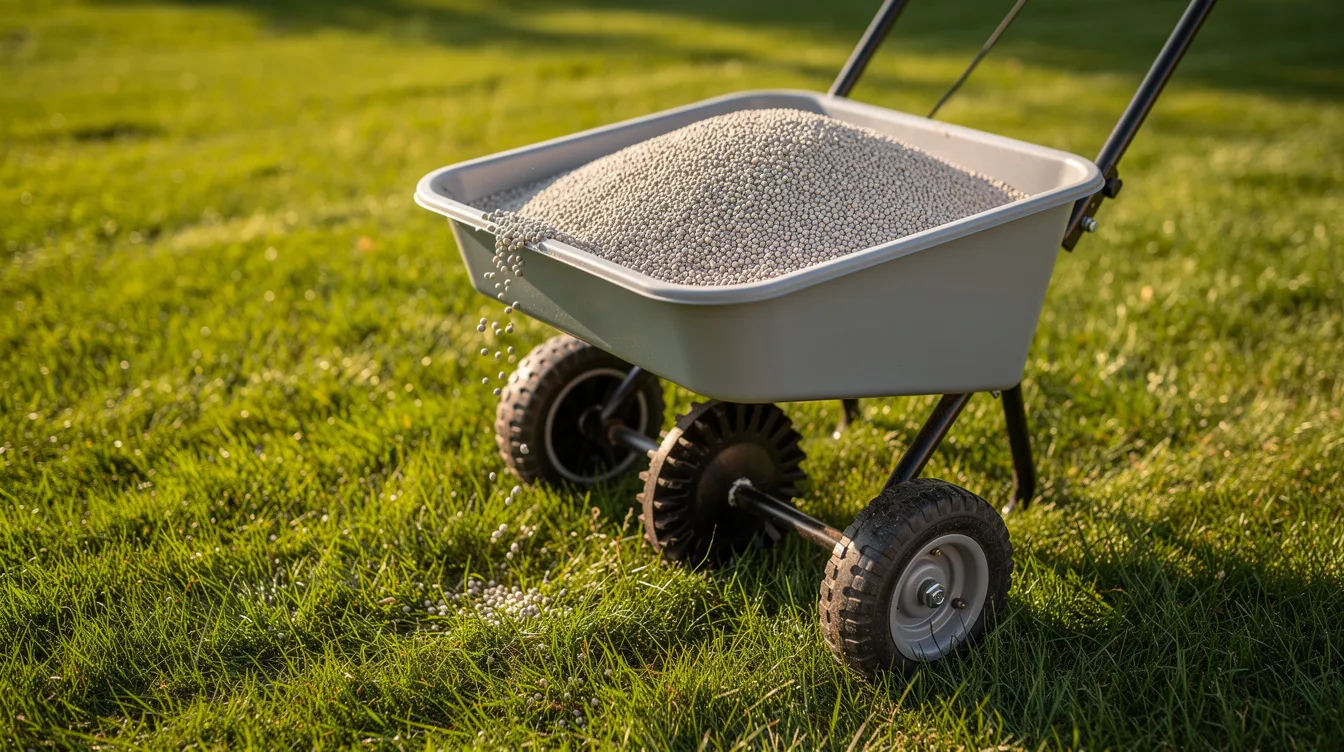
Modern lawn fertilizers often prioritize organic bases and controlled-release technology, which is exactly what new grass needs. Organic-based fertilizers use slow-release granules for extended nutrient delivery, feeding grass steadily over 6–8 weeks rather than dumping everything at once. Tiny polymer-coated granules can release nutrients based on temperature and moisture, matching the pace of grass growth naturally.
GREENER's granular feed within the Lawn Transformation Kit is formulated to be safe for young lawns while still boosting establishment - delivering the essential nutrients your new grass needs without the scorch risk.
Granular vs liquid lawn feed for new lawns
Both granular and liquid feeds deliver nutrients to grass, but for most new UK lawns, granular lawn feed is the safer default choice. Here's why.
Liquid lawn feed
-
Fast acting - you'll see visible greening within 3–7 days, which is satisfying but short-lived.
-
Liquid fertilisers provide quick results for smaller lawns and are useful for a targeted colour lift on specific patches.
-
Nutrients wash through the soil quickly, so repeat applications every 2–3 weeks are often needed.
-
Risk of uneven application is higher, especially for beginners using a watering can or sprayer. Dilute too little and you can scorch young grass; dilute too much and you've wasted product.
Granular lawn feed
-
Effects last significantly longer - typically 6–8 weeks depending on formulation and weather conditions.
-
Granular fertilisers are easier for larger lawns and can be spread evenly with a basic lawn spreader.
-
Granular fertilisers are convenient for larger lawns because they require less frequent applications than liquid ones.
-
Slow-release granules are gentler on new grass than strong liquids mixed too rich - there's more margin for error.
Our recommendation
Default to a slow-release granular feed for any new lawn. GREENER's granular product in the Lawn Transformation Kit is designed for exactly this purpose - even coverage over weeks, not days.
If you do want to use a liquid feed, wait until the lawn has been mown at least once, dilute it well, and apply in the cooler part of the day. Never apply liquid feed in strong midday sun on very young grass.
When to fertilise a new lawn: seeding, turfing and first year timing
Timing depends on whether you're working with lawn seed or new turf, and whether you're starting in spring or autumn. Getting this right is one of the biggest factors in whether your new lawn thrives or struggles.
Pre-seeding / pre-turfing fertiliser
Apply starter fertiliser 3–7 days before sowing new grass seed or laying turf:
-
Spread granules across prepared soil at the recommended rate.
-
Lightly rake into the top 2–3 cm so the feed sits just below the surface, close to where roots will form.
-
Water well so granules start dissolving before seed hits the ground.
This ensures phosphorus - the nutrient that matters most at this stage - is available right where new roots will be searching for it. Ideal Home's turf-laying guidance confirms applying starter fertiliser 4–5 days ahead of laying turf is best practice.
Post-emergence fertiliser for seeded lawns
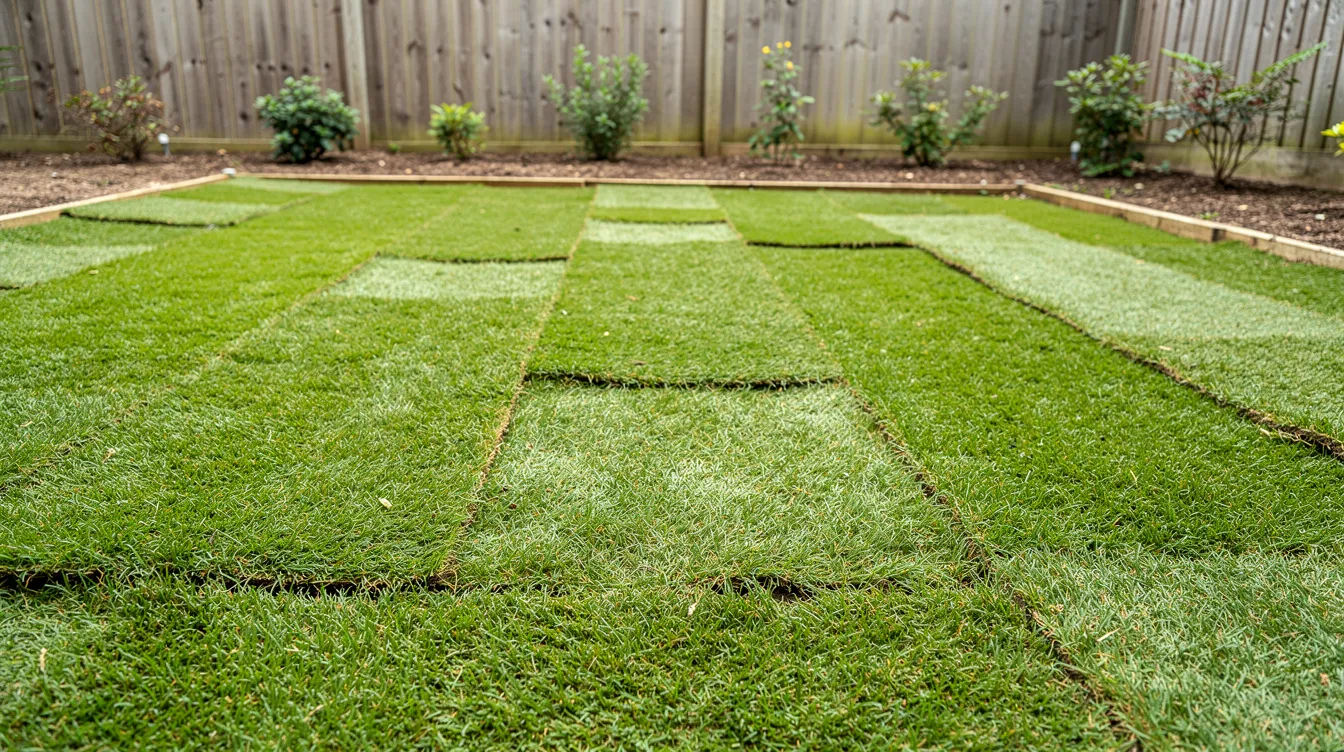
Don't rush the follow-up feed. Wait until grass reaches 5–7 cm high and has been mown once on a high setting with your lawn mower - usually 6–8 weeks after sowing. Then apply a light dose of new lawn fertiliser at the rate on the packet. New grass fertiliser should be applied every 4–6 weeks in spring to keep momentum going without overwhelming young plants.
Timing for new turf
Fresh turf often arrives with some feed already applied at the turf farm. Apply fertiliser 4–6 weeks after laying new turf, once roots have "pegged" - meaning the turf can't be easily lifted by hand. Similarly, apply autumn-winter feed 4–6 weeks after turfing if you're laying in the cooler months.
First-year feeding schedule
|
Stage |
Spring sowing 2026 |
Autumn sowing 2026 |
|---|---|---|
|
Starter feed |
3–7 days before sowing |
3–7 days before sowing |
|
First follow-up |
~6–8 weeks after germination |
~6–8 weeks after germination |
|
Summer / seasonal |
Light balanced feed if growth slows; use a granular feed every 6 weeks until September |
Low-nitrogen autumn/winter feed once established |
|
Transition to maintenance |
From following spring, move to seasonal programme |
From the following spring |
Apply spring-summer feed once soil temperature reaches 5–6°C - typically late March in most UK postcodes. High nitrogen fertilisers promote new grass growth in spring, and high nitrogen content is crucial for encouraging rapid green growth during the active season, so once your lawn is fully established you can use high nitrogen fertiliser from February to September.
How to apply new lawn fertiliser safely and evenly
Correct application is just as important as choosing the right fertiliser. A premium product applied badly will give you stripes, scorch marks, or bare patches - none of which are the look you're going for.
Step-by-step application
-
Measure your lawn accurately in square metres before opening the bag. Don't estimate.
-
Calculate the exact amount using the label rate. The application rate for new grass fertiliser is 25–35 grams per square metre - apply fertiliser at 25–35 grams per square metre as a general guide, but always defer to the specific product instructions.
-
Use a lawn spreader for even fertiliser coverage across most gardens. A rotary or drop spreader works well. Hand-spreading is only reliable for very small patches.
The "half in each direction" method
For the most even coverage, split your total dose in two:
-
Walk north to south, applying half the calculated amount.
-
Then walk east to west with the remaining half.
This cross-pattern approach eliminates banding and ensures no strip of your lawn gets double-dosed while another gets nothing.
Watering in
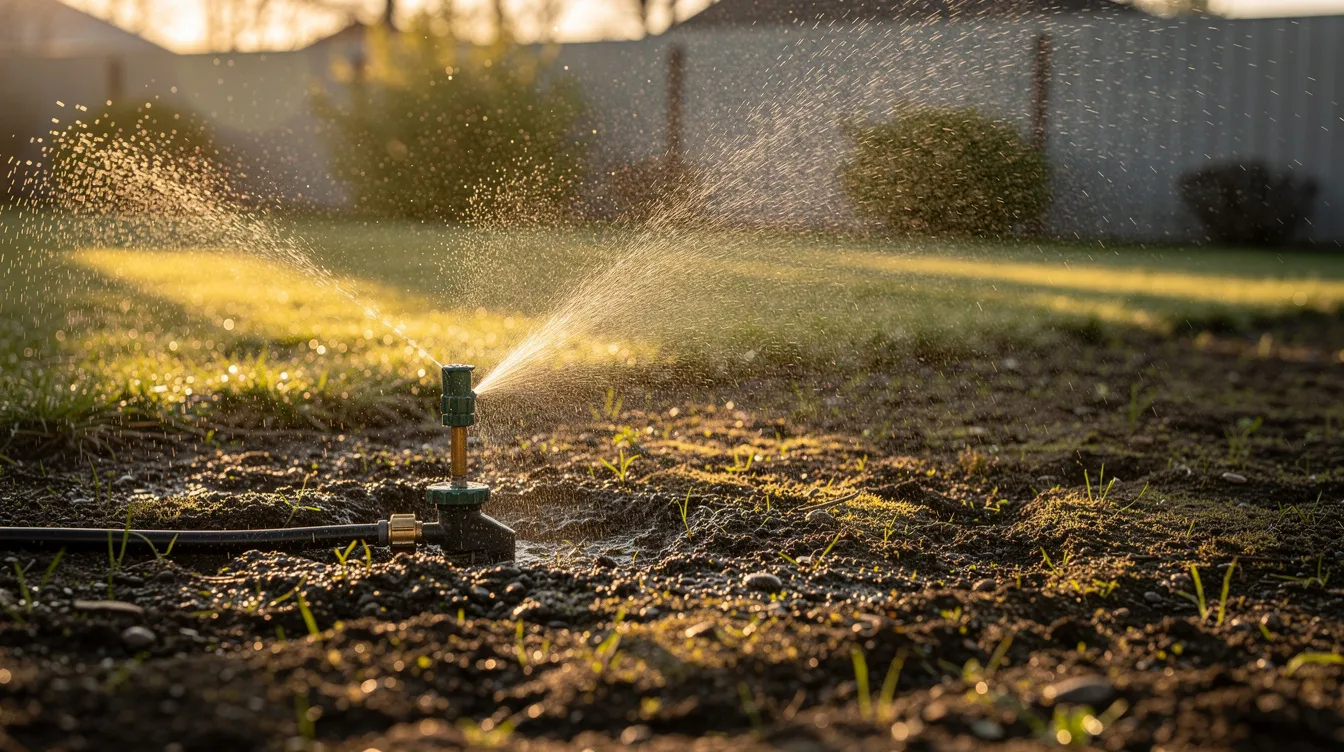
After applying granular fertiliser, water for 20–30 minutes unless steady rainfall is forecast within 24 hours. Granules sitting undissolved on wet leaves in hot sun can cause localised scorch, especially on very young grass. Water turf in the morning and evening to retain moisture throughout the growing period - this is particularly important for new turf and freshly seeded areas where irrigation is critical.
Safety
Safety for pets and children is often a focus of modern lawn fertilizers, and rightly so. Keep children and pets off the treated area until granules have fully dissolved and the grass is dry. Store lawn fertiliser in a cool, dry place away from pets and moisture, which can trigger premature nutrient release inside the bag.
Common mistakes to avoid with new lawn fertiliser
Most new lawn problems we see in customer photos at GREENER come down to over-feeding or feeding at the wrong time. Here are the mistakes that trip people up most often - and how to fix them.
-
Using a strong weed & feed on a lawn under 3–6 months old. The herbicides in these products can kill young grass as readily as weeds. Fix: wait until the lawn is well established before introducing any weed or moss treatment.
-
Applying fertiliser to drought-stressed or frozen soil. Nutrients won't be absorbed properly and can either leach away or sit on the surface causing damage. Fix: ensure soil is moist and at a workable temperature. Check conditions ahead of application day.
-
Doubling the dose "for faster results." More is not better. Over-dosing causes scorch, uneven growth, and nutrient runoff into your garden's drainage. Fix: follow the label rate precisely. Slow-release formulations deliver results without the risk.
-
Skipping watering-in during dry spells. Fertiliser granules left on the surface dissolve unevenly when rain finally arrives, leading to patchy growth. Fix: water manually if no rain is forecast. Don't leave granules sitting dry for more than 24 hours.
-
Fertilising immediately after sowing without raking in. Exposed granules can wash off, interfere with germination, or concentrate in hollows. Fix: lightly incorporate feed into the soil surface, then sow seed on top.
-
Ignoring soil pH and trace nutrients. Even with the correct NPK, phosphorus can become unavailable if soil pH is too high or too low. Fix: consider a simple soil test before your first feed, especially on new-build plots where topsoil quality is variable.
Take a photo of your lawn before and after each feed, and note the date, product, dose, and weather. These records are invaluable for refining your lawn care approach season by season.
GREENER's guidance and products are designed to make these mistakes less likely - especially for first-time lawn owners who want to grow a great lawn without the guesswork.
Choosing the right lawn feed for your lawn goals
Not every lawn is the same, and different situations call for different feeding approaches. Your lawn's purpose, location, and the amount of wear it receives should all influence the feed you choose and how often you mow.
Example profiles
|
Lawn type |
Key needs |
Feeding notes |
|---|---|---|
|
Busy family lawn |
Durable grass growth, safe for children and pets, tolerates wear |
Moderate nitrogen, child- and pet-safe products; regular but not excessive feeding |
|
Ornamental striped lawn |
Aesthetic colour, fine texture, tight sward |
More frequent lighter feeds once established; closer mowing height; benefits from micronutrients for a lush finish |
|
Shaded or damp lawn |
Disease resistance, moderate growth to avoid sponginess |
Lower nitrogen to limit soft, shade-stressed growth; more potassium; careful watering management |
|
Patch-repair / overseeded areas |
New grass seed establishing within an older lawn |
Treat repaired areas like a new lawn - use starter feed, protect from heavy foot traffic, avoid weed killers on the seed zone |
Lawn feed replenishes nutrients extracted by regular mowing, so even once your new lawn is established, a year round seasonal feeding programme is important. After the first 3–12 months on starter feed, transition to a seasonal plan: higher nitrogen in spring for rapid green growth, balanced feed in summer, and higher potassium in autumn to prepare for winter.
Note that GREENER's Lawn Transformation Kit is designed to cover these stages - from new lawn establishment through to ongoing care. Whether you have a small shade garden or a large family lawn, consider how much time you realistically have for lawn care. If time is tight, slow-release granular products reduce the number of applications you need to deliver across the season.
GREENER's Lawn Transformation Kit: complete feeding for new and tired lawns
Whether you're creating a new lawn from scratch or reviving a tired, thin sward in 2026, the Lawn Transformation Kit from GREENER gives you everything in one order - no guesswork, no mixing and matching from different brands.
What's in the kit
-
High-quality granular lawn feed formulated for both new and established lawns, with balanced NPK and slow-release technology.
-
Premium lawn seed suitable for overseeding or establishing new grass in a range of conditions, including shade and high-wear areas.
-
Clear, step-by-step instructions covering application timing, watering, mowing, and the transition from establishment to maintenance feeding.
How to use it
-
Preparing soil for a new lawn from seed: apply the granular feed to prepared ground, rake in lightly, then sow the included seed.
-
Laying new turf: feed the soil before laying, then follow up once roots have established.
-
Thickening an existing, tired lawn: overseed bare or thin patches with the kit's seed and feed to promote new grass growth and fill gaps.
Why it works
The products in the kit are selected to work together across the season, so you're not guessing whether your seed and feed are compatible. The guidance is written for beginners but detailed enough for experienced gardeners who want a reliable baseline. And the focus is on sustainable grass growth and strong roots - building a lawn that looks good in every season, not just for a week after feeding.
Plants need consistent, balanced nutrition to thrive. A quick flash of green from a fast acting liquid might look impressive on delivery day, but it won't build the kind of dense, resilient lawn that handles children, pets, drought, and the unpredictable UK weather.
Ready to start your new lawn plan? Visit the GREENER website, add the Lawn Transformation Kit to your basket, and request delivery to your door - we deliver across all UK postcodes.
Order the Lawn Transformation Kit today
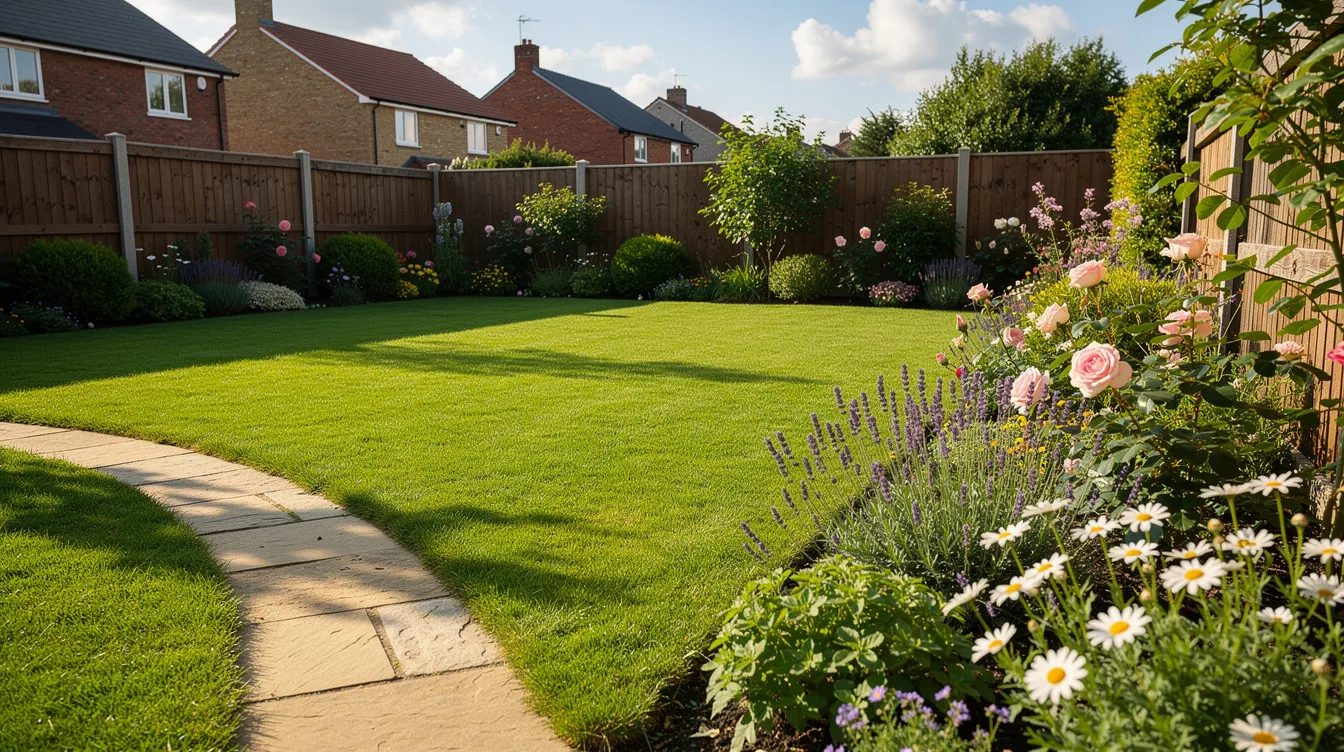
A new lawn is an investment in your garden - feed it right from day one, and you'll be rewarded with thick, resilient grass that stands up to everything the UK climate throws at it. Whether you're sowing your first lawn seed this spring or laying turf ahead of autumn, the right fertiliser at the right time makes all the difference. GREENER is here to help you grow it.


