


Most lawn care brands are formulated by whoever happens to be sourcing the product, then written up afterwards to sound authoritative. GREENER works the other way round. If you’re searching for “lisa aitchison landscaper”, Lisa Aitchison is a professional landscaper with more than 20 years of hands-on experience, co-founder of GREENER, and the person who shaped its lawn care formulations from real work on residential gardens, commercial grounds, and school playing fields.
This is her background, in enough detail to actually mean something, and specifically how it shaped what’s inside the box. For homeowners and gardeners who want professional-level, UK-specific lawn care they can actually use, it also explains the lawn care mistakes Lisa kept seeing on site, why product sequencing matters, and how that practical experience was turned into treatments designed to help lawns recover properly in British conditions.
Who is Lisa Aitchison?
Lisa Aitchison is the co-founder of GREENER and the person behind its formulations. Before GREENER existed, she ran Aitchison's Landscapes for more than 20 years, based in the North West of England, maintaining residential gardens, commercial grounds and school playing fields.
Her business, Aitchisons Landscapes Ltd, has been on the public record with Companies House since 2010, with Lisa listed as director throughout. That's a formally registered, independently verifiable UK company, not a name invented for a product launch. It's worth checking yourself rather than taking our word for it: the Companies House record is public.
A career built on school playing fields, back gardens, and Aitchisons Landscapes
What sets Lisa's background apart from most people formulating lawn care products isn't just the length of it, it's the range. Twenty years across residential gardens, commercial grounds and school playing fields means twenty years of lawns under completely different kinds of pressure:
-
Residential gardens, the same kind of lawn most GREENER customers have: small to medium, often shaded by fences or trees, frequently neglected for a season or two before someone decides to fix it properly.
-
Commercial grounds, which have to look consistently presentable on a schedule, with no room for "we'll get to it eventually."
-
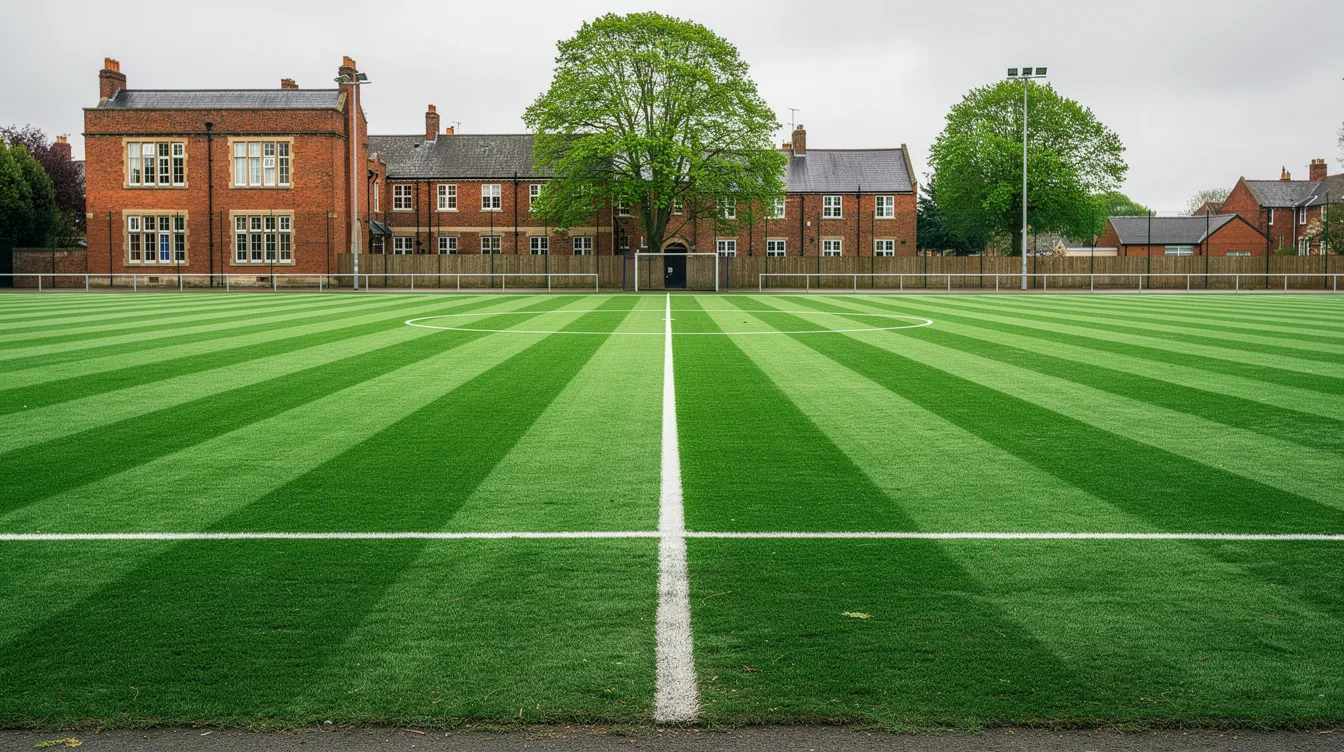
School playing fields, which take genuinely brutal daily footfall from hundreds of children, in all weather, and still have to recover and stay usable. If a treatment approach doesn't hold up on a playing field used every single day, it doesn't get called reliable.
Most homeowners only ever see their own lawn, in its own specific state, and reasonably conclude their situation is unusual. A landscaper who has worked across all three of those environments sees the same underlying problems recur constantly, just wearing different clothes. That repetition, across genuinely different conditions, is what eventually produces real expertise rather than a single lucky formula that happened to work once.
The pattern that kept repeating, job after job
Across hundreds of those lawns, three specific mistakes kept showing up, regardless of the garden:
No defined sequence. Homeowners would try seed, then feed, then moss killer, whatever order seemed logical at the time, with no understanding that treatments interact. Seed sown into ground still smothered by living moss fails at a far higher rate than seed sown after that moss has actually been cleared. That's not a marketing claim, it's a basic condition of germination: grass seed needs direct contact with soil and light to establish, and a moss mat sitting on top of the surface blocks both.
Products built for the wrong lawn. Most garden centre feeds and treatments are formulated for a lawn that's already reasonably healthy and just needs seasonal maintenance. A genuinely patchy, mossy or thin lawn isn't in a maintenance state, it's in a recovery state, and needs a different, more targeted intervention rather than a lighter version of the same product.
No follow-through. A single treatment, applied once and then left, rarely holds. What actually works, consistently, across every kind of lawn Lisa worked on, is a full sequence: clear what's working against the grass, rebuild with the right seed and nutrition, then support the new growth while it establishes. Skip any one of those three stages and the other two underperform.
This is the exact knowledge that GREENER's four-product system is built to package and hand to someone who has never had access to a professional landscaper's judgement before.
From client lawns to a packaged lawn care system: how the formulas came together
Each product in the Lawn Transformation Kit exists because of a specific professional decision Lisa made repeatedly on real jobs, not a generic ingredient list assembled to fill four boxes.
POWER (liquid iron sulphate) is the same category of professional-grade treatment landscapers use ahead of any lawn renovation work, not a consumer-diluted version of it. Its job is narrow and specific: suppress active moss with a moss control treatment and produce a fast, visible colour change, typically within 24 to 48 hours, so the surface is actually clear before anything else is applied. This has to go first. Applying seed or feed onto a lawn still choked with living moss is the single most common mistake Lisa saw homeowners make, and it's a mistake no amount of good seed can fix on its own.
LAUNCH (premium grass seed) goes down specifically into the space POWER has created, not scattered onto a surface still full of moss and dead thatch. Seed selection matters here too: not every grass seed blend suits every UK lawn's use and light conditions, which is exactly the kind of judgement call a landscaper makes on-site and most homeowners have no way to make for themselves from a garden centre shelf. Lisa uses professional-grade grass seed to ensure dense coverage across bare patches and achieve a thicker finish.
GROWTH, the granular feed applied alongside LAUNCH, is a mycorrhizal formulation rather than a standard all-purpose fertiliser. Mycorrhizal fungi form a relationship with new grass roots from the moment they germinate, rather than only becoming useful after the first few cuts, which is when most homeowners would otherwise start feeding a newly seeded lawn. Timing new growth's very first nutrition to the moment it actually starts, instead of weeks later, is a small decision with an outsized effect on how quickly a lawn establishes, and it's the kind of detail that only shows up if you've watched enough seedlings succeed and fail to notice the difference. Early results often start to show within 2 to 4 weeks.
BOOST, a liquid seaweed biostimulant, is the maintenance stage: build on what's grown in and hold the result, rather than letting a newly recovered lawn quietly drift back to where it started once the visible "fix" is done. This is the stage most DIY lawn care skips entirely, because by the time a lawn looks better, it's easy to assume the work is finished. A proper lawn renovation plan also includes scarification, aeration, overseeding, and topdressing where needed.
None of these four products is exotic. What's genuinely different is that they were chosen and sequenced by someone who had already watched this exact process succeed and fail, repeatedly, on real UK lawns, rather than assembled from a supplier catalogue and given a plausible-sounding order afterwards. Ongoing seasonal treatments help build a healthier lawn, and four applications through the year can include weeds and moss control to improve thickness.
Twenty years of UK-specific, year round lessons: soil, rainfall and weather
A landscaper working exclusively across the UK builds up knowledge that's genuinely specific to this country's conditions: heavy clay soils that hold water and compact easily, a growing season interrupted by unpredictable rainfall rather than reliable irrigation, and moss pressure that's considerably worse in the UK's damp, mild climate than in drier growing regions most generic lawn care content is written for. GREENER's timing and formulation are built around that UK-specific reality rather than adapted from a US lawn care model designed for a completely different climate and grass species mix.
That's also why the sequencing GREENER teaches isn't generic "add water and wait" advice. It reflects specific decisions about when UK soil temperatures and rainfall patterns actually make each stage of the process work, decisions that come from two decades of watching what happens when the timing is right, and what happens when it isn't.
Why this still matters more than any single ingredient
It would be easy for a lawn care brand to lead with ingredient lists and percentages. Lisa Aitchison co-founded GREENER to simplify professional lawn care for homeowners, and GREENER leads with sequence instead because that's genuinely what the professional experience behind it points to as the actual differentiator. A landscaper doesn't succeed by having access to secret chemistry. They succeed by knowing, from repetition across hundreds of real jobs, what a struggling lawn needs first, second and third, and by not skipping steps under time pressure. GREENER's entire structure, four products, strict order, pre-measured to garden size, exists to make that same discipline available to someone with no landscaping background at all, with lawn-care products designed to help homeowners achieve professional results.
Ready to put twenty years of professional lawn care to work on your own garden? Start with the Lawn Transformation Kit, built around the exact sequence described above and backed by the 60-Day Lawn Pledge. If your lawn's already been fixed and you want to keep it that way through the seasons, Seasonal Care Subscription carries the same professional logic forward year-round.
FAQ
Who formulates GREENER's lawn care products?
GREENER's products are formulated by co-founder Lisa Aitchison, a professional landscaper with more than 20 years' experience running Aitchison's Landscapes across residential gardens, commercial grounds and school playing fields in the UK.
Is Aitchison's Landscapes a real company?
Yes. Aitchisons Landscapes Ltd has been on the public record with Companies House since 2010, with Lisa Aitchison listed as director throughout.
Why does GREENER use four separate products instead of one all-in-one treatment?
Because professional experience across hundreds of real lawns showed that sequence, clearing moss first, then seeding and feeding into the space that creates, then supporting new growth, matters more than any single product. Combining every stage into one formula would remove the ability to apply each step at the right moment. Professional lawn care is often delivered as a structured plan, such as four seasonal visits in a package. Monthly lawn treatment packages can start from £12 per month. One-off lawn renovations can start from £150.
What makes GROWTH different from a standard lawn fertiliser?
GROWTH is a mycorrhizal formulation that works with new grass roots from the moment they germinate, rather than only becoming useful after the first few cuts, which is when most standard feeding advice recommends starting.
Is GREENER's formulation specific to UK conditions?
Yes. The sequencing and timing are built around UK-specific soil types, rainfall patterns and moss pressure, based on two decades of hands-on landscaping experience across UK gardens, rather than adapted from lawn care advice written for a different climate. Under suitable UK growing conditions, visible results can appear in 2 to 4 weeks. Four seasonal treatments help produce a healthier, thicker lawn over the year.
In short
GREENER's formulas exist because a professional landscaper spent 20 years watching what actually works, and what doesn't, across hundreds of real UK lawns, from back gardens to school playing fields, before any of it became a product. POWER, LAUNCH, GROWTH and BOOST aren't a generic ingredient list, they're Lisa Aitchison's professional sequence, made simple enough to apply in under an hour, and backed by the 60-Day Lawn Pledge.


