


A dull, patchy or yellowing lawn is almost always fixable. Before reaching for a random bag of fertiliser, it helps to understand what actually makes grass greener, because most UK lawns are dull for one of a handful of predictable reasons, and treating the wrong one wastes both time and money.
Why is my grass not green? Common lawn weeds explained
There are usually one or more of these causes behind a lawn that's lost its colour:
-
Moss build-up, which crowds out grass and leaves brown or bare-looking patches, especially in shaded or damp areas common in UK gardens.
-
Thatch, a layer of dead organic matter sitting at soil level that stops water, air and feed reaching the roots.
-
Nutrient deficiency, particularly iron and nitrogen, which shows up as pale or yellowing grass rather than a rich green.
-
Thin or bare patches from wear, poor drainage, or grass that was never properly established.
-
Wrong-time feeding, applying the wrong treatment for the season, which UK weather makes an easy mistake given how variable spring and autumn conditions can be.
Getting a genuinely greener lawn usually means treating the actual cause, in the right order, rather than applying a single product and hoping.
[EXTERNAL LINK: RHS guidance on lawn problems and diagnosis, for readers who want to identify their specific issue in more depth]
The sequence that actually makes grass greener with fresh grass seed
Whichever products are used, an effective approach follows roughly this order:
-
Deal with moss and thatch first. An iron sulphate-based treatment blackens and kills moss within days, and also greens up the surrounding grass quickly, since iron is one of the main nutrients responsible for that deep green colour.
-
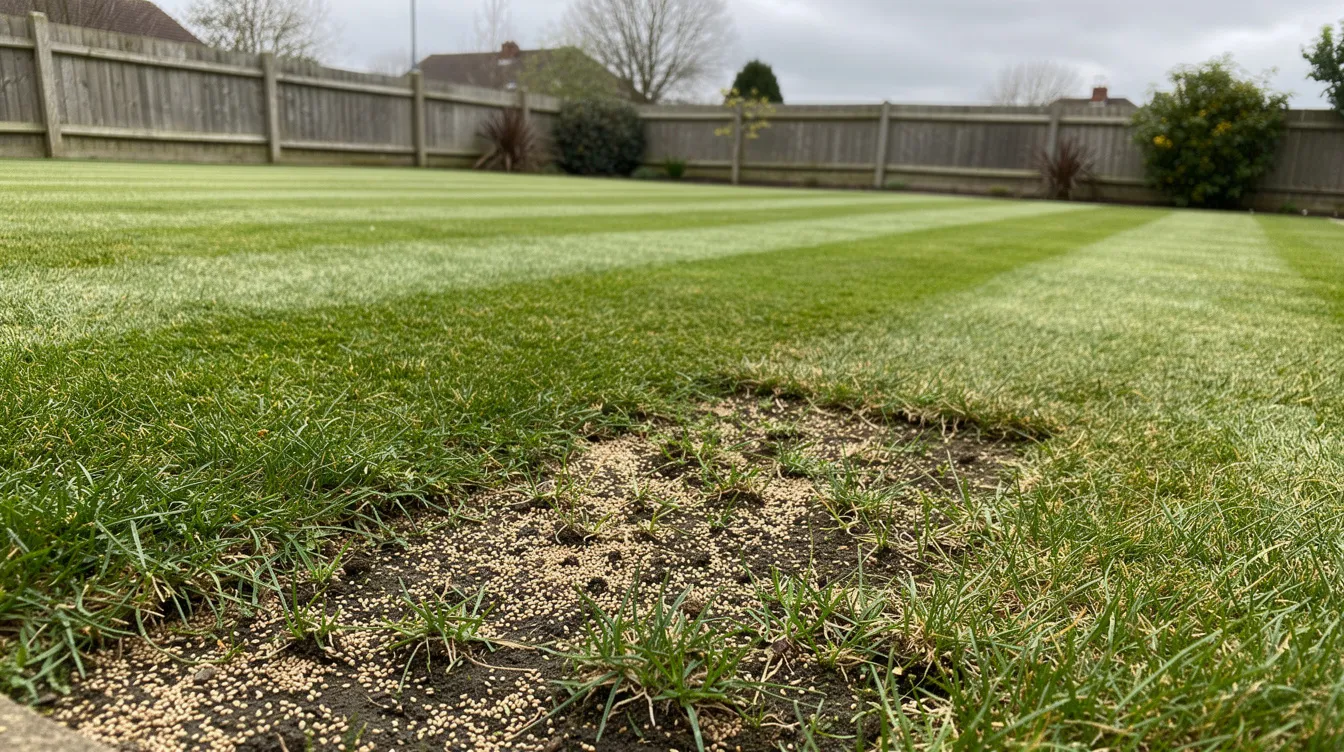
Fill the gaps. Once moss and dead thatch are cleared, bare patches need overseeding with a quality grass seed, otherwise moss or weeds simply move back in.
-
Feed to establish new growth. New seedlings need a different feed to established grass, timed to support root and shoot growth without scorching young grass.
-
Feed again to thicken and maintain. A final boost treatment thickens the lawn and supports the colour and density long-term, rather than a one-off green-up that fades.
Skipping steps, or doing them out of order (for example, seeding before dealing with moss), is one of the most common reasons a DIY attempt at a greener lawn doesn't hold.
Can I just buy one product to make my grass greener?
A single fertiliser can green up grass temporarily, largely through nitrogen and iron content, but it won't fix moss, thatch or bare patches underneath. That's the gap GREENER's Lawn Transformation Kit (from £89.99) is built to close: it's a pre-measured, four-step kit covering the full sequence above (POWER iron sulphate moss treatment, LAUNCH premium grass seed, a growth-stage feed, and a boost/maintenance treatment), sized to the actual garden at checkout, so there's no separate calculation or guesswork on dosing or timing. It carries a 60-day guarantee and a genuine 4.9-star rating from customers who've used it.
How long does it take to get a greener lawn?
Most greening happens faster than most people expect, but full recovery takes longer than a single weekend:
|
Stage |
Typical timeframe |
|---|---|
|
Visible colour improvement (moss treatment) |
Within days |
|
New seed germination |
1-2 weeks |
|
Overall visible transformation |
2-4 weeks |
|
Fully thickened, established lawn |
6-8+ weeks |
Weather matters more than most guides admit: cold snaps, heavy rain or drought can all slow germination, which is why timing treatment to the UK's actual seasons, rather than a generic international calendar, makes a real difference.
Keeping a lawn green once it's fixed
A lawn that's been fixed doesn't stay that way on its own. Grass has different needs each season (spring growth, summer stress, autumn root strengthening, winter protection), so the maintenance that follows an initial fix matters as much as the fix itself, and regular maintenance is what keeps it healthy over time. This is what GREENER's Seasonal Care Subscription (from £39.99 every 3 months) is for: the right treatment for the season, delivered automatically, rather than needing to remember what to buy and when four times a year, with lawn feed or lawn food changing through the year and some lawn fertilisers using slow-release formulas that provide nutrients for months. Organic options can improve soil structure, benefit microbes, and support a stronger soil ecosystem. In that sense, it is practical lawn care that uses more sustainable, eco-friendly management techniques.
FAQ
What actually makes grass greener?
Iron is the nutrient most directly responsible for deep green colour, but a greener lawn is not just about iron: to achieve greener grass, use a nitrogen-rich fertiliser, since nitrogen-rich fertilizers promote lush growth and help keep grass green, while iron can darken grass colour without promoting growth in the same way. Magnesium in fertilisers also supports greenness.
Longer-term colour and thickness also depend on clearing moss and thatch, overseeding bare patches, and feeding correctly through the growing season.
Why is my lawn yellow instead of green?
Yellowing is usually a sign of nutrient deficiency (commonly iron or nitrogen), poor watering, overwatering, drought stress, or in some cases a lawn disease; in most areas, lawns need about 1 inch (2.5 cm) of water per week, much of it from natural rainfall unless you hit a spell of dry weather. For healthier grass roots, water deeply and infrequently rather than little and often, which can lead to weak grass; avoid watering during the hottest part of the day to reduce evaporation, and use a soil moisture gauge to judge when watering is actually needed. Checking for moss or thatch build-up first is worth doing, since it's the most common underlying cause in UK gardens.
What's the fastest way to make my lawn greener?
An iron-based treatment gives the fastest visible colour change, typically within days, though it addresses colour rather than the underlying causes of a patchy or thin lawn. Faster improvement also depends on mowing: keep the mower on a higher setting to encourage deeper roots, aim for 4-5 cm (1½-2 in) on normal lawns, and use a light touch so enough leaf area remains to support recovery. Use good quality equipment and check the blades, removing no more than one-third of the grass height at once to avoid stressing the grass. For a lasting result, colour treatment needs to be paired with dealing with moss, overseeding bare patches, and appropriate feeding. Regular mowing also helps deter weed growth, keeps the lawn looking tidy, and the mower should have its blades sharpened 2-3 times per season for cleaner cuts.
Do I need a professional to get a greener lawn?
Not necessarily. A sequenced, pre-measured kit such as GREENER's Lawn Transformation Kit is designed specifically so homeowners can follow a professional-grade sequence themselves, without hiring a landscaper. Many homeowners can also aerate compacted soil themselves so oxygen and nutrients reach the roots more effectively. For better health, do this at least once a year.
How often should I use lawn food to keep my lawn green?
Most UK lawns benefit from a seasonal feeding schedule, roughly four times a year, with the product matched to spring, summer, autumn or winter conditions rather than one all-purpose feed used year-round.
In short
A genuinely greener lawn comes from treating the real cause (moss, thatch, bare patches or nutrient deficiency) in the right order, not from a single quick-fix product. GREENER's Lawn Transformation Kit is built around exactly that sequence, sized to your garden, with a 60-day guarantee; Seasonal Care Subscription keeps it looking that way once it's fixed


