


"I've fed it, seeded it, done everything right, and it still won't grow properly" is one of the more frustrating patterns in UK lawn care, and it's very often a soil problem rather than anything to do with feeding or seeding technique. Clay soil in particular works against a lawn in a genuinely unusual way, it isn't poor soil, it's difficult soil, and those aren't the same thing.
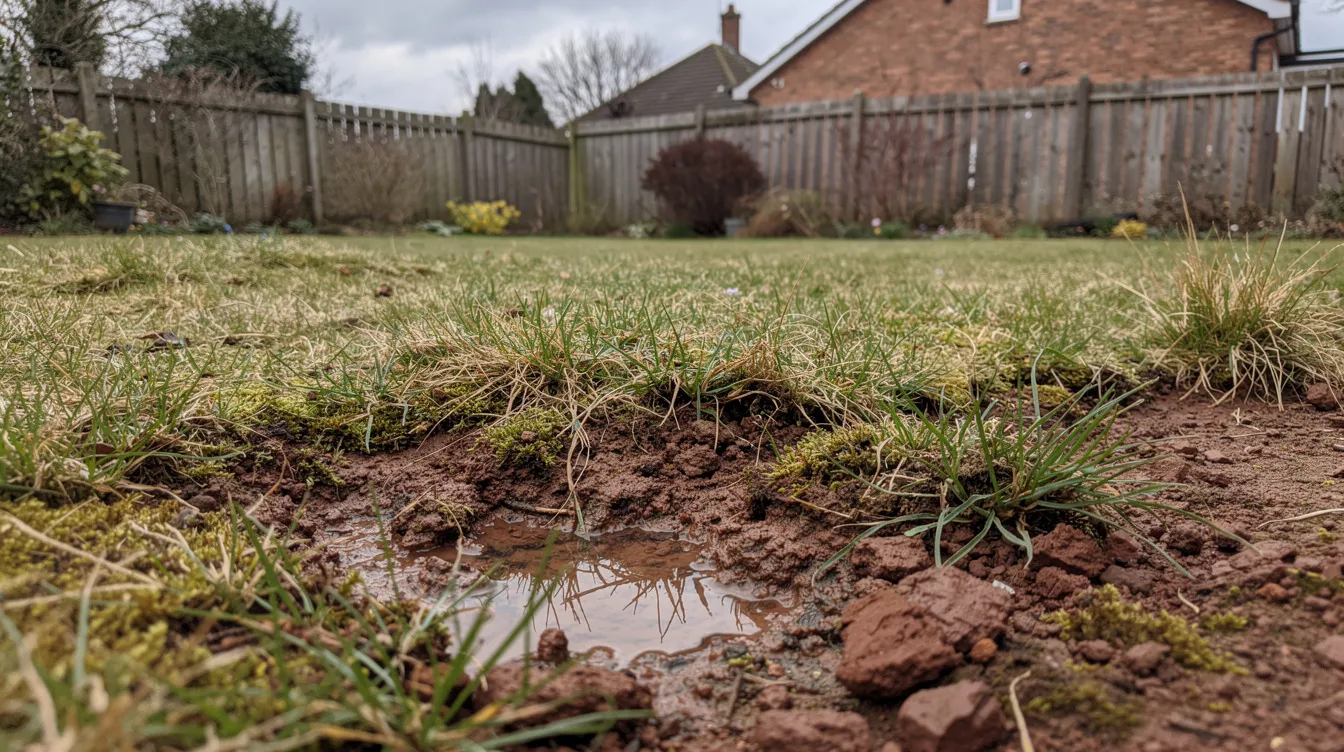
Clay soil isn't lacking nutrients, it's a soil structure problem
According to the RHS's guidance on clay soils, clay soil, made up of over 30% fine clay particles, is actually fertile, usually rich in plant nutrients, and it holds moisture well. Because it contains very small mineral particles, the problem isn't what's in the soil, it's the soil's physical structure working against roots getting to it, or against the lawn as a whole functioning properly through the year.
Why clay behaves so differently in wet and dry conditions
Clay's real challenge is that it's difficult in both directions, not just one. When it's wet, clay soil drains slowly, retains moisture well, and holds water, and heavy clay with poor drainage can turn into wet soil with standing water; wet clay should be left alone to avoid compaction and preserve structure, according to the same RHS guidance. For a lawn specifically, that means genuinely soggy, waterlogged ground for longer after rain than other soil types, exactly the kind of prolonged, poorly-drained, oxygen-starved root environment covered as a cause of yellowing in Yellow Lawn? Here's Why (And What Actually Fixes It).
Then, once the weather turns dry, clay does the opposite: it warms up slowly in spring, can become waterlogged in winter, and then bakes hard from late spring onward, cracking in summer as it dries. That's a genuinely difficult combination for a lawn to sit on top of, boggy and compacted for part of the year, then hard and cracked for the rest, with root growth struggling in both conditions. Given how significant this year's drought has been, covered in UK Lawn Drought 2026: A Realistic Look at the Growing Season, a clay lawn that baked hard over summer is a genuinely harder recovery case than a lighter, more free-draining soil, since the compacted, cracked structure itself needs addressing before feeding or seeding can really take hold.
Why compaction is the actual mechanism to fix
Because clay particles are so fine, they pack together tightly once compressed, by foot traffic, mowing, or simply their own weight when waterlogged, leaving very little space for air or water to move through and making drainage harder in compacted soil. Grass roots need both oxygen and reasonable access to water to function, and a compacted clay lawn restricts both, so compacted clay can suffocate grass roots even when the nutrients themselves are often genuinely present in the soil. This is the real reason feeding alone rarely fixes a struggling clay lawn: the nutrients can be there and still be functionally inaccessible to roots that can't penetrate compacted ground properly, which is why improving soil structure matters in compacted lawns where compaction limits drainage as well as root penetration.
What actually helps improve drainage
Relieving the compaction itself is the step that makes the biggest practical difference, typically done by aerating the lawn, with spiking or hollow-tining used as core aeration to relieve compaction and let air and water penetrate deeper through the compacted layer. For clay lawns, this is usually best done in spring or autumn, when the soil is moist rather than saturated so you can improve drainage without smearing the surface. Over time, top-dressing after aeration with a 70/30 sand-to-soil mix plus compost can support better drainage and gradually improve the soil's structure over the long term, rather than trying to fix it in a single pass. Don't add sand on its own unless it's being used in large quantities. It's also worth avoiding walking on or working a clay lawn when it's waterlogged, since that's exactly the condition that causes clay to compact further, according to the RHS guidance above, so timing matters as much as the treatment itself.
Once the underlying structure is being addressed, the actual feeding and seeding follows the same logic covered in Sequenced Lawn Care: Why We Don't Sell You One Product and Hope: deal with what's working against the lawn first, in this case compaction, then let seed and feed actually do their job in soil that can support them, rather than applying the Lawn Transformation Kit or any other product on top of ground that's still fighting against it structurally.
FAQ
Is clay soil actually bad for growing grass?
Not because it lacks nutrients, clay is often genuinely nutrient-rich. The problem is structural: clay soil drains slowly and compacts easily, which reduces oxygen flow to plant roots, limits the water access grass roots need, and bakes hard when dry, making it harder to keep grass green and maintain healthy turf.
How can I tell if my lawn's problem is clay soil rather than something else?
Genuinely waterlogged, soggy ground that stays wet long after rain has stopped, combined with soil that goes hard and cracks in dry weather, is a strong indicator of clay soil specifically, rather than a feeding, disease or pest issue. These wet, compacted conditions also make lawns more prone to moss invasion and fungal disease, so aeration is important to improve airflow, limit moss, and reduce that risk.
Does feeding a clay lawn more help if grass isn't growing well?
Not usually on its own. Clay soil is often already nutrient-rich, so the more common problem is that compaction is preventing roots from accessing those nutrients properly, which feeding alone doesn't fix.
When's the best time to aerate clay lawns?
Autumn is generally the most useful window, though spring time can also work, since it lets the lawn recover before winter and avoids working the soil while it's either waterlogged or baked hard, both of which make clay's structural problems worse rather than better, while aeration improves drainage and root access to oxygen.
In short
Clay soil isn't poor soil, it's often genuinely nutrient-rich, but its structure works against a lawn in both directions: compacted and waterlogged when wet, hard and cracked when dry, with root growth struggling either way. Addressing the compaction itself, through aeration and, over time, structural improvement with sand and organic matter to improve soil structure and support microbial activity, is what actually lets feeding and seeding do their job, rather than applying more product to ground that's still fighting against it, so a clay soil lawn can stay healthy year round.


