


Chafer grubs and leatherjackets are common UK lawn pests, especially in late summer and autumn, when they feed on grass roots below the surface and turn a healthy garden lawn into yellowing patches, loose turf and, often, a mess dug over by birds, foxes or badgers overnight. By then the grubs have usually been feeding for weeks. Catching them earlier, identifying whether you're dealing with chafer grubs or leatherjackets, and treating at the right time with nematodes is what stops a minor patch becoming a lawn that needs re-turfing.
Free download: Grab the complete GREENER Lawn Guide: everything you need to grow, fix and maintain a UK lawn, all year round.
Why late summer is grub season
Both chafer beetles and crane flies, also known as daddy longlegs, lay their eggs in lawns during summer. The eggs hatch into grubs that feed on grass roots from below, right through autumn and into the following spring in some cases. August and September are when populations are established enough to treat, but before the damage has really shown on the surface, which is exactly why most UK lawn owners and gardeners miss the window and only act once the lawn is already torn up. Below, you'll see how to identify each pest, tell their damage apart, apply nematodes properly, and repair the lawn afterwards.
What chafer grubs look like
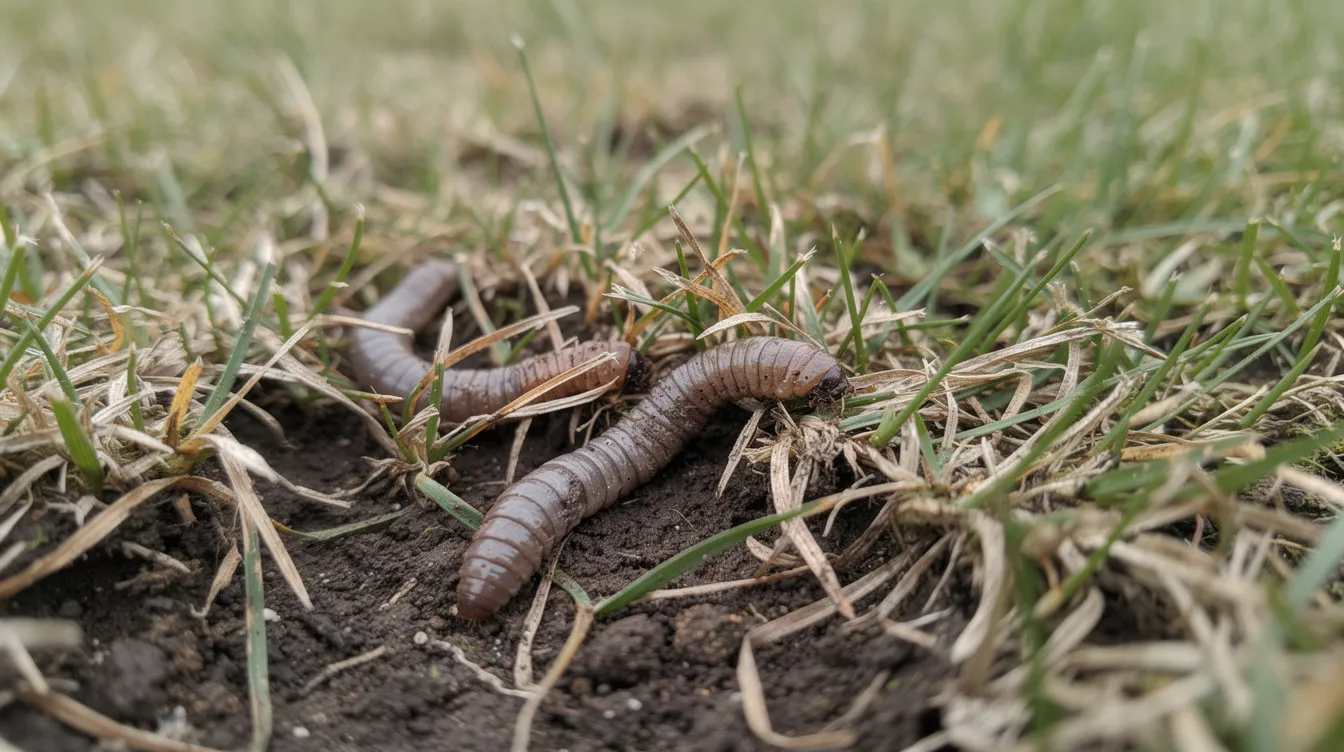
Chafer grubs are C-shaped, cream-coloured with an orange-brown head and six visible legs near the front. They stay curled into that C-shape even when disturbed and move sluggishly. You'll usually find them a few centimetres down, close to the root zone they're feeding on.
What leatherjackets look like
Leatherjackets are the larvae of crane flies: grey-brown, tube-shaped, with no visible head or legs, and can reach up to 40mm long. Unlike chafer grubs, they wriggle actively when you handle them rather than staying curled. If you're holding one and trying to work out which pest you've got, that's usually the fastest tell: C-shaped and still means chafer, straight and wriggling means leatherjacket.
Telling the damage apart
Both pests cause similar surface symptoms, so the giveaway is usually who's digging up your lawn rather than the grub itself. Look for irregular brown or yellowing patches that don't respond to watering, turf that lifts easily almost like loose carpet because the roots have been eaten away, birds such as starlings and crows probing or pulling at the grass, foxes or badgers digging holes overnight, and patches that feel spongy or soft underfoot with visible root loss when you check.
If you're seeing torn-up patches with wildlife damage on top, that's grubs. If it's just yellowing without the digging, it's worth ruling out other causes first: thatch build-up and drought stress can look similar from a distance.
Nematode treatment, when and how
Nematodes are microscopic worms that infect and kill grubs from the inside, and they're the standard, pet-safe treatment for both pests. Timing and soil conditions matter more than the product itself. For chafer grubs, the RHS confirms Heterorhabditis bacteriophora nematodes should go down in late summer to early autumn, roughly late July to September, while grubs are still small and near the surface. For leatherjackets, the RHS recommends Steinernema feltiae nematodes from September into early October, once populations have built up enough to target effectively.
Nematodes need moist soil at a minimum of around 12°C to survive and work, so water the lawn before application and keep it consistently damp for around two weeks afterwards. Treating too early, or letting the soil dry out, is the most common reason nematode treatments underperform. It's rarely the product; it's the conditions it was applied into.
After treatment, repair the patches
Nematodes deal with the grubs, not the bare patches they've already caused. Once the lawn stops attracting digging, rake out dead material, loosen the soil in affected areas and reseed the bare patches. Autumn's actually a good window for this, since grass seed germinates well in the cooler, damper soil that follows.
Grub damage looks dramatic, but it's rarely complicated to fix once you know which pest you're dealing with and when to treat it. Nematode treatment itself is a job you'll still need to time and apply yourself in that window; what GREENER's Seasonal Care Subscription does is keep the lawn's roots and resilience strong through the season either side of it, so recovery is faster once the grubs are dealt with. If your lawn's already showing patches and you're not sure what's behind them, our free lawn diagnosis quiz can help narrow it down.


