


If a lawn that looked fine yesterday suddenly has patches torn up overnight, and it looks more like the work of an animal than a lawn problem, that's often exactly what it is, and it's usually a sign of something underneath the surface rather than random damage. Chafer grubs and leatherjackets are the two most common culprits in UK lawns, and while they're often lumped together as "grubs," they're genuinely different pests with slightly different timing.
The giveaway most people miss: the damage isn't always the grubs themselves
It's worth knowing this upfront, because it changes what you're actually looking for. According to the RHS's guidance on chafer grubs, a chafer grub infestation starts with the larvae eating grass roots, and that infestation can cause yellowing and thinning patches before the worst visible damage appears. The most obvious damage is usually caused by birds, particularly crow-family birds like jays, magpies, rooks and crows, along with badgers and foxes, digging up the turf because they are eating the grubs underneath, so this kind of disturbance is a strong sign of their presence. If you're finding torn-up patches of lawn, especially overnight, that's often the real first sign, arriving before the root damage itself becomes obvious. It can also attract secondary pests, leading to more lawn damage.
Chafer grubs: what they are and when they cause chafer grub damage
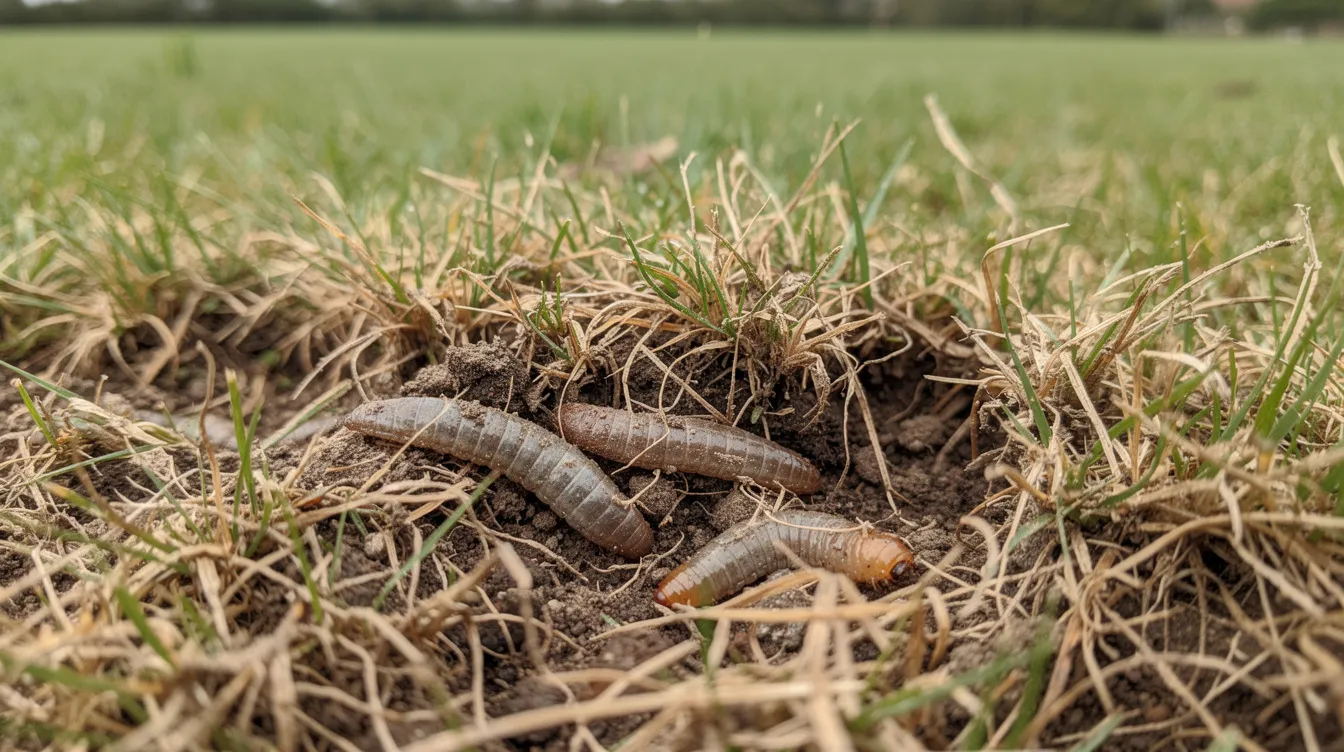
Chafer grubs are the larvae of adult chafer beetles, C-shaped, cream-coloured with a brown head and three pairs of legs, and they measure about 1 to 2 centimetres in length. Adult chafer beetles emerge from the soil in late May, eggs are laid in early summer, the eggs hatch after about two weeks, and the larvae spend the larval stage feeding on grass roots from autumn to early spring before they pupate in the soil during spring. That means peak damage, and peak risk of birds and animals digging for them, runs from autumn through to spring, which lines up with when most people actually notice the problem. Damage is often most visible in spring and summer.
Leatherjackets: what they are and when they cause damage
Leatherjackets are the larvae of crane flies (daddy longlegs), greyish-brown, tubular and legless, growing up to about 30mm long, distinctly different in shape from chafer grubs even though the damage they cause looks similar. Adult crane flies emerge and lay eggs in turf between August and October, and the larvae hatch a few weeks later to start feeding on roots. Cold winters slow their growth down, but a mild winter can let them reach damaging size by late winter, which is worth knowing given how mild and wet recent UK winters have tended to be. As with chafer grubs, birds, crows and starlings in particular, searching for leatherjackets often leave small, round holes in the turf where they've probed for them, sometimes before the root damage itself is obvious.
Telling the two apart, and why it matters
Both cause similar-looking symptoms, with a grub infestation often showing as yellowish-brown, thinning patches that can die back, and affected areas may also feel spongy or loose alongside birds or animals digging at the lawn, which is why they're often confused with each other or dismissed as "just grubs." If you suspect chafer grubs, lifting a small section of turf can reveal grubs beneath the surface. The practical difference that matters is timing and treatment window rather than the visible damage itself: chafer grub prevention is best applied around July to September, while leatherjacket prevention is best applied around September to early October, so knowing which pest is actually present affects when treatment will work, not just what treatment to use.
What actually treats chafer grubs and adult chafer beetles
The best treatment for both is biological control, using pathogenic nematodes watered into the lawn, a different nematode species depending on the pest (Steinernema carpocapsae is commonly used for chafer grubs, Steinernema feltiae for leatherjackets). Both need reasonably warm, moist soil to work, ideally when soil temperatures are 12°C to 20°C, which is exactly why the application windows above matter: apply too early or too late, when the soil's too cold or too dry, and the nematodes won't be effective even if the product itself is correct. They are most effective against newly hatched chafer grubs, before insects build up in large numbers. This is also why prevention, treating before grubs reach a damaging size, tends to work better than trying to treat an already-established, visibly damaged patch. Effective control may also require regular treatment through the season within that application window.
Repairing the damage once it's dealt with
Whether the visible chafer grub damage came from the grubs themselves or from birds and animals digging for them, the lawn should recover more reliably once the cause is dealt with, even after serious damage or significant damage that can quickly ruin the overall colour if left untreated. The repair itself follows the same logic as any other bare or torn-up patch: firm the soil back down if it's been disturbed, rake out dead grass, then reseed bare spots with quality grass seed suitable for your lawn into prepared ground rather than scattering seed over undisturbed soil. Water newly seeded areas regularly and add a light top dressing of organic compost to help developing grass plants establish. That's the same sequencing principle covered in Sequenced Lawn Care: Why We Don't Sell You One Product and Hope, dealing with the actual cause first, then rebuilding what's left behind, rather than tackling the visible symptom in isolation. Regular lawn care helps the grass recover and stay less susceptible to minor repeat damage.
FAQ
How do I know if my lawn damage is from a grub infestation and not something else?
The clearest giveaway is birds, foxes or badgers actively tearing up patches of turf, often overnight, since they're digging for the grubs underneath rather than causing random damage. That's frequently the first visible sign, arriving before the yellowish root-damage patches themselves become obvious. If you suspect an infestation in affected areas, lifting a small piece of spongy, loose turf can reveal grubs beneath the surface because it may peel back easily.
What's the difference between chafer grubs and leatherjackets?
Chafer grubs are C-shaped, cream-coloured with a brown head and legs, and cause peak damage from autumn through spring. Leatherjackets are greyish-brown, tubular and legless, and cause damage that can worsen through a mild winter into late winter. Both attract birds and animals digging for them.
When's the best time to treat chafer grubs or leatherjackets?
Chafer grub prevention with nematodes works best applied around July to September. Leatherjacket prevention works best around September to early October. Both need warm, moist soil, generally at least 12°C, to be effective, which is why timing matters as much as the treatment itself.
Can I just reseed the damaged patches without treating the grubs first?
It's better to treat the underlying grub problem first if it's still active, since reseeding into a lawn that still has feeding larvae, or that birds are still actively digging up, is likely to be disturbed again before new grass can establish properly.
In short
Torn-up patches of lawn, particularly overnight, are often a sign of chafer grubs or leatherjackets underneath rather than random animal damage, and correctly telling the two apart matters because an untreated infestation can quickly destroy large sections of a lawn and their treatment windows differ, chafer grub prevention in summer, leatherjacket prevention in early autumn. Both respond well to nematode treatment applied at the right time in warm, moist soil, and repairing the visible damage afterwards follows the same principle as any other patch repair: deal with the actual cause first, then rebuild what's left behind.


