


What is the best treatment for patchy grass in the UK?
The best lawn treatment for patchy grass in the UK combines diagnosing the root cause, scarifying and aerating the lawn surface, then overseeding with a UK-appropriate grass seed mix plus a balanced feed. Expert advice is essential for diagnosing and treating patchy grass, including recommendations for reseeding, turfing, and seasonal best practices to achieve optimal results. For severe damage exceeding 30% of your lawn, re-turfing specific areas delivers faster results.
The ideal time for repair work in UK climates falls between mid-April and May in spring, or September to early October in autumn, when soil remains moist and temperatures sit between 10–16°C. During these windows, you can expect germination in just a few weeks.
Before starting repair work, underlying issues such as compacted soil or heavy clay should be addressed to prevent patchiness from recurring. For typical UK patchy lawns, overseeding with a hard-wearing ryegrass mix plus a phosphorus-rich pre seed fertiliser gives the best cost-effective results—around £0.50–£1.50 per m² compared to £10–£20/m² for turf. Ready-made lawn repair kits like GREENER’s lawncare kits simplify this repair process by combining seed, feed and clear instructions in one delivery. In cases of severe or widespread damage, establishing a new lawn may be necessary to ensure healthy, even growth.
This guide walks you step-by-step through choosing between reseeding, overseeding and returfing for UK conditions.
Understanding why your grass is patchy
Treating patches without knowing the cause leads to repeat problems—failure rates of 50–70% when you skip diagnosis. Before spreading new seed, identify what created your bare patches in the first place.
Most common causes in UK gardens:
-
Heavy foot traffic from kids, pets and daily shortcuts
-
Dog urine burns causing yellow-brown dead patches with lush green edges
-
Shade from north-facing fences, walls and trees
-
Soil compaction in clay-heavy profiles (common in 60% of UK gardens)
-
Drought stress following hotter summers
-
Poor soil pH or nutrient imbalances
-
Pests like leatherjacket grubs eating roots
-
Moss and thatch build-up smothering grass
How to observe patterns: Look for linear worn paths from children’s play or washing lines, radial burns 30–50cm wide from dog spots, thin mossy growth under hedges, or dry south-facing cracks after hot spells.
Take 1–2 soil scrapes with a trowel to 5–10cm depth. Check for thatch layers exceeding 1cm, compacted soil that fails a screwdriver test, debris, or C-shaped white grubs. This lets you select the right seed blend and treatment approach.
When is the best time in the UK to fix patchy grass?
Timing matters as much as the product you choose. Get it wrong, and your lawn seed sits dormant or dies before establishing.
Best UK repair windows:
|
Season |
Months |
Why it works |
|---|---|---|
|
Spring |
Late March – May |
Soil warms to 10–16°C, natural moisture, grass actively growing |
|
Autumn |
Early September – early October |
Post-summer recovery, rain returns, roots establish before winter |
April emerges as the sweet spot in much of the UK, with average soil temperatures reaching 10–12°C by mid-month. September offers a second chance after summer stress.
Avoid reseeding during:
-
June–August heatwaves when evaporation exceeds 5mm daily
-
Mid-winter when ground is frozen or waterlogged
-
Heavy rain spells creating anaerobic conditions
Check your local 7–10 day forecast. Target a cooler, showery spell to minimise watering effort and maximise germination success.
Choosing the right treatment: seed, overseeding or turf?
You have three main options for your garden: patch repair with seed, overseeding the whole lawn, or cutting out and replacing patches with turf.
When to use each method:
-
Patch repair kits: For isolated bare spots or when treating just one spot, all-in-one patch repair mixes are generally the easiest and most effective DIY solution. These kits are ideal for bare areas up to roughly A4 sheet size—delivering 90% fill-in within 4 weeks. All-in-one patch repair mixes combine seed, fertiliser, and a growing medium to ensure moisture retention and quick growth.
-
Overseeding entire lawn: Widespread thinning, lots of small patches, or 30–50% sparse coverage after dry weather
-
Re-turfing: Severe damage, heavily compacted soil, persistent dog spots, or patches dominated by weeds and moss
Quick comparison:
|
Method |
Cost per m² |
Time to full coverage |
Best for |
|---|---|---|---|
|
Patch seeding |
£0.20–0.50 |
4–6 weeks |
Small bare spots |
|
Overseeding |
£0.50–1.50 |
3–4 weeks |
Thinning existing lawn |
|
Turf |
£10–20 |
Instant green |
Severe damage |
A mixed strategy often works best: returf the worst 10%, then overseed and feed the rest of your lawn.
When reseeding, it is best to use the same grass seed mixture originally applied to your lawn for a uniform appearance, or select a comparable variety if the original is unavailable.
Step-by-step: best way to repair patchy grass (reseeding method)
This is the core method for most UK readers with patchy lawns. Follow these steps for the strongest results.

Preparation:
-
Mow your lawn slightly shorter than usual (3–4cm), being careful not to remove too much of the grass blade, and avoid scalping below 2.5cm
-
Remove clippings completely to prevent smothering
-
Mark out damaged patches clearly
Soil preparation:
-
Rake or lightly scarify each new patch to remove dead grass, moss and thatch
-
Aim to expose at least 50% bare soil for good seed-to-soil contact
-
Loosen compacted soil with a hand fork to 5–7cm depth. Aeration can relieve soil compaction caused by foot traffic, improving drainage and root growth.
-
Break up large clods for a fine tilth (crumb size under 1cm)
Topdressing and sowing:
-
Brush in a thin layer (0.5–1cm) of quality top soil or lawn dressing to level sunken areas
-
Sprinkle your chosen grass seed at 25–35g/m² for overseeding or 35–50g/m² for bare patches
-
Very lightly rake or tread seeds in for soil contact—this deters 80% of bird loss. For effective seed-to-soil contact, lightly firm down with your feet or a roller once the seed or repair mix is spread over the patch.
-
After sowing, cover the newly sown area with a thin layer of compost or similar material to protect the seed and promote germination.
-
Apply starter fertiliser or balanced lawn feed if not included in your kit
Aftercare:
-
Water gently once or twice daily for the first 2–4 weeks after overseeding, keeping soil evenly moist (not waterlogged), as consistent watering is crucial for lawn recovery.
-
A light sprinkling is better than heavy soaking that causes runoff
-
Expect ryegrass germination in 5–10 days; finer fescues take 10–21 days
-
Avoid cutting new grass until it reaches at least 3–4 inches (7–10cm) in height to ensure proper establishment, then cut on a high setting with sharp mower blades
Dealing with specific patch problems
The best treatment varies depending on what caused your dead patches. Here’s how to handle each scenario.
Heavy traffic and worn paths
Kids, pets and daily shortcuts to sheds create clear tracks across UK lawns. The soil beneath becomes heavily compacted, preventing root growth.
Solutions:
-
Install stepping stones or gravel strips on the most-used routes
-
Fork or spike the soil prior to seeding to break compaction
-
Overseed with hard-wearing mixes containing 80% perennial ryegrass
-
Cordon off repaired patches for 2–4 weeks during establishment
-
Annual overseeding in spring or autumn maintains thickness on high-traffic areas
Dog urine burns and pet damage
Nitrogen and salts in dog urine scorch grass, leaving yellow centres with sometimes lush dark green edges from nitrogen overload. These brown patches appear 30–50cm wide.
Solutions:
-
Flush fresh urine spots immediately with 2L water to dilute salts
-
Rake out dead patches fully, removing the top 1–2cm of soil if badly scorched
-
Mix in fresh topsoil and consider gypsum (50g/m²) to rebalance soil structure
-
Reseed with resilient, hard-wearing mixes
-
Keep dogs off new growth until grass has been cut at least twice
-
Train dogs to use a specific gravel or bark area—this reduces future damage by 70%
Shade from fences, walls and trees
North-facing fences, under hedges, and beneath mature trees create typical UK shady spots. Standard grass mixes struggle here, leading to bare soil and moss invasion.
Solutions:
-
Use shade-tolerant seed blends with 20–40% fescues (chewings and red fescue)
-
Prune or crown-lift trees to increase dappled light
-
Thin dense thatch and moss with a wire rake before sowing
-
Mow shaded areas slightly higher and less frequently
-
Accept realistic expectations: deep shade zones may suit bark, gravel or shade-loving plants better than struggling grass
Debris, disease and small bare spots
Thick clippings, autumn leaves and old weed patches can suffocate grass, creating small bald spots across your lawn.
Solutions:
-
Remove fallen leaves regularly in autumn
-
Avoid leaving heavy piles of clippings after mowing
-
Dig out persistent weeds by the roots before reseeding
-
Use ready-to-use patch repair kits combining seed, fertiliser and moisture-holding medium
-
For diseases like red thread, improve drainage and avoid over-feeding nitrogen
-
Clean mower blades between other areas to prevent spread
Drought, heat scorch and brown lawns
Hotter UK summers—2022’s 40°C peaks and 2024’s extended dry spells—have increased brown grass and drought damage across the country.
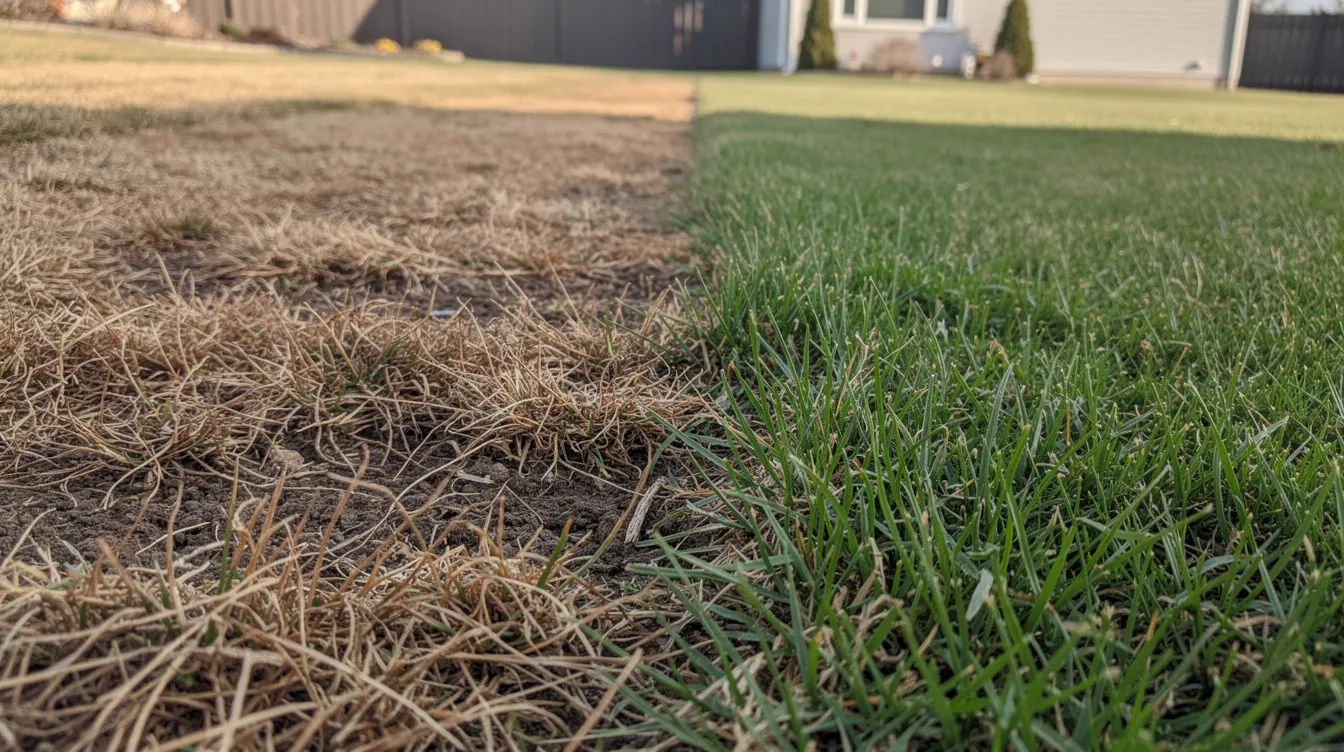
Distinguishing dormant from dead:
-
Dormant brown grass will green up when rain returns
-
Dead grass appears grey, flaky, and pulls away easily leaving bare soil
Solutions:
-
Focus limited water on high-value areas and young growth
-
Water deeply but less often to encourage deep roots
-
Use wetting agents to help water penetrate hydrophobic, dried-out soils
-
Choose drought-tolerant seed mixes with deeper-rooting species for repeatedly affected areas
-
After rain returns in late August–September, scarify away dead material and overseed with autumn feed
Top-dressing, aeration and feeding: boosting patch repair success
Patch repair works best when combined with improved soil structure and nutrition.
Lawn topdressing uses a thin layer of sand/soil/compost mix (70/20/10 ratio) to level small hollows and improve drainage. Apply 0.5–1cm maximum—this isn’t a thick new soil layer but a surface enhancer improving water holding capacity.
Aeration relieves compacted soil using a garden fork, aerator sandals, or mechanical aerator. Create holes to 10cm depth on a 10cm grid. In clay-heavy UK soils, regular autumn aeration increases water infiltration fourfold.
Feeding schedule:
-
Spring: High-nitrogen feeds (20-5-10) for shoot growth
-
Late summer/autumn: Balanced or higher-potash feeds (5-5-15) to toughen grass for winter
Warning: Avoid feeding during drought—this can scorch grass and worsen problems. Combine these practices with reseeding during April–May or September for the strongest regrowth.
Ongoing prevention: keeping a UK lawn thick and even after repair
Prevention proves easier than repeated patch fixing. Establish a simple yearly routine:
|
Season |
Tasks |
|---|---|
|
Spring |
Rake, overseed thin areas, light feed |
|
Summer |
Mow at 4–6cm weekly, remove only ⅓ of blade height |
|
Autumn |
Scarify, aerate, overseed, autumn feed |
|
Winter |
Rest the lawn, remove debris |
Additional prevention tips:
-
Rotate garden furniture, paddling pools and toys to avoid persistent bare rings
-
Address drainage issues with soil improvement or French drains
-
Respond quickly to small bare spots—reseed within days rather than months to deny weeds and moss establishment
-
Maintain mowing height around 4–6cm for family lawns
Using lawn care kits to simplify patchy lawn repair (and how GREENER helps)
Many UK homeowners find choosing separate seed, feed and treatments confusing. Poor quality product matching leads to variable results and wasted effort.
What a good kit should include:
-
UK-suitable grass seed blend matched to your conditions
-
Seasonally appropriate fertiliser
-
Clear instructions for timing and application
-
Guidance on watering and mowing
GREENER’s lawncare kits are designed specifically for repairing lawns in UK conditions. Quantities are calculated for small and medium gardens—no need to buy oversized bags or work out complex coverage rates. Everything arrives by delivery at your door, ready for your repair weekend.
Predictable, subscription-style deliveries help you remember seasonal overseeding and feeding, preventing patches from reappearing year after year. This beats ad-hoc purchases where mismatched feeds and seeds get applied at the wrong times.
Get a greener, patch-free lawn this season
You’re in the ideal repair window right now. Whether tackling your front lawn or dealing with worn patches across the whole lawn, following the above steps will deliver visible results.
Your next step: Measure your lawn roughly and choose a GREENER lawncare kit sized for your patches. Skip the guesswork at the garden centre. Select the patchy lawn repair kit for your lawn size, schedule delivery, and plan your repair weekend.
By following this guide with a tailored kit, you’ll enjoy a dense, healthy, green lawn ready for summer barbecues and autumn evenings—without instant results promises that never deliver, just proven methods that work.
Order your GREENER kit today and transform your patchy lawn this season.


