


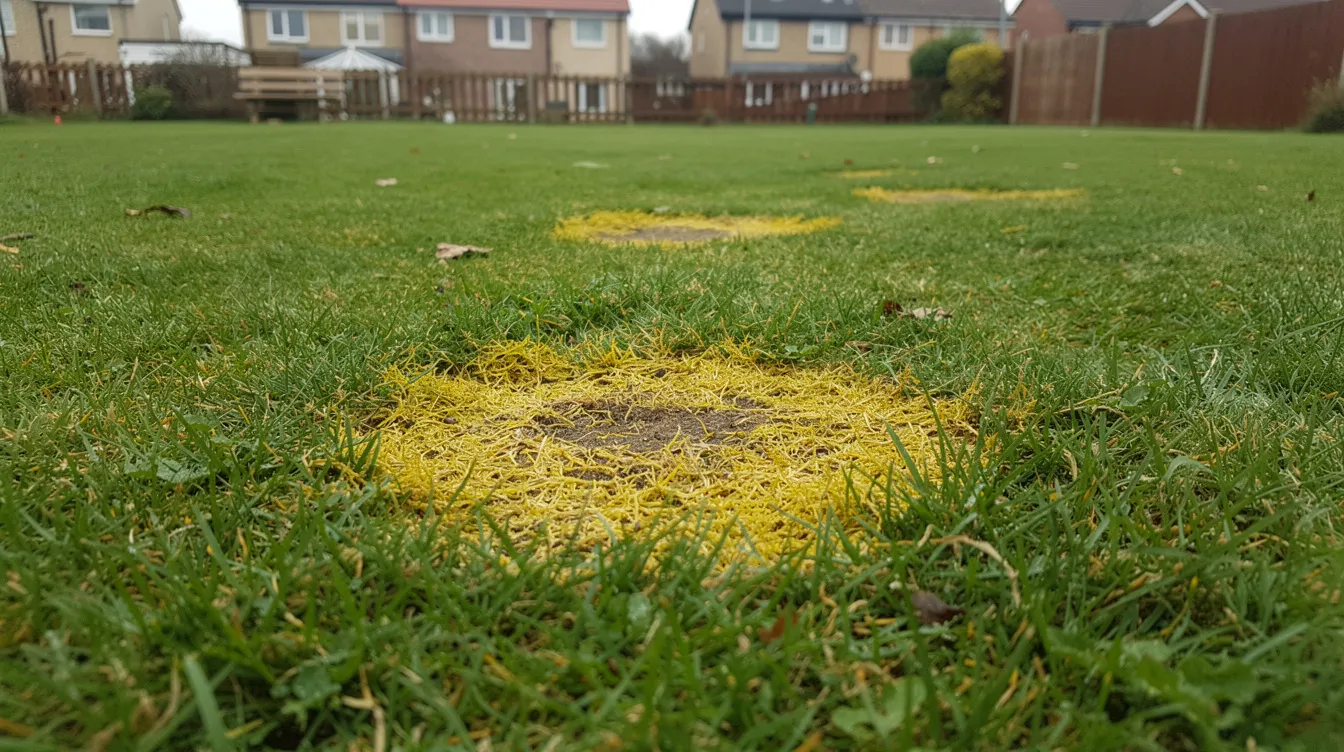
If you've got a dog and a lawn, there's a decent chance you've also got a scattering of dead or scorched patches with a strange, unmistakable pattern: a bare or brown centre, ringed by a patch of noticeably darker, lusher grass. That specific look is a genuine giveaway, and it points to a cause that's different from most other lawn problems, which means the usual advice for patchy grass doesn't fully apply here.
Why dog urine damages grass in such a specific way
Dog urine is highly concentrated in nitrogen, along with salts, both of which grass actually needs in small amounts. The problem isn't the nitrogen itself, it's the volume delivered to one small, exact spot all at once. At low concentrations, that nitrogen acts like a fertiliser, which is exactly why the ring around a urine patch is often noticeably greener and more vigorous than the surrounding lawn. At the concentration found in a single urination, directly on one small area, it scorches the grass at the centre instead, effectively burning it. That's the mechanism behind the characteristic pattern: fertilised ring, burnt centre, from a single event rather than two separate problems.
The RHS's guidance on lawn dead patches covers this alongside other causes of localised lawn damage, and the nitrogen-scorch mechanism is the same one behind over-application of a granular feed in one spot, just concentrated into a much smaller area by a dog rather than a spreader.
The one genuinely effective prevention step, and why most other advice is weaker
The most reliable way to prevent a patch forming is also the simplest: flooding the area with water shortly after the dog urinates, diluting the concentrated nitrogen before it has a chance to scorch the grass. This works because it addresses the actual mechanism directly, rather than trying to work around it.
A lot of the other commonly suggested fixes are weaker by comparison. Dietary supplements marketed to reduce urine's effect on lawns generally work, if they work at all, by encouraging a dog to drink more and dilute its own urine, which is a genuinely reasonable idea in principle, but isn't something to rely on as a guaranteed fix, and any dietary change for a dog is worth discussing with a vet rather than taken on lawn-care advice alone. Training a dog to use one designated spot, gravel, mulch or a specific corner, doesn't stop the damage, but it does concentrate it into an area that doesn't need to look pristine, which is often the most realistic solution for a lawn that gets regular use.
Does it matter if the dog is male or female?
This comes up a lot, and the honest answer is that it's about behaviour and volume more than anything else. A dog that squats and delivers a full volume of urine to one exact spot, more commonly but not exclusively female dogs, tends to cause more concentrated, visible patches than a dog that marks in smaller amounts across a wider area, more commonly but not exclusively male dogs marking vertical surfaces. It's a pattern, not a hard rule, and it's really about how the urine is delivered rather than anything else.
Repairing existing patches: same principle as any bare patch, one extra step first
Once a patch has actually died back, treating it is close to repairing any other bare patch, with one addition: since the soil in the affected spot has had a concentrated dose of salts and nitrogen, it's worth thoroughly watering the area first to help flush that out, before doing anything else. Skipping this step and seeding straight into still-affected soil is a common reason repairs fail to take.
After that, the same sequence applies as any bare-patch repair: clear out the dead grass, loosen the soil surface so new seed has something to root into, then overseed properly rather than just scattering seed on top of undisturbed ground. That's the same logic covered in Sequenced Lawn Care: Why We Don't Sell You One Product and Hope: the ground needs preparing before seed goes down, not the other way round.
The Lawn Transformation Kit is built around exactly that sequence, which makes it a reasonable fit for repairing a scattering of dog urine patches across an otherwise reasonable lawn, alongside whatever else the wider lawn needs.
FAQ
Why do dog urine patches have a green ring around a dead centre?
The nitrogen and salts in dog urine act as a fertiliser at low concentration, which is why the ring around a patch is often greener than the rest of the lawn, but scorch the grass at the point of highest concentration, the centre, which is why that part dies back or browns.
What's the single best way to stop dog urine patches forming?
Watering the area thoroughly shortly after the dog urinates, to dilute the concentrated nitrogen before it scorches the grass. It's more reliable than dietary supplements or training alone, though training a dog to use one designated area does help contain the damage to a smaller space.
Do only female dogs cause lawn urine patches?
No, though the pattern is more commonly associated with female dogs because squatting tends to deliver a full volume of urine to one exact spot. Male dogs marking in smaller amounts across a wider area tend to cause less concentrated damage, but it's a behavioural pattern rather than a strict rule tied to sex.
Can I just reseed straight over a dead urine patch?
It's better not to. The soil itself has usually had a concentrated dose of salts and nitrogen, so watering thoroughly to help flush that out first, then loosening the soil before reseeding, gives new grass a much better chance of actually establishing than seeding straight onto undisturbed, still-affected ground.
In short
Dog urine patches have a specific, well-understood cause, concentrated nitrogen and salts scorching grass at the point of contact while fertilising the ring around it, and that means they respond best to a specific fix: dilution to prevent them, thorough watering to flush the soil before repair, then the same seeding sequence as any other bare patch. Treating it like a generic patchy-lawn problem, without the flush-first step, is the most common reason repairs don't take properly.


